


Four days into this American-Israeli war with Iran, no one knows for sure how the conflict will turn out — and what its ripple effects will be in the Middle East and around the world.
But everyone seems to agree those effects will be significant, for better or worse. How will history judge this consequential moment and the president behind it?
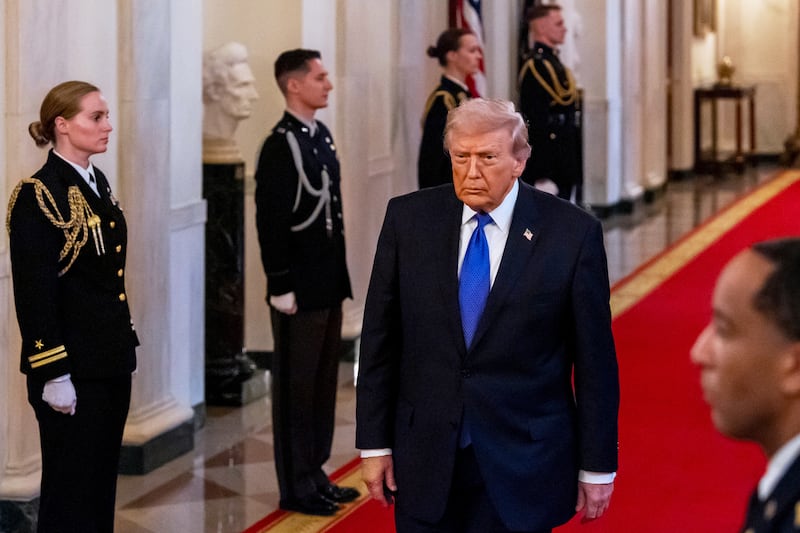
That depends on who you ask. Deseret News summarizes below prominent voices reflecting on how the ongoing U.S. operation against Iran will impact President Donald Trump’s legacy, ranging from the cautionary to the celebratory.
Reza Pahlavi, the exiled Iranian crown prince
Reza Pahlavi is a prominent critic of Iran’s Islamic Republic as the eldest son of the Iran’s last shah — and has become the most well-known advocate for a secular, democratic Iran. In a “60 Minutes” interview on Saturday, Pahlavi says of Trump: “He will go down in the annals of Iranian history as the most celebrated foreign leader that changed the ball game and changed the world as a result.”
“I’m here to echo and join millions of my compatriots inside and outside of Iran to thank him for having done and having the courage to do what is not easy.”
As 40-year-old Mona Johanbin, Iranian-American mother of three said this week, “My sister in Iran is now saying, ‘If you look at people’s eyes, all of the light is coming back.’ They are celebrating in the street.”
Pahlavi again expressed his people’s gratitude for the president “standing on his word and acting upon his word.”
About the elimination of the country’s former brutal leadership, Pahlavi adds, “It is definitely a sort of earth shattering event … maybe this is it. This is our chance now.”
“To us, it’s liberation.”
Tucker Carlson, independent journalist
“The United States didn’t make the decision here. Benjamin Netanyahu did,” Tucker Carlson argues in a video posted Monday. The independent journalist, formerly with Fox News, is a Trump supporter, but a frequent critic of American intervention overseas.
“It was very clear from the outset … that Donald Trump did not want an extended war in Iran," Carlson says.
People “voted for this president in the hope that he would improve their lives,” he says. But when it comes to these material improvements Americans want, Carlson continues, “none of that will be possible if this (war) continues.”
“We are on the way to getting … into a lot of suffering.”
“And the fault, of course, is with anyone who went along with (Netanyahu)’s demands or threats or whatever,” Carlson adds — insisting again “the root cause” was Israel and its leadership’s “ambitions.”
Trump rejected suggestions on Tuesday that his hand was forced by Israel, telling reporters: “No. I might have forced their hand.”
Marc A. Thiessen, The Washington Post
“This is the greatest day in American foreign policy since the fall of the Berlin Wall,” says Washington Post conservative columnist Marc Thiessen in a Saturday conversation with Bret Baier.
Of the 45 American presidents who have served, he says, “a very small handful have truly changed the world” — referencing the defeat of fascism with Franklin D. Roosevelt and the fall of communism under Ronald Reagan.
“Donald Trump is going to stake his place today as one of the most consequential commanders in chief in American history.”
In The Washington Post on Tuesday, Thiessen further argues that “Trump is not starting a forever war in Iran; he’s ending one.”
“For 47 years, the Iranian regime has been waging war against the United States,” citing hostage taking, bombings and attacks across decades, along with terror inflicted on Israelis.
“Now, Trump is taking decisive action to bring this reign of terror to an end. If he succeeds, the impact will be profound, opening up the possibility of enduring peace in the Middle East and beyond.”
With Middle Eastern dangers reduced, Thiessen adds, the United States could draw down forces there and “execute the long-promised ‘pivot’ to the Indo-Pacific” — defending interests closer to home.
Alexander Burns, Politico
An executive editor at Politico, Alexander Burns, writes that with the U.S. operation against Iran, “President Donald Trump’s legacy became clearer than ever.”
“He is burying the 20th century: Its villains, its alliances, its political norms and ceasefires. And he is unleashing a future of uncertainty and disruption with no new equilibrium in sight.”
Across so many different events, the president’s “signal achievements have been acts of demolition,” Burns argues — recapping Roe v. Wade being struck down, tariffs upending free trade, and pushback on Europe and NATO, as well as historic norms of the U.S. Presidency. Trump has also pushed “the Cuban government, one of the last surviving Cold War regimes, to the brink of collapse.”
While “Trump is tearing down old structures and systems,” Burns questions whether the president has a “vision for replacing them.”
For instance, he says, “It is not likely that before he leaves office we will see a stable global trade order, thriving new governments in Havana and Tehran or a post-NATO order of international security that reflects America’s overdue destiny as a Pacific nation.”
“If the 20th century is finally dead, this country’s trajectory in the 21st is an immense question mark. That is the great challenge Trump has left for the next president.”
Bret Stephens, The New York Times
In an article entitled, “Trump and Netanyahu Are Doing the Free World a Favor,” New York Times columnist Bret Stephens recaps the wide range of criticism against Trump’s war with Iran, before adding: “But one country where the United States and Israel are garnering broad support is the same country that’s being bombed.”
He quoted one Iranian resident sharing with The Wall Street Journal in the wake of Khamenei’s death, “Everyone is joyful; it is one of the best days of probably 95% of Iranians’ lives” — along with a woman in Tehran named Sara who told The New York Times: “We bolted outside and shouted from the top of our lungs and laughed and danced with our neighbors.”
“There was a time when American hearts could be moved by moments like these,” Stephens writes — “when free nations, having endured years of provocations and attacks from tyrants, band together to administer justice and supply hope.”
“We’re a different country now, less naive but considerably more pessimistic and cynical, and thus likelier to ask: What’s in it for us?”
The columnist outlined five potential ways the U.S. could benefit, before adding: “millions of ordinary people around the world — not just in Tel Aviv or Tehran … will notice that the United States, for its many warts, still stands for freedom.”
Stephens concludes: “My column has never been shy about denouncing either Trump or Netanyahu. It won’t be shy to criticize them in the future. But on Saturday this much-maligned duo did the free world a courageous and historic favor. It will be remembered long after the petulant criticism dies down.”