

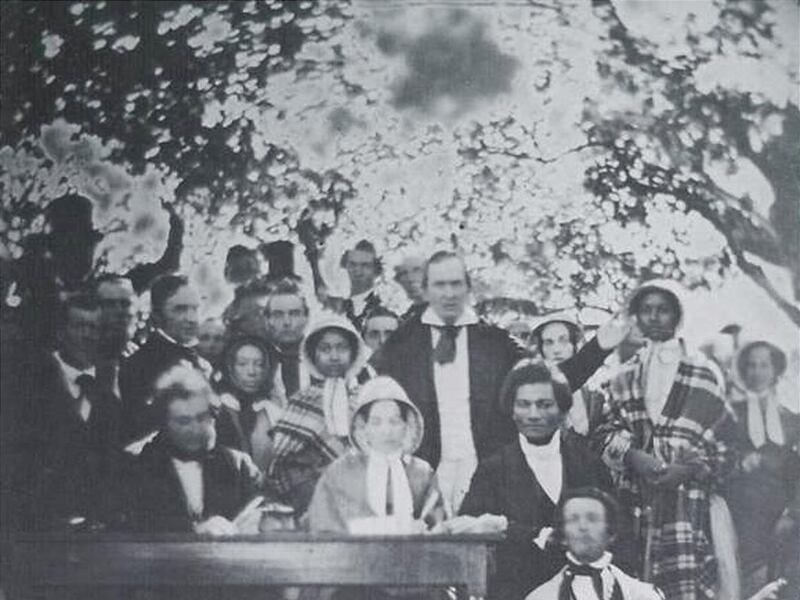
Several years ago a friend of mine told me of his greatest photographic find. He was in New England going from one antique store to another when he found a photo on glass of a group of men at a table in front of a tree at a meeting of a number of people.
He bought it for $35 and put it in his pocket and took it home.
Sometime later he saw that the man in the center was African American. Research proved that this photo was the first known photo of an abolitionist meeting being addressed by Frederick Douglass in New England.
Today this photo sits in the Smithsonian Museum rated as one of the ten greatest photographs in our history. Sometime later my friend was offered $1 million for the photo. Happily it's still on display for all to see. He realized the greatest value was the history it represented.
Sadly, many great historical items and photographs are left in boxes or worse, casually thrown out. Most people realize that most historical photographs may have little monetary value — without realizing that their historical value may be incalculable.
Before 1826, history was recorded in books, drawings and painting. A few years later in 1839 photography really took off and the world was changed forever.
Unlike today's digital cameras, early photographs were process of chemicals and skill. They were made on glass, tin and paper and were taken in photo solons or shops because of the heavy equipment Kodak Brownie camera and non-professional photography swept the world.
Photos are important in documenting history. Like my friend's photo he discovered of Frederick Douglass, photographs tell us things we can't learn elsewhere. They can show us a flag being raised on a hill on an island in the pacific during World War II or the New York towers on 9/11. They can also let us look into our ancestors' eyes.
Last year we asked people to send us copies of their old photographs or early moving pictures. Two people responded.
One donated their families' early motion pictures (in color) of LDS General Conference from 1938. Also included was film of a University of Utah football game and graduation of that same year.
They also recorded on film the construction of temples in the 1940s and 50s. These films are currently being digitized and will soon be available at the Church History Library for people to enjoy and learn from. The Deseret News will have some of them on the web in the near future.
Another reader donated some of her ancestor's photographs as he tried to become a professional photographer here in Salt Lake City at the turn of the century.
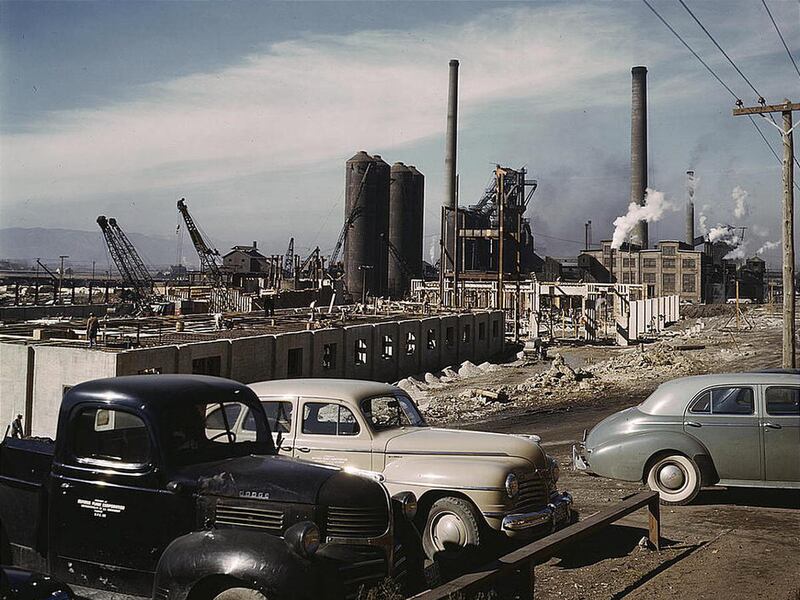
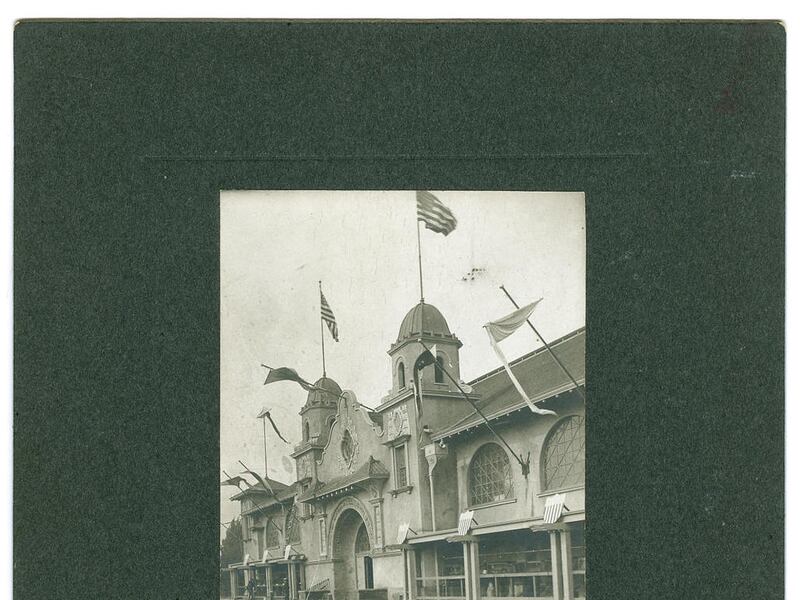
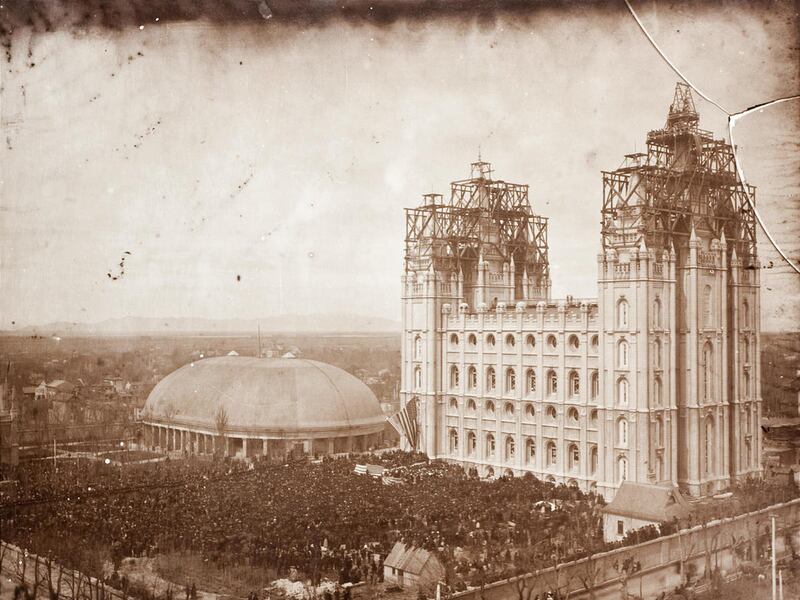
Photos shown with this article are some of the best that we have found in our archives; they are a cross-section of different types of activities.
We invite you to submit to us at UtahHistoryPhotos@gmail.com scans of old photos to find out a little more about the importance or value of your photograph. We also encourage individuals to make donations to Colleges and Universities, Church libraries, and County and State Historical Societies.
We are especially interested in events of visiting VIP's to the state, building dedications, parades, church events and so forth.
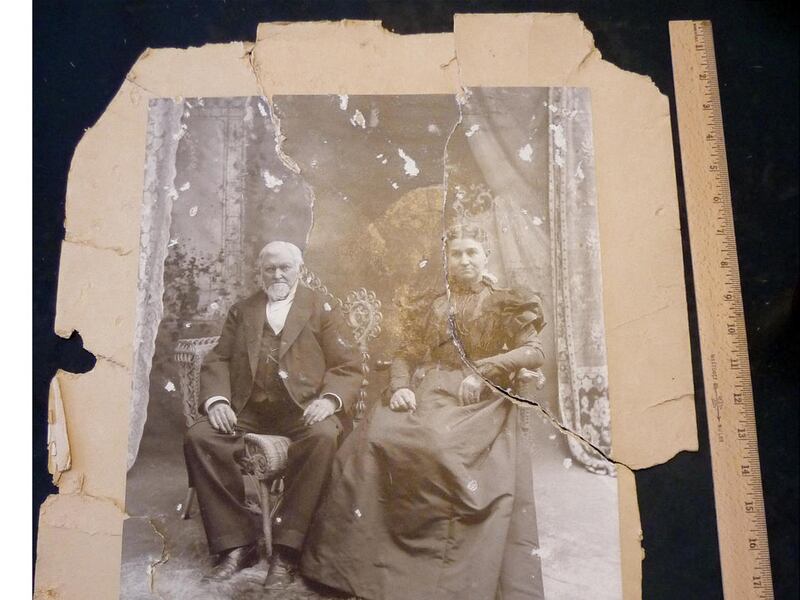
Recently, as the Deseret News moved to its new headquarters in the Triad Center, we found many items of value. One was a photograph of 19th century LDS Church President Wilford Woodruff and one of his wives. The photograph was signed by both of them to their daughter.
We hope to feature a story about something that you have in your collection that you feel is worth sharing. So check your trunks, attics and garages for photographs of events, famous people visiting Utah, parades and other photographs. E-mail us with scans and or questions to UtahHistoryPhotos@gmail.com.
e-mail: UtahHistoryPhotos@gmail.com