




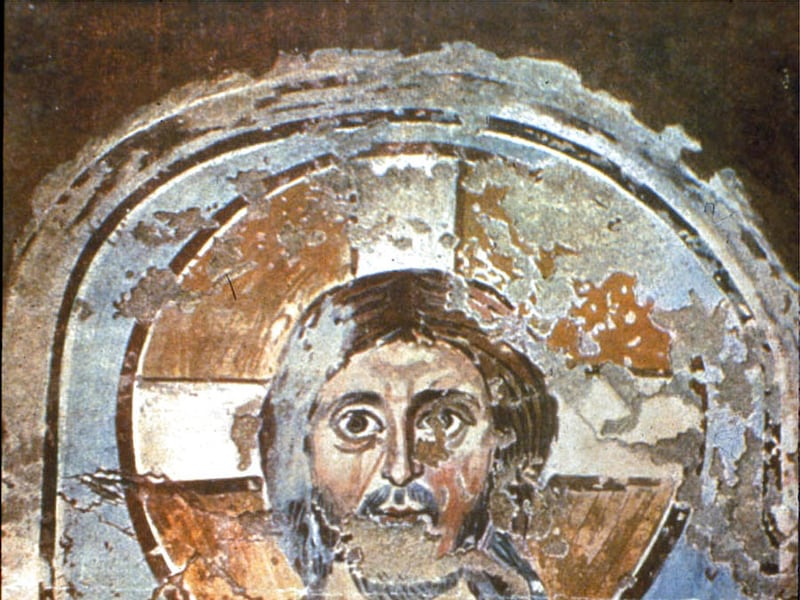

PROVO — Even when he walked the dusty streets of ancient Israel, people couldn't agree on how to characterize Jesus of Nazareth.
To some he was a prophet, to others, a political revolutionary. His disciples revered him as the Son of God, yet others saw Christ's declarations of divinity as blasphemous, and called for his death.
More than 2,000 years later, scholars are still on a "quest" to define the "Historical Jesus," relying on historical, cultural and architectural information to form a more complete picture of the man from Galilee.
Their theories, which span the spectrum, continue to fill best-selling books, magazines and television broadcasts. Some scholars reaffirm Jesus as deity, the very Son of God, while others strip him of his divinity and question the veracity of the religious records that describe him.
Yet amid the debate, evangelical scholars say that the study of a historical Jesus doesn't have to threaten faith and can even strengthen a person's belief in a divine Messiah.
"The stakes are high here," said Thomas Wayment, a BYU religion professor and LDS historical Jesus scholar. "This affects millions and millions of people — far more than people we can individually talk to or speak to, and there's a lot of good intent in this whole process. By being part of it, we're part of a movement for good. By writing it off, we walk away from one of the most important conversations being had today about religion."
WHO WAS JESUS?
During the enlightenment of the 18th century, people began to ask more questions — especially about what they'd been taught regarding Jesus Christ.
"There was essentially the realization that Jesus as we knew him in the 19th and early 18th century…had only (been known) through faith," Wayment said. "Scholars wanted to unshackle him from the faith interpretation and then try to find out who he really was as a person. "
Rather than relying solely on the Bible, primarily the accounts of the four disciples, scholars began scouring other sources — non-Christian Roman and Jewish histories, letters from early non-mainstream Christians, archaeological records and a growing body of papyri.
Using these resources, historical Jesus scholars began approaching Jesus the same way they had Mark Antony or Caesar Augustus (yet unlike other historical figures, conclusions about Jesus have far greater ramifications).
And while this historical study didn't and doesn't create faith, it is fundamental for informing faith, said James Charlesworth, a professor of New Testament Language and Literature and Director of the PTS Dead Sea Scrolls Project at Princeton Theological Seminary.
"No one wants a faith that is misinformed or uninformed," he said.
As historical Jesus scholarship grew and evolved, scholars engaged in various "quests" — the first quest, the period of no quest, the new quest and now the third quest.
Through those quests, Jesus has been labeled an apocalyptic prophet, a charismatic holy man, a social reformer, a proactive peacemaker, a cynic sage, the incarnation of divine wisdom and a marginalized messiah.
New Testament scholar Ben Witherington III, a professor of New Testament at the Asbury Theological Seminary in Wilmore, Kenn., takes the position that Jesus was the Messianic figure he said he was.
To buttress his point, he references two phrases that nearly all scholars agree that Jesus actually spoke: "Son of Man" and "Kingdom of God."
While found throughout the New Testament, the only place these two ideas are juxtaposed in the Old Testament is in Daniel 7. In that chapter, it references the Son of Man who will be the judge over the earth and be worshipped forever and ever — the role traditionally reserved for God, Witherington said.
Thus, it wasn't surprising that when Jesus was tried before the Sanhedrin and responded that He was the Son of the Blessed and would come in the clouds of heaven as the Son of Man to judge the earth, the rulers would be upset, declare him a blasphemer and condemn him to death, he said.
"(Other scholars) may not agree with how Jesus viewed himself, but then (their) argument is not with the historical information, but with how Jesus viewed himself," Witherington said. "The actual Jesus of the past, the real Jesus, made messianic claims, divine claims that scandalized many Jews and eventually led to his execution."
Witherington cites other details that help bolster his belief in a messianic Jesus. He points out that Jesus is never recorded as saying: "Thus sayeth the Lord," as was common in the Old Testament. As a member of the Trinity, he simply spoke with his own authority, Witherington said.
Craig Evans, distinguished New Testament professor at Acadia Divinity College in Nova Scotia, Canada, finds his faith in a divine Jesus and master healer bolstered by archaeological records.
As scholars have unearthed thousands of tombs in and around Jerusalem, they have learned that life expectancy was about 25 years, and that a quarter of the population was afflicted or sick in some way.
"With that type of situation, you have this man who's a remarkable teacher, but also known as having great power and can heal," Evans said. "Well, no wonder there were large crowds that followed him. Historical research sheds light on that kind of thing."
DIFFERENT VIEWPOINTS
First-century Romans believed that in order to see God, or Jupiter, while in the flesh, they simply needed to look at Caesar. While clearly mortal, Caesar was considered "divine" and the revelation of God on earth because he brought peace to the Roman Empire.
That's how scholar John Dominic Crossan sees Jesus of Nazareth — a mortal man, but the revelation of the divine character of God because of a life and death of "transcendental value."
"I think the hardest thing I can possibly imagine, and therefore the most divine thing I can imagine, is non-violent resistance to violence, even if it kills you," said Crossan, a scholar on the opposite end of the historical Jesus spectrum from people like Evans and Witherington. Crossan was one of the co-founders of the controversial "Jesus Seminar," a collection of scholars who vote with colored beads on the veracity of phrases and acts attributed to Jesus, and who dismiss Jesus' virgin birth, death for sinners and resurrection.
Crossan doesn't believe in Jesus Christ as the literal son of God, but praises Jesus' for using his power to heal, teach and provide food, rather than responding to critics with displays of power or violent rage — thus providing the example for how Christians should live.
By viewing the historical Jesus as a pacifist, Crossan finds it impossible to believe in an apocalyptic Jesus who is supposed to return in a violent, blaze of glory.
"That's the huge issue for me today," he said. "Whether the God of the Christian Bible is violent or not. Which (answer) do I find…revealed in Jesus? If Jesus comes back violently, it means that the incarnation has been sort of annulled…(that) the first coming has been somehow inefficient."
Yet Crossan believes the first coming was sufficient, and that Jesus of Nazareth fulfilled his role by teaching and living a peaceful, loving life — a fact sometimes overlooked in the midst of "smart arguments," he said.
"I would refuse basically to argue (about Jesus' divinity), not simply to avoid the argument," he said, "but because I think we have used that to avoid facing what the challenge is from Jesus."
THE NEED FOR FLEXIBLE FAITH
To some lay Christians, the Gospels are infallible records of the life of Jesus Christ.
"Almost as though they are a video-taped recording of things Jesus said and did," Evans said. "And if you suggest that Matthew edited Jesus' words or rearranged the sequence of events in a different order… a Christian layman is very bothered by that and thinks that's tampering with the text."
Yet, years ago when Evans began his studies in theology with side-by-side readings of the Bible in English and its original Greek and Hebrew he quickly learned that the accounts in the Gospels were not exact "video recordings."
Instead, he learned that in the first century, students were taught to summarize, epitomize and share the message of their instructors — while making adjustments, edits and updates to reflect what their audience did or didn't understand.
"That's how Jesus taught his disciples and how they taught others," Evans said. "Once you've come to recognize how the gospels are constructed, then the discrepancies and differences aren't a problem anymore. When you do archeology and other historical works, you realize how accurate the gospels are, and you have new-found confidence, not because of something you heard in church, or learned in Sunday School, but because of your own critical studies."
Scholars are also completely comfortable with the fact that the Bible is not a perfect translation — there are omissions, errors and mistranslations, realized after discoveries of earlier manuscripts, additional historical writings and a greater understanding of translation and language.
Thus, a study of Jesus through canonical sources alone may leave some questions unanswered and create occasional confusion.
Yet, Latter-day Saints believe they are prepared for such a situation, thanks to a belief in the Book of Mormon, which provides additional insight into the life of Jesus Christ; a belief in modern revelation and an Article of Faith that proclaims belief in the Bible, "as long as it is translated correctly," said Lincoln Blumell, a visiting professor at BYU from Tulane University and another LDS Historical Jesus scholar.
"My perspective is, we've already known about (Bible errors) from the start," he said. "There wouldn't have been a restoration if everything was translated correctly from day one."
HISTORY AND FAITH CAN COEXIST
For Blumell, viewpoints of a non-divine Jesus aren't threatening, because he recognizes that those scholars began their studies with certain assumptions and presuppositions that will obviously affect their conclusions.
He knows that if a scholar studies the historical Jesus without a belief in God, such beliefs will be reflected in their scholarly views. He notes many theories about Jesus that mirror popular paradigms of the day.
"Scholars, knowingly or not, tend to pick the Jesus that they like, in terms of what their values are in that time in history," he said.
He cited research from Germany in the 1930s where religious scholars went so far as to deny that Jesus was a Jew, which is now seen as an obvious reflection of the anti-Semitic sentiment of the time.
More recently, Blumell points to the wave of thought around the year 2000 that Jesus was an apocalyptic prophet.
There's even talk of Jesus as an anti-big government environmentalist — oddly similar to the beliefs of scholars who present that point of view, he said.
"This will keep going on in flux, it's not going to end anytime soon," Blumell said. "We'll have a 'new Jesus' in the next 20 years. But what I find is, historically these things are cyclical."
For the lay Christian, Evans said the important thing to remember is that there are myriad opinions, and the discussion is far from over. In fact, there are millions more clues still hidden or un-translated.
He cited one 100-year-old discovery of half-a-million papyri from an Egyptian city, yet only 10 percent of the papers have been published. Add the fact that only 5 percent of Biblical sites have been excavated and the amount of unknown information becomes staggering, he said.
But regardless of the historical, archaeological or literary details that may arise, they don't have to threaten or damage a Christian's belief in a divine Son of God, evangelical scholars say.
"I don't think Christians need to take a defense posture at all about their faith or the historical substance of their faith," Witherington said. "It's quite unnecessary.
In fact, whether people are religious or not they all live by some measure of faith, he said. No one checks the tension strings in a chair before sitting down, or runs tests on a battery before starting a car.
"If you go through an average day, even an atheist trusts some things, and takes some things on faith that they haven't done empirical studies on," Witherington said. "Are you going to limit the things you have faith about to mundane things or do you have capacity for a greater trust? So I would say it's not ever a question of there's faith over here, and over here we've got knowledge. It's never that. They're always combined, no matter what we're talking about."
Email: sisraelsen@desnews.com