

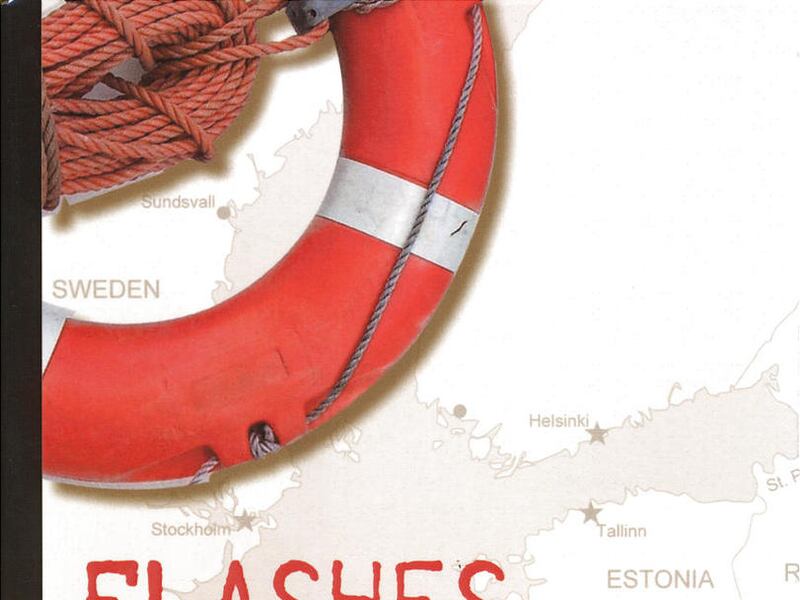

Jack Nelson got an offer he couldn't refuse.
A cousin in Sweden called and said he'd pay his expenses to fly there and research the sinking of the MS Estonia.
So he did. About a year and a half after the September 1994 incident, the local author and his wife spent a month in Sweden, researching the ship's sinking that resulted in the deaths of 852 passengers and crew, leading to the recent publication of his book, "Flashes in the Night: The Sinking of the Estonia." Not to say the retired professor and former Deseret News reporter didn't enjoy the opportunity.
"I found it very exciting, the whole drama of the thing; it happened at midnight, a huge storm, the waves washing over people," Nelson said. "My wife and I took the sister ship on the same trip, went down to the very bottom of it, listened to the engines. They have dance halls, restaurants; we got a pretty good feel for it."
Nelson said he was particularly fascinated by finding out who survived and who didn't — and why. "My original title, in fact, was 'Survive,' " he said. "But the publisher changed it to the person who was taking pictures on the deck." (A survivor of the sinking used his camera to take pictures before the ship sank, hoping that the flashes would show their position to the other approaching ships.)
Two who survived grabbed the attention of the media when the news of the tragedy first hit the papers: Sara Hedrenius and Kent Harstedt, two young Swedes who made a promise to each other that they would meet for dinner in Stockholm if they survived. The book focuses on their experience, among a few others, clinging to a life raft through a harrowing night until rescue finally arrived.
The story of the tremendous loss of life and the personal accounts of survivors bring to mind the sinking of the Titanic decades before. In fact, Nelson said, the similarities between the two events made it more challenging for him to publish his book a few years after he finished his research.
"I sent it to a New York agent," he said. "We had a lot of good bites on it. But some editors said it was too much like 'Titanic,' " the movie that had just come out around the time he was trying to sell the manuscript.
Nelson was fortunate to have good help in his research. He hired a student from Norway who could speak Swedish and was able to translate the Swedish newspaper articles Nelson brought back from his trip.
Through some other connections, he also was able to hire a former film director in Estonia who "was wonderful," Nelson said. "She met us at the boat when we got there with flowers, conducted interviews in Estonian and translated into English. After we left, she went to some of the seamen's homes and got their accounts."
His visit a year and a half after the sinking was also well-timed, Nelson said. "Kent (Harstedt) told me, this is the perfect time. Right after it happened, people didn't want to talk about it; it was too raw in their memories. It was a real horror."
Cathy Carmode Lim is the founder of RatedReads.com.