

ALBUQUERQUE, N.M. — Northern New Mexico's Valle Vidal is known for its mountain vistas, clear streams and prized elk herd.
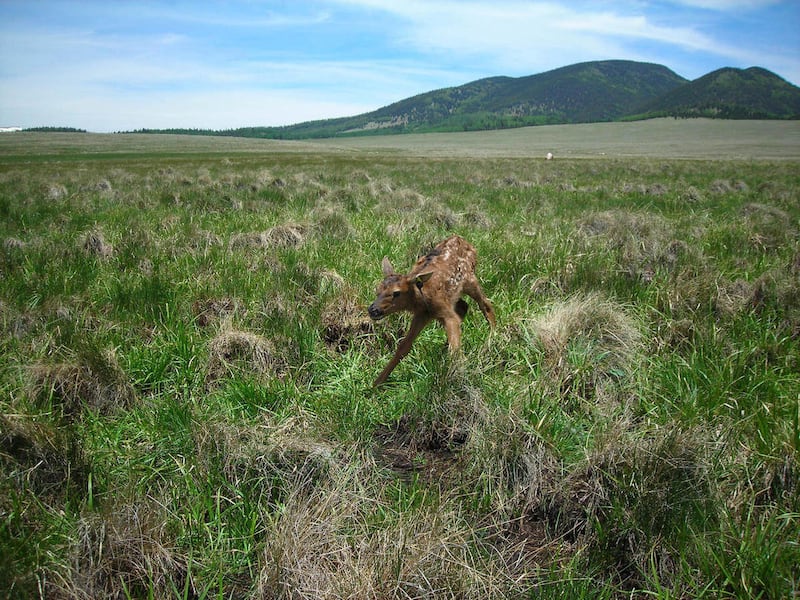
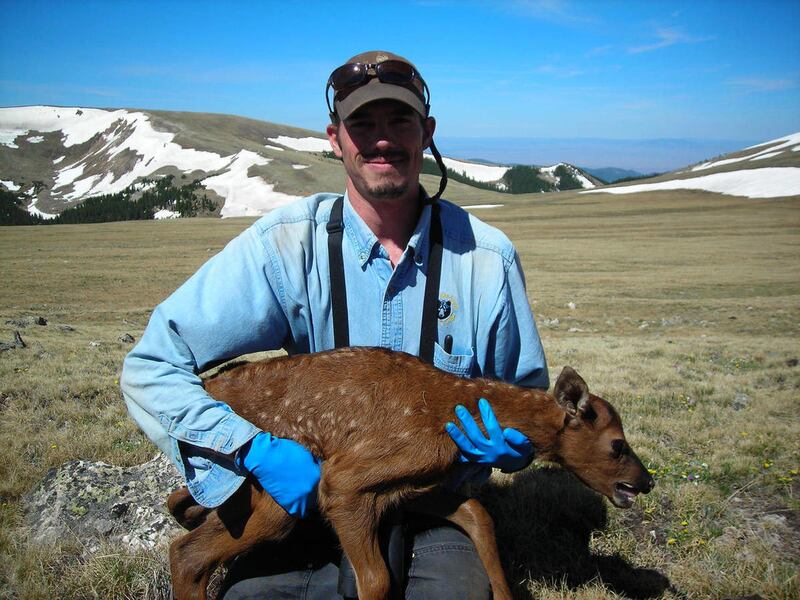
Wildlife managers with the state Game and Fish Department want to keep it that way. That's why they're scouring the area in hopes of capturing and tagging with radio transmitters as many of this year's baby elk as possible.
The herd's calves have about a 25 percent survival rate right now and if those numbers don't improve the population will ultimately start to decline, said Stewart Liley, the department's elk program coordinator.
"The Valle Vidal herd is a well-known elk herd throughout New Mexico and throughout the rest of the western United States, not only from the hunting aspect but for wildlife viewing," he said. "It's important for us to find a stable balance so to we don't have a population decline."
Elk calf survival rates in the Valle Vidal have been slowly declining for about the past decade, Liley said. The state started the monitoring program in 2009 to find out what was happening.
So far, the problem appears to be predation by black bears, mountain lions and coyotes. Researchers estimate that between 40 and 50 percent of the elk calves that turn up dead were done in by bears.
Most of the department's efforts are focused on the Valle Vidal because of the importance of the area's elk herd, but similar studies are also being done on the Valles Caldera National Preserve and on the sprawling Gila National Forest in southern New Mexico.
Work began about two weeks ago with the start of calving season and will continue through the summer.
"We're trying to see if we're experiencing the same kind of mortality across the board. That will tell us a number of things," said Rick Winslow, the department's large carnivore biologist.
High calf mortality rates can reduce recruitment of more cow elk into the herd. With fewer cows, there will be fewer calves born each year.
Biologists estimate there are between 70,000 and 90,000 elk in New Mexico, including as many as 5,000 in the Valle Vidal alone. Despite the healthy population, the state offers few hunting tags for the area. In fact, hunting there is a once-in-a-lifetime opportunity. Once a hunter draws a tag for the area, he will never be eligible again.
Jeremy Vesbach, executive director of the New Mexico Wildlife Federation, described it as one of the most special places in New Mexico, where the elk population is reminiscent of the giant herds of animals that used to roam in prehistoric times.
"You see so many elk. It's just really a special kind of experience," he said. "If I know somebody who draws a tag, I'll just drop what I'm doing and go walk with them just to experience it."
In an effort to reduce predation, the game department offered a spring hunt in the Valle Vidal this year, but Winslow said only two male bears were taken on the last day of the hunt. There are believed to be between 70 and 100 adult bears in the area.
The department plans to offer a fall hunt as well and will continue to monitor the elk calves to see if their numbers improve with fewer bears in the area.
Ensuring hunter opportunity in the Valle Vidal and elsewhere is a vital part of being able to manage the state's wildlife, Liley said.
Like other wildlife projects, the calf study is funded by sportsmen through license fees and federal excise taxes on hunting equipment.
"Hunters foot a lot of bills for wildlife in general. Over 95 percent of wildlife management and wildlife viewing opportunities is brought forth by hunter dollars," he said. "It's really important for us to have a stable population that allows for the hunting community to be able to still have that opportunity."