

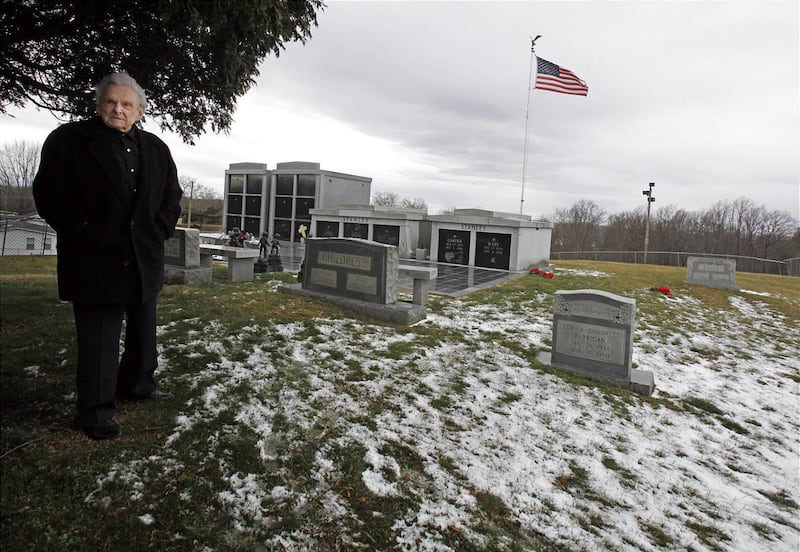


MCCLURE, Va. — The winter wind blew cold, and the steel-gray sky spit sleet as a white-haired man in black, hands stuffed warmly into his coat pockets, stepped cautiously among the tombstones of the hilltop family cemetery.
Dr. Ralph Stanley, whose haunting voice renders songs of death and sorrow (and just about any other subject) like no other, walked visitors toward his final resting place: a granite mausoleum where he will reside in time between his beloved mother, Lucy, who died almost 40 years ago, and his wife, Jimmi, who is still very much alive and by his side.
His marker is already etched with his name and a banjo, but he's hoping to be spared over till another year. Or 20. He's kind of busy.
"I know one of these days I won't be around, but I'll never completely retire until I have to," he said.
Stanley, who turned 85 on Feb. 25, still performs with his Clinch Mountain Boys, still travels on his fancy tour bus parked behind his home on Doctor Ralph Stanley Highway, still plays everywhere from the Grand Ole Opry to the Fairview Ruritan Club in Galax, Va.
And deep into his seventh decade in the business, he's still reeling in the honors. He was nominated to win his fourth Grammy. His recent album, "A Mother's Prayer," a collection of Appalachian spirituals, was nominated in the category of Best Bluegrass Album. He was up against stiff competition: Alison Krauss, Steve Martin, Jim Lauderdale and the Del McCoury Band. Krauss was the winner.
Stanley doesn't move as quickly as he once did (he had a pacemaker implanted a year ago), and he doesn't play the banjo in his distinctive style as often because of arthritis. He doesn't remember every single name or date, doesn't mind greeting visitors at his front door carrying a protein shake. But that voice remains something to behold. There are those who say his lonesome, mournful, heart-piercing tenor has only gotten better, that he finally has aged into its ancient qualities, in much the same way he has evolved comfortably into a musical elder statesman, one of the last lions of a certain era.
He has released or performed on more than 200 albums. He has played Carnegie Hall and been a guest on David Letterman's show. He has visited the White House and he travels the world. Young musicians bow to him and send him roses; stars travel great distances to come here to sing with him. He is, as the Library of Congress officially proclaimed in 2000, a "Living Legend." And an entire museum is devoted to his life and career. How many people with a pulse can say that?
"Can you imagine a country boy from the Virginia mountains who's done everything he's done," said Alan Maggard, who operates the studio where Stanley does much of his recording, "and is still doing it?"
In a way, the hit movie "O Brother, Where Art Thou?" in 2000 made Stanley an overnight sensation, even though he had been in the business since the 1940s and was already considered a star in his musical realm. What "O Brother" did was introduce him to a broader audience previously unfamiliar with his work or the style of music that comes out of the hills and hollows of places such as Dickenson County, Va., where he was born and raised and still lives. The movie's soundtrack featured Stanley's chilling "O Death" and "Angel Band," an old Stanley Brothers' classic from the 1950s, and, suddenly, he was a 70-something national treasure.
"The icing on the cake," Stanley calls the happy hullabaloo created by the movie.
Despite the fame, success and money that rolled in, Stanley still lives in the same house near Coeburn, Va., that he and Jimmi have shared since 1973. It's just a few miles from the mountain hollow where he was born and even nearer to the old home place on the ridge where he grew up and where he will be buried when the time comes. He resisted the pull of Nashville, figuring he can get most anywhere he needs to just as easily on the four-lane road that connects Southwest Virginia to the rest of the world.
He records much of his music (including "A Mother's Prayer") just a few miles from home at Maggard Recording Studio. The small, cinderblock building wedged between houses on a narrow lane in Big Stone Gap, Va., was built by Alan Maggard's father on land that had been used for the family's vegetable garden. Over the three decades Maggard has worked with him, Stanley has been uncommonly loyal and "straight up."
"Ralph has been good to us," Maggard said. "I can't brag on him enough."
Stanley will never be accused of verbosity. Despite thousands of nights singing on stages, despite the celebrity and adulation, Stanley remains at heart a shy, quiet man who won't say four words when three will do, especially around people he doesn't know well. But don't take his poker face for a lack of humor. He's very funny, in a parched sort of way.
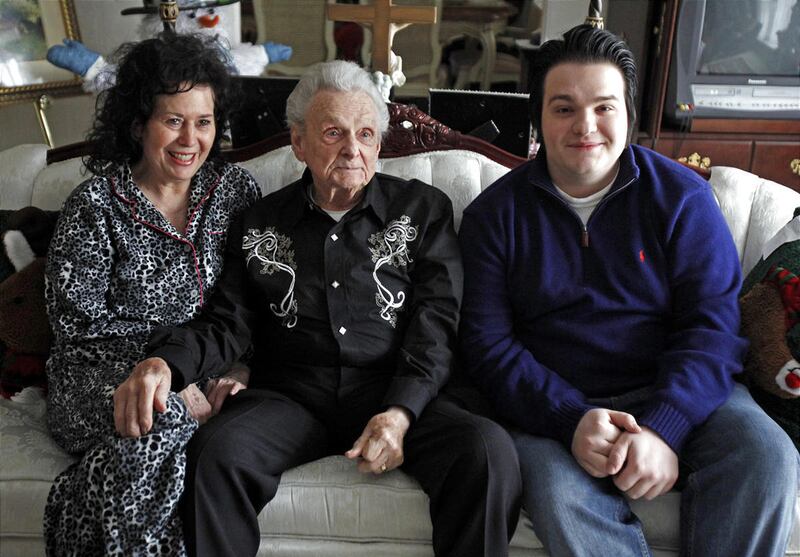
Like when the conversation in his living room turned to Elvis Presley, whose new brand of music in the 1950s nearly put Stanley out of business. The King, though, is a favorite of Jimmi and 19-year-old grandson Nathan, who plays in Stanley's band.
"Elvis is great," Stanley said finally, punctuating the discussion without changing expression, "but I believe I'd rather be me."
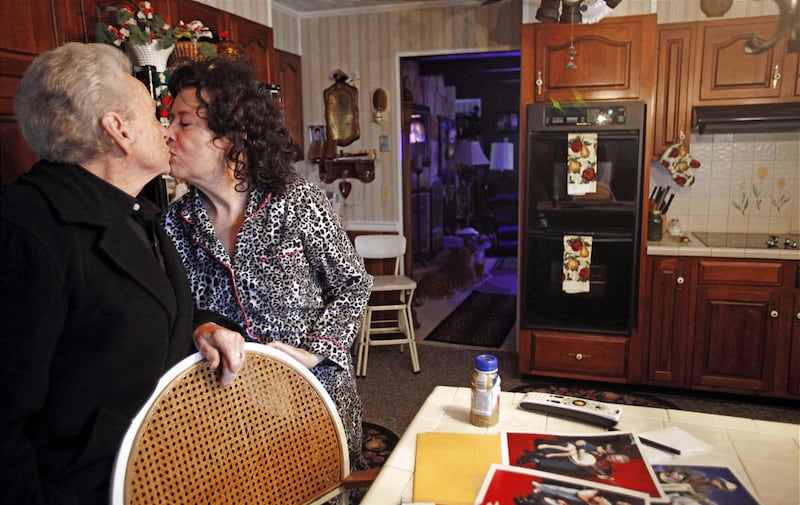
In fact, Jimmi was such a big Elvis fan as a young woman she wasn't all that enthralled about going to a Stanley Brothers show in 1961 in Cincinnati, but her sister and brother-in-law insisted she come along. She met Stanley that night and thought he sang well enough, but she didn't think that much of him. That night, she dreamed he kissed her, so she returned to the next night's show. And he kissed her.
"That's what done it," said Stanley, although he acknowledged being a bit shook up himself by the presence of the 21-year-old beauty, prompting Carter Stanley to ask, "What's wrong, little brother?"
Ralph and Jimmi married, but not until 1968, two years after Carter Stanley died of cirrhosis of the liver due to years of alcohol abuse. Carter, the older of the brothers, was the more outgoing and the lead singer. His death caused Ralph to stop and wonder if he could go on, which might have seemed a no-brainer considering the popularity of the group, except that it wasn't in Ralph's nature to step out front.
"I'd never done much of it, but the last two or three years Carter would leave the stage a lot of times, just vanish, and leave me on the stage, and I had to go up and talk," Stanley recalled. "I believe he knew I'd need that some day."
Stanley was under great pressure from fans to continue the band, the implication being he would be letting Carter down if he quit. Fact is, Stanley didn't know what else he would do. Other than his time in the Army and playing music, the only other job he had held was at Ford Motor Co. in the early 1950s when he and Carter drove north for work and regular paychecks. Ralph landed a job as a spot-welder and hated every minute of it, he said in his 2009 autobiography, "Man of Constant Sorrow: My Life and Times." He didn't last three months.
So he not only kept the band going after Carter's death but, by his own admission, he took the music "back a little farther" into the traditional mountain sound, which he learned as a boy singing in church without instrumental accompaniment.
"When everyone else in bluegrass headed in the urban singer-songwriter and modernizing direction, Ralph went to the head of the hollow and the richness of the older tones," said Joe Wilson, chairman of the National Council for the Traditional Arts. Wilson also is co-founder of The Crooked Road musical heritage trail in Southwest Virginia and a friend of the Stanleys since the 1950s, when the brothers were performing daily on radio station WCYB in Bristol, Va.
"Ralph is a paragon of nonconventional wisdom. Working on the old music and developing it and playing it with a great band were his greatest joy. His output of recordings on small indy labels was huge. He did all the things one was not supposed to do, and it worked. It was not blind luck. The quiet brother knew what he was doing, and why."
Living at home in Dickenson County means Stanley can go shopping and not be bothered by anyone; he's more neighbor than celebrity, and chances are he might be a cousin to anyone he encounters anyway. He's still listed in the local phone directory, but he and Jimmi said callers are universally respectful.
"Been many a call from people who say it changed their lives just hearing him sing a sacred song in a beer joint years ago," Jimmi said.
On the way to the Stanley home above Coeburn, you pass coal mines and tipples for loading coal into rail cars. Stanley never worked in the mines, and neither did his father, who was a sawmill man. You head even deeper into the hills of Dickenson County to reach his old home place near McClure.
As you wind up to Smith Ridge, where he spent most of his childhood, you wonder how anything larger than a small sedan could negotiate the twists and turns of the narrow road, but hundreds do every spring for Stanley's Hills of Home Bluegrass Festival that he has hosted for years.
This is where Stanley's lonesome sound was born: a rugged and remote place of great beauty and great hardship where you learn to do for yourself; mornings spent listening to music shows spilling magically from the old battery radio; a difficult, but fortuitous, childhood decision to spend a hard-earned $5 on an old banjo instead of a pig. But he firmly believes the explanation for his musical success comes down to something more.
"It's just natural; that's just the way it comes out," Stanley said of his voice. "I guess God give me what I got. Good or bad. I give him credit for all of it."