

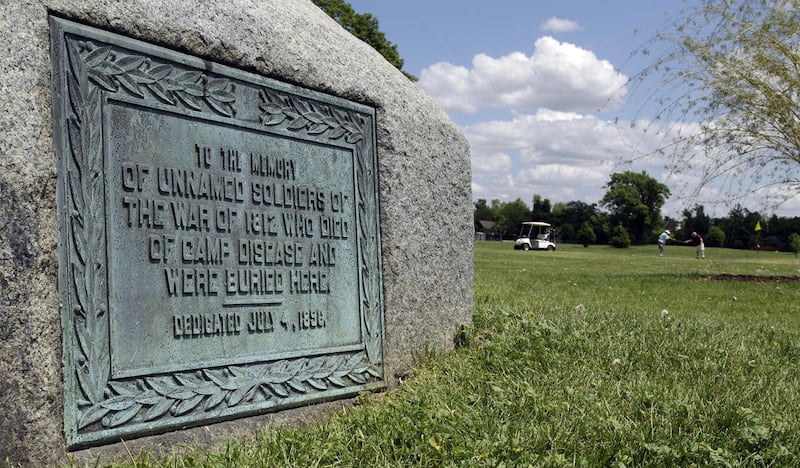
BUFFALO, N.Y. — They were American soldiers who'd set up camp in a Buffalo meadow in the fall of 1812, after failing in their attempts to cross the Niagara River and invade British-held Fort Erie in Ontario.
But in the encampment, in their summer-weight uniforms and open-ended tents, the soldiers would face their fiercest enemies yet: the coming winter and disease.
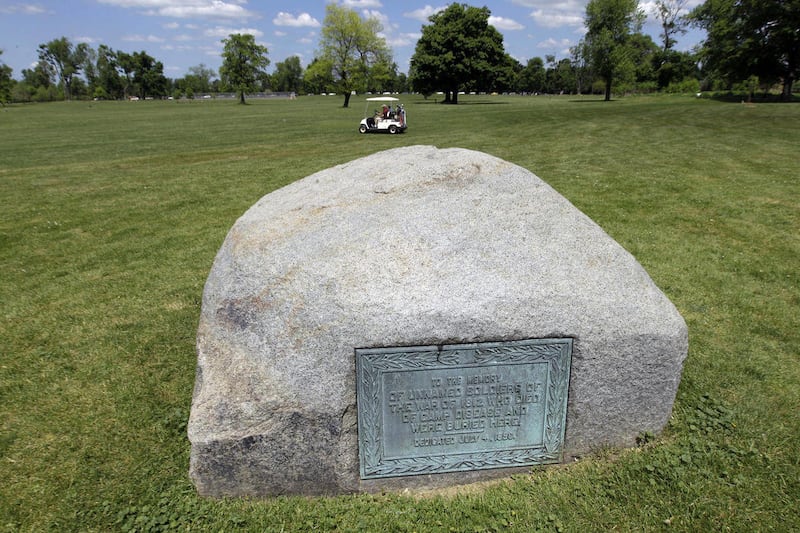
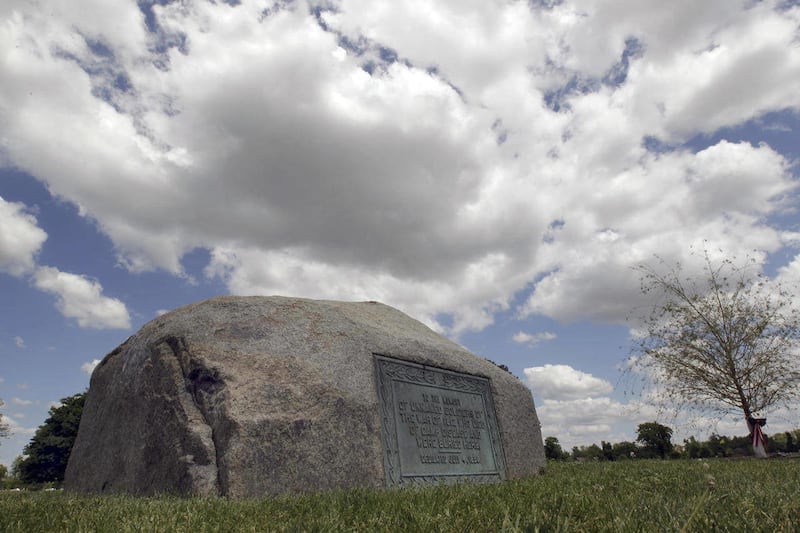
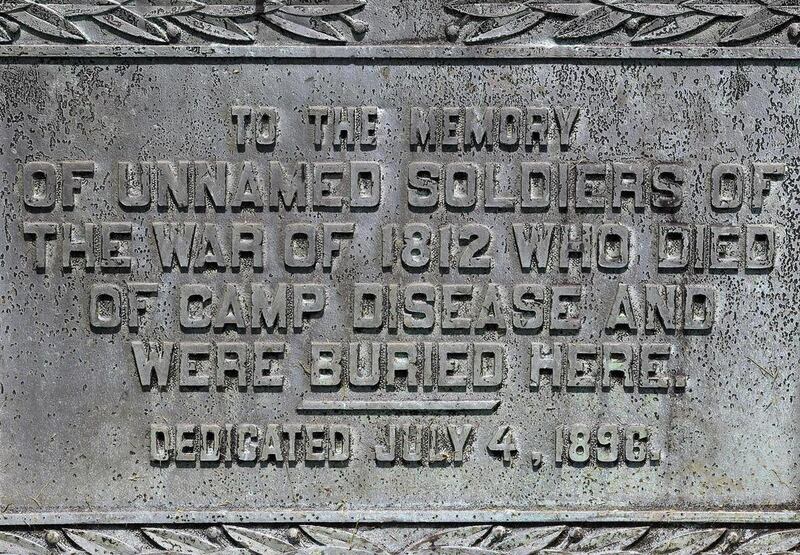
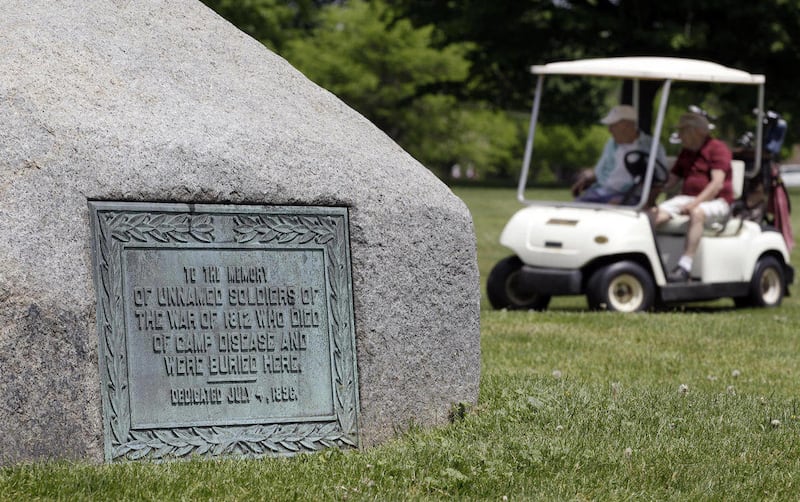
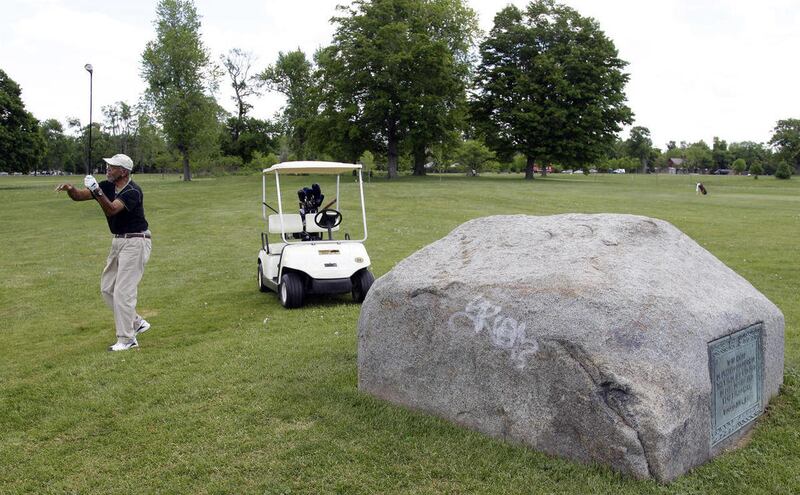
Some 300 soldiers died at the Flint Hill camp during the winter of 1812-13 and their bodies were buried in a mass grave. The unidentified soldiers remain there today — but only a golfer with a terrible slice is likely to notice, according to a historian who's been working to change that. Marked only by a small plaque on a boulder, the gravesite sits in what is now the middle of a city-owned golf course in Delaware Park.
"Even if you read the plaque that's on the boulder that's out there right now, there's nothing that indicates in any way, shape or form that there are 300 guys buried here, that you are standing on the grave of 300 soldiers," said Steve Cichon, whose 2009 book, "The Complete History of Parkside," chronicles the neighborhood encompassing the park.
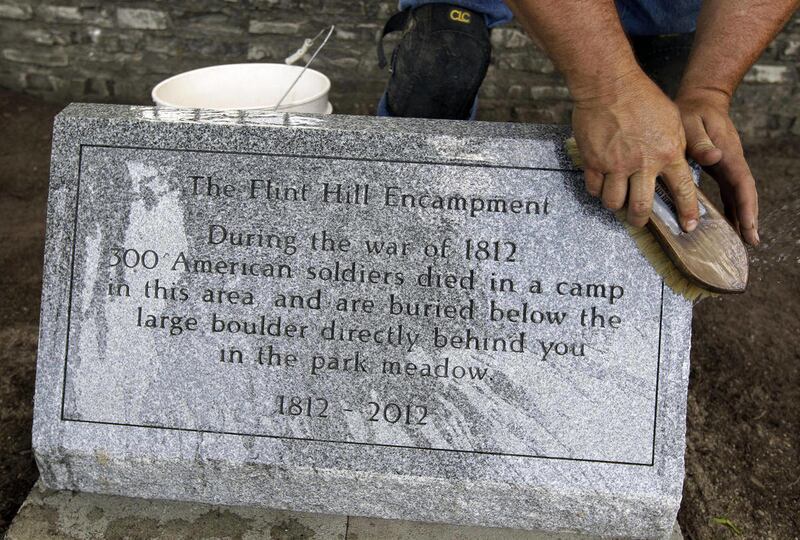
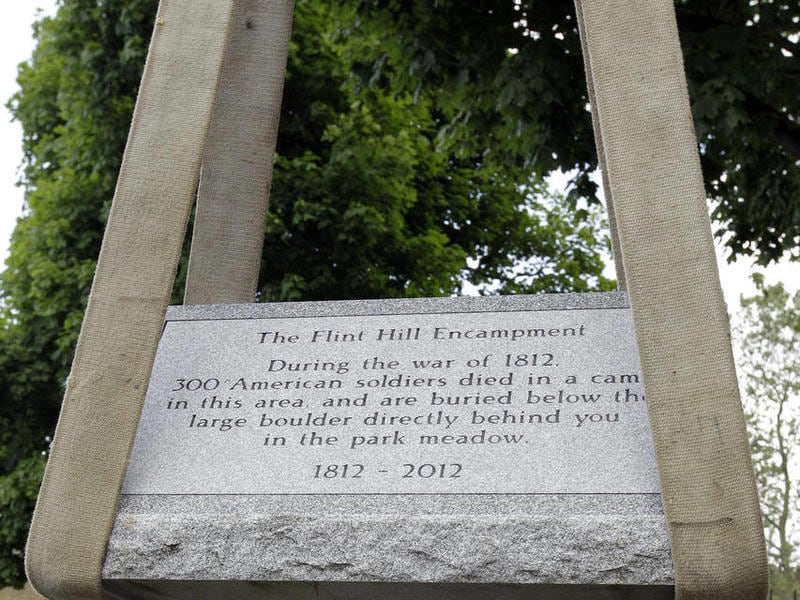
On Memorial Day, a new granite marker will be dedicated in a more accessible place, outside the adjacent Buffalo Zoo but still in view of the "mound in the meadow" that holds the remains.
"During the War of 1812, 300 American soldiers died in a camp in this area and are buried beneath the large boulder directly behind you in the park meadow," the monument instructs.
With the soldiers' story unknown to many even in Buffalo, Cichon and other volunteers behind the project hope it will both honor and preserve their memory.
"People are shocked that they'd never heard this story before," said Cichon, the news director at WBEN radio, who drummed up donations for the new stone through Facebook and word of mouth, working with fellow historians Michael Riester and Pat Kavanagh.
Kavanagh's research uncovered historic documents and news accounts that pieced together the 1812 soldiers' ordeal.
"It's all about the men who died, and that their sacrifice not be forgotten," said Kavanagh, historian for the city's Forest Lawn Cemetery.
That Buffalo winter was a harsh one, particularly for the soldiers who'd come from warmer Virginia, Maryland and southern Pennsylvania in linen uniforms and without boots. Food was in short supply and blankets scarce. Then there was the "dreadful contagion," as newspapers of the day called it, typhoid, and other disease.
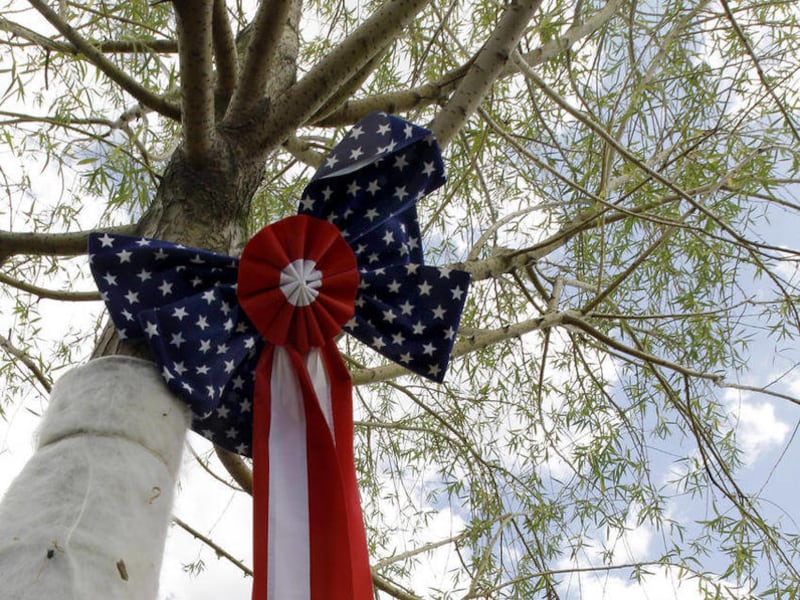
The dead were buried first in shallow graves near a creek. In the spring, when the ground thawed, they were exhumed and reburied in a single trench. The spot was marked by two willow trees, which eventually died. A flagpole and cannon also came and mysteriously went, leaving only the boulder.