

If you love perennial flowers you will be interested in The Perennial Plant of the Year program. It began in 1990 with the idea of showcasing one perennial that stands out among other competing plants.
Perennials, of course, have to survive the winter to meet the definition of living for multiple years. However, the Perennial Plant Association wants to make certain that any plant selected for this special honor meets other criteria as well.
Plants are selected to grow in a wide range of climates. They must be low maintenance, have multiple-season interest and be reasonably pest/disease-free.
The Perennial Plant of the Year committee reviews the nominated perennials each year. This is no small task because some years more than 400 different perennials are nominated. The committee selects 3-to-4 perennials to be voted on.
Walters Gardens, Inc. is the originator of this great plant. They are located in Michigan and are the largest perennial grower in the country. I have visited their nursery several times and saw this plant growing there.
Brunnera macrophylla 'Jack Frost' grows 18 inches tall and 18 inches wide in an attractive mounded form. This hardy perennial will grow well throughout the state as it tolerates USDA hardiness zones 3 to 8.
"It was discovered as a non-induced sport of 'Langtrees' at Walters Gardens, Inc. and was a sight to behold! We knew we had something special right from the start. 'Jack Frost' opened up the possibilities for shade gardeners when it was first introduced in the year 2000," according to Walters Gardens.
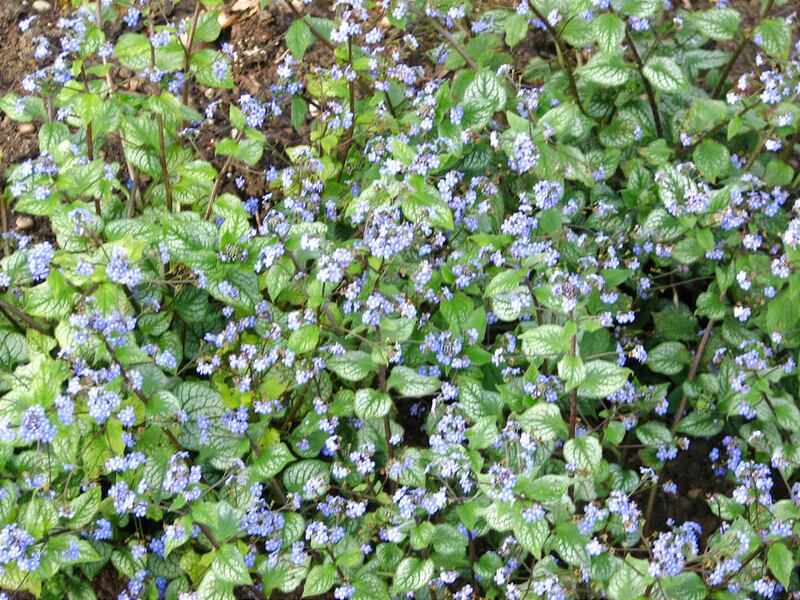
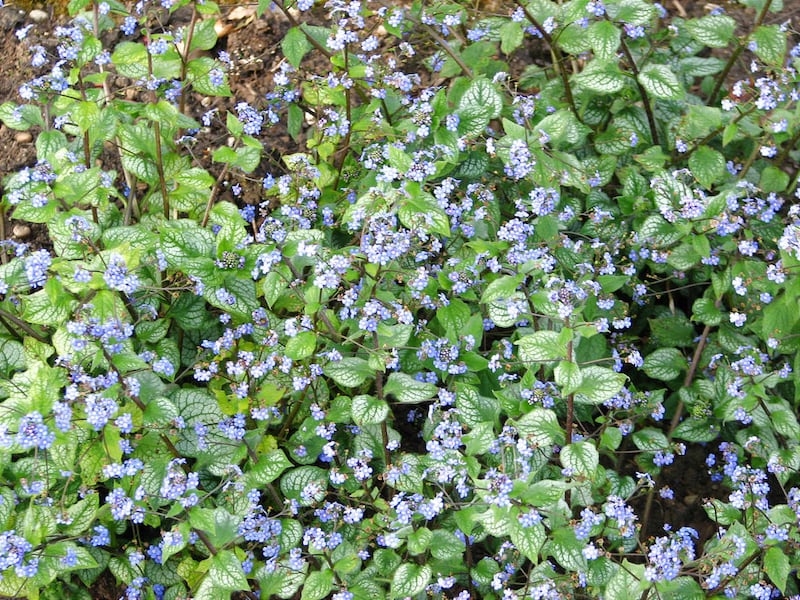
"From mid-to-late spring, baby blue, forget-me-not type blossoms are held in clusters several inches above the shimmering foliage. The effect is breathtaking! It is certainly one of the very best perennials introduced by our company in our 65 year history."
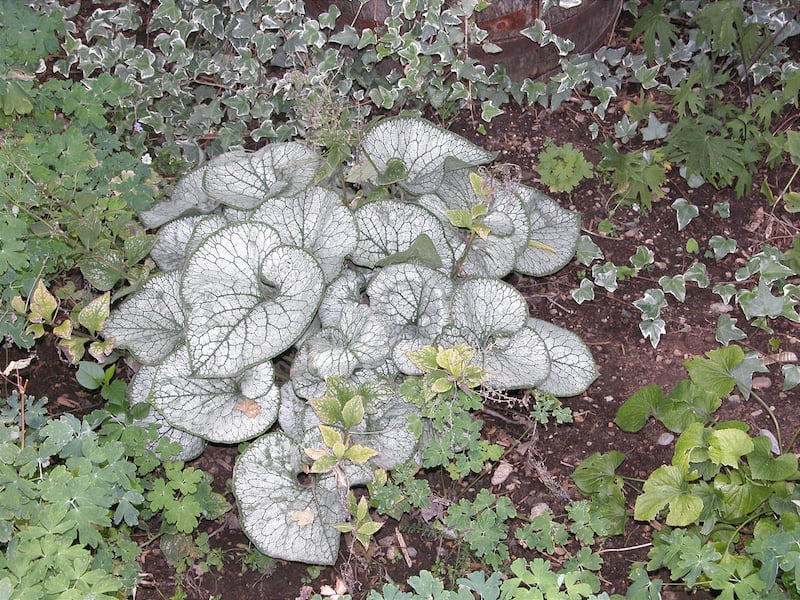
"The leaves of 'Jack Frost' are intricately detailed with a crackle-like finish. Though the leaves are dark green, they have a heavily frosted metallic silver overlay which allows only the green veining to show through.
As mentioned, 'Jack Frost' gets it multi-seasonal beauty from its enchantingly silvery leaves. This beauty is enhanced by the early baby-blue, forget-me-not like flowers in the spring.
Brunneras as a group have been around for many decades. They are tried and true performers that are treasured because they are shade tolerant and have lovely blooms. They work well as groundcovers but the variegated forms are slower to fill in.
They are woodland plants need to grow shade or semi-shade to keep from burning. The soil needs to stay moist. They flourish in rich organic soil and need little care once they are established.
Leave the foliage on a plant and cut it back in the spring rather than in the fall as that will help to protect the crown during the winter. Adding some winter mulch also helps protect the plant.
One common name for this perennial is heartleaf brunnera because the emerging leaf enlarges to a heart shape. Other names are Siberian bugloss, false forget-me-not and largeleaf brunnera.
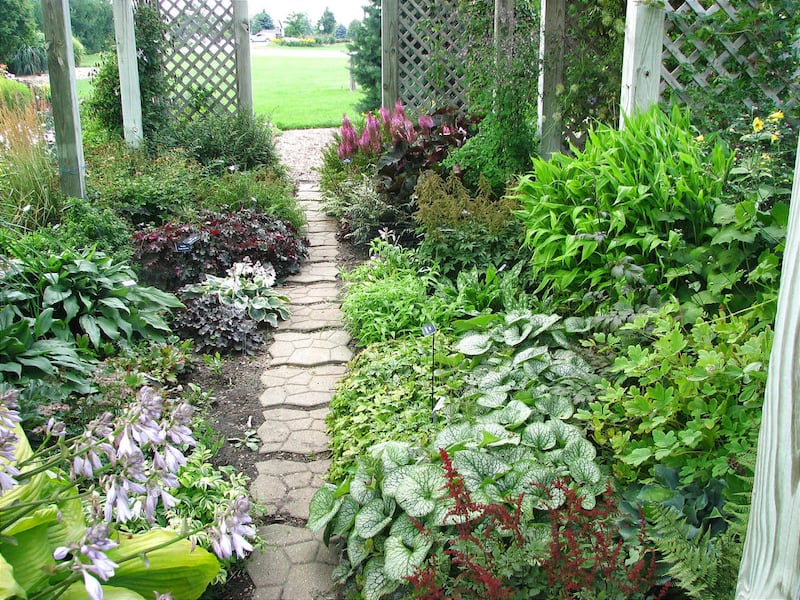
'Jack Frost' brunnera has many uses. Consider using it in the front of your shade border. It is excellent as a container plant. Use it combined with other ground to cover perennials including hostas, lamiums, ferns, epimediums or pulmonarias.
One special benefit of this plant shows up if you have garden lighting. The frosty silver leaves reflect the light and give a nice glow to the garden. Even during the day the silvery foliage lights up a dark garden from spring to fall.
While there are no deer-proof plants, the rough leaf texture makes this perennial less palatable to browsing deer. That will help those whose gardens are overrun by these creatures.
Consider adding the award-winning plant to your garden this season. It will be one you can enjoy for many years.
Larry A. Sagers is a horticulture specialist for the Utah State University Extension Service at Thanksgiving Point.
Garden Tips
The 2012 Wasatch Community Gardens Annual Plant Sale is Saturday, May 12, 8 a.m.-1 p.m. at Rowland Hall (720 South Guardsman Way) in Salt Lake City. Featured are more than 30,000 plants including 50 varieties of organic heirloom tomatoes, water-wise and Utah native plants and an excellent selection of edible perennials and organic herbs. The presale is Friday May 11 from 7:30-8:30 p.m. for plant sale volunteers, event sponsors and donors who made contributions of $250 or more.
Garden Classes at Thanksgiving Point:
Flower Bed Design, May 8, 15 and 22 from 2-4:30 p.m. and 6-8:30 p.m. (3-week course). Wonderful flower gardens don't just happen. They are created by careful gardeners. Learn how to plan and plant flowerbeds similar to those at Thanksgiving Point and Temple Square that are aesthetically pleasing and that will bloom from spring through autumn. Cost is $43.
Best Plants for Utah Landscapes, May 8, 15 and 22 from 10 a.m.-12:30 p.m. (3-week course). Utah soil and growing conditions are unique. It is important to understand them so your landscape will survive our climate, soil and water conditions. Avoid mistakes by selecting plants that will thrive in your landscape. This class addresses these issues and answers questions about the best trees, shrubs and flowers for the Wasatch Front. Cost is $43.
Garden tips
The 2012 Wasatch Community Gardens Annual Plant Sale is Saturday, May 12, 8 a.m.-1 p.m. at Rowland Hall (720 S. Guardsman Way) in Salt Lake City. Featured are more than 30,000 plants, including 50 varieties of organic heirloom tomatoes, water-wise and Utah native plants and an excellent selection of edible perennials and organic herbs. The presale is Friday, May 11, from 7:30-8:30 p.m. for plant sale volunteers, event sponsors and donors who made contributions of $250 or more.
Garden classes at Thanksgiving Point:
Flower Bed Design, May 8, 15 and 22 from 2-4:30 p.m. and 6-8:30 p.m. (three-week course). Wonderful flower gardens don't just happen. They are created by careful gardeners. Learn how to plan and plant flower beds similar to those at Thanksgiving Point and Temple Square that are aesthetically pleasing and that will bloom from spring through autumn. Cost is $43.
Best Plants for Utah Landscapes, May 8, 15 and 22 from 10 a.m.-12:30 p.m. (three-week course). Utah soil and growing conditions are unique. It is important to understand them so your landscape will survive our climate, soil and water conditions. Avoid mistakes by selecting plants that will thrive in your landscape. This class addresses these issues and answers questions about the best trees, shrubs and flowers for the Wasatch Front. Cost is $43.