

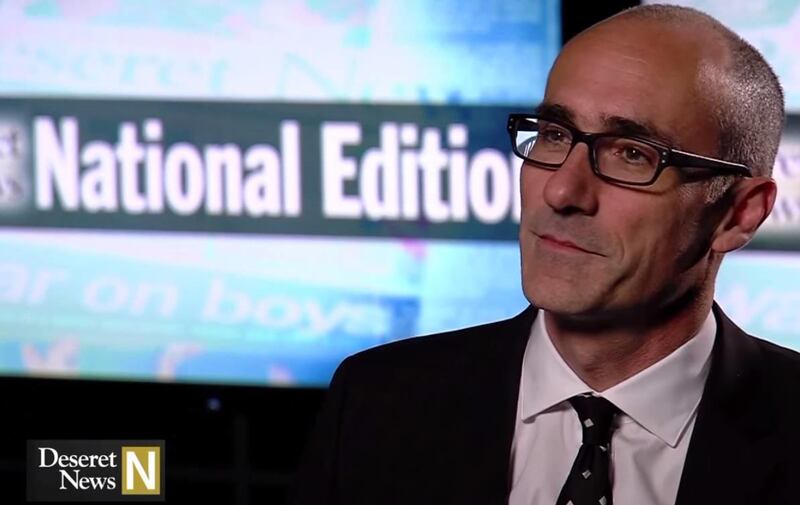
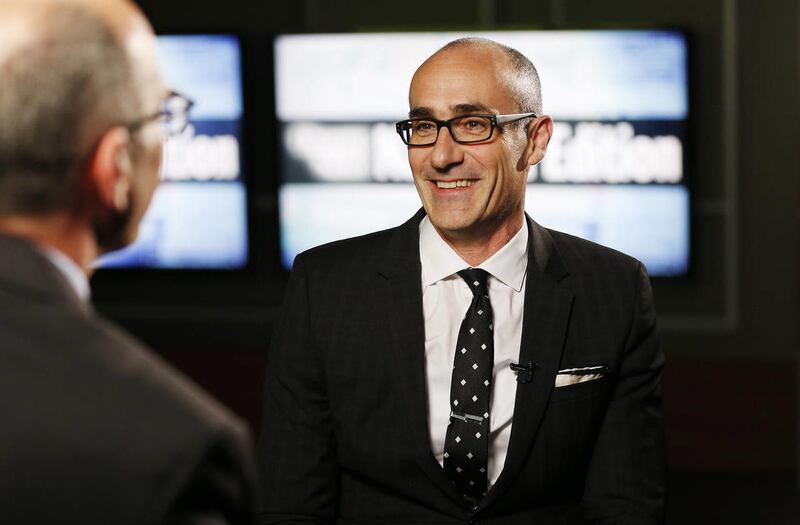
Arthur Brooks took an unconventional path to becoming president of the American Enterprise Institute, a Washington, D.C., think tank.
After dropping out of college, touring Europe playing the French horn, playing full-time with the Barcelona Orchestra and marrying a Spanish woman, Brooks decided to leave his music career to pursue a graduate degree in public policy and economics. His reason? The pursuit of happiness.
Brooks began putting himself through school, studying by night and teaching music by day, ultimately completing a Ph.D. from RAND graduate school. As a professor at Syracuse University, he studied, among other things, the anatomy of happiness and its pursuit, a thread that runs through much of his research, including his most recent book, "The Road to Freedom." A devout Catholic, he has written 10 books and hundreds of articles on topics including the role of government, fairness, economic opportunity, happiness and the morality of free enterprise.
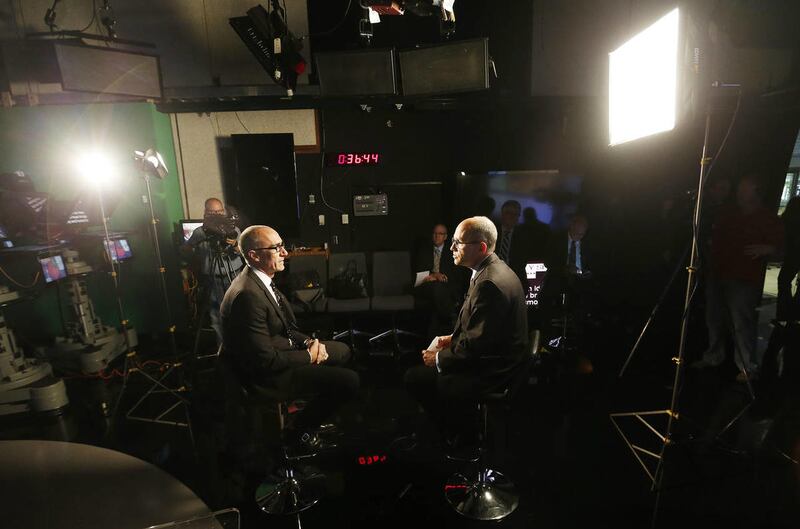
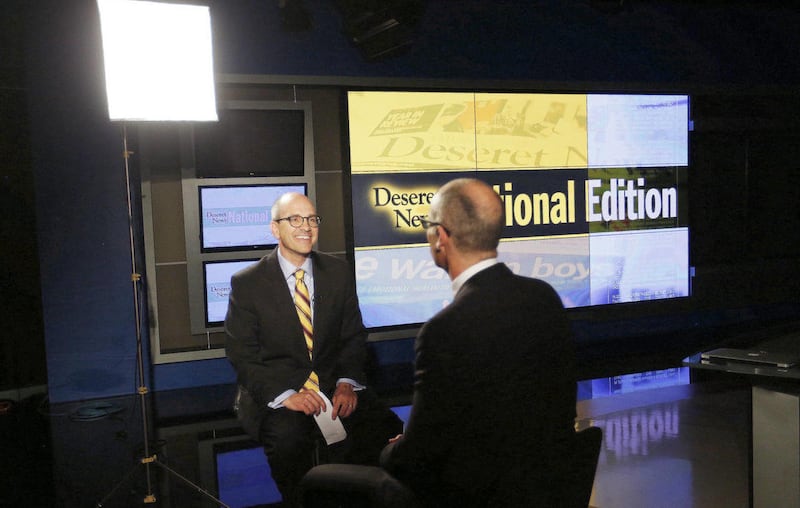
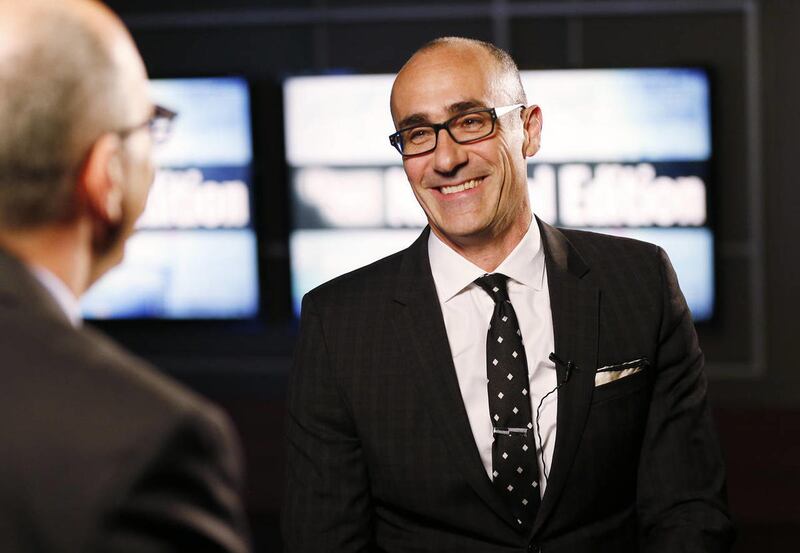
Brooks became the president of AEI in 2008. He sat down with Deseret News Editor Paul Edwards recently to talk about the moral case for capitalism, the cultural factors that contribute to personal happiness and the role of faith in the national conversation.
Deseret News: In your recent book, "The Road to Freedom," you lay out what you call the moral case for free enterprise.
As I think about the people who may have felt or experienced problems from the collapse of the housing bubble, or who are feeling the effects of what some are calling "the hollowing out of the middle class," I suspect many of them may see free enterprise as amoral, at best, and perhaps unfair and even immoral because of the kind of social inequality that some perceive is coming from our capitalist system.
So, is there really a moral case for free enterprise? Capitalism may be super efficient in its allocation of resources, but is there really a moral case?
Arthur Brooks: Well, there has to be a moral case for any economic system. The reason is because economics is a big part of our lives. If we are moral creatures, if we’re endowed by our Creator with inalienable rights — which the second paragraph of the Declaration of Independence tells us — and one of those is the pursuit of happiness, then when we’re going about our ordinary lives, when we’re going about the vocations of our work lives, that involves economics. There better be a moral case for it. If we don’t have a moral case for the way we conduct our economic lives, shame on us — we’re going to do a lot of things wrong.
Now to your point, a lot of people think that we did a lot of things wrong. And a lot of things did, in fact, go wrong. But the balance of the evidence suggests that it’s not that we had too much free enterprise, it’s that we didn’t have enough. We had too much crony capitalism, we had too much bad regulation, we had too much corruption, too much amorality and greed. We had too little of this adventure of people being rewarded for their merit and their hard work, too little earned success that could actually be even shared with people who are poor.
So the moral case for capitalism, the moral case for free enterprise, is sharing this ethos of a great adventure where we can help each other — where we can be rewarded for hard work, merit and innovation — and making sure that everyone can share in that, including the poor in this country.
DN: You talked about the pursuit of happiness. And I know this has been a real interest of yours: the social scientific study of happiness. I think you admit that roughly half of happiness might come from a genetic predisposition that we have, and another chunk may come from how recent events occur to us. So, there’s a small slice that’s open to our agency.
As we think about this idea in the Declaration of Independence — "the pursuit of happiness" — what does national policy have to do with this small slice of freedom that we have to do something about our own happiness?
Brooks: Well, national policy is important, but the most important thing is our culture. This is the thing that we have to remember.
The thing that people forget in Washington, D.C., is that it’s not all about policy, it’s not all about politics, it’s not all about what policymakers are doing or not doing. It really starts in our own hearts, in our own families, in our own churches, in our own communities. This is an intensely private country, and that’s extremely important.
The most important thing is culture. And the cultural variables that lie behind a happier life are fourfold: faith, family, community and work. And work, not as just a way to make money, no, it’s a way of understanding the formation of life, the shape that comes to life, the meaning that comes from having a vocation where we can serve others and indeed serve our country and serve a whole community. That’s what work is supposed to be. But if we remember first that faith, family, community, and work are the basis of a good life, then we can form policy that, simply put, doesn’t get in the way of those things.
The best way that the government can actually help happiness is by not creating unhappiness. And a way to do that is to not to get in the way of our faith lives, to not make it harder to form traditional, strong families, to not fragment communities, and, for goodness' sake, not get in the way of incentives for people to work and to create jobs and to do a lot with their own lives. That’s what national policy needs to do: to take those four factors into account. And then, we’ll be actually complying with this desire, this visionary aim, that we had from Thomas Jefferson in the Declaration of Independence to actually let everybody define and pursue their happiness.
DN: The American Enterprise Institute is known for a lot of work on things like economic policy and foreign policy. It was interesting to me to see that you recently hosted His Holiness the Dalai Lama for a few days at the American Enterprise Institute. So, I’m curious, what is the relevance of faith in our national culture and dialogue, and what should it be?
Brooks: Well, you can’t look at the history of the United States without understanding that fundamentally, the United States is a country that has so many of its values and so much of a history bound up in the idea of faith — so many faiths, the multiplicity of faiths, the pluralism that allows all of us to pursue the faith that is in our hearts that we believe is given to us by God.
It’s funny, you know, we talk about this free market economy, but the truth of the matter is, one of the great sources of our strength is the free market for souls. It’s almost as if the fact that you can worship and I can worship and nobody tells us what’s legal and what’s illegal, notwithstanding a long tradition of difficulties along the way, that we’ve been able to get where we are today — that’s one of the greatest sources of our strength.
So, understanding freedom means understanding faith in this country. We can’t have a country that gets away from that that expects to have the pursuit of happiness as we traditionally understand that.
This is an important opportunity for us at the American Enterprise Institute to talk to people that are religious leaders. We’ve had the most important guru in India, for example — there are 300 million followers — his name is Sri Sri Ravi Shankar. And you mentioned that we had the Dalai Lama, who is, according to public opinion polling, the most respected religious leader who currently lives in the world today, which is really quite something.
I visited him first in India last year. I went to his home in Dharamsala, which is on the Tibetan border in the Himalayan foothills. He’s been exiled there since 1959 when he had to flee the Chinese persecution of the Tibetans and Buddhists. I went to visit him there, and we talked about the idea of a collaboration. What if we had a large conversation about the morality of free enterprise, about the important link between faith and a good life?
He was really interested in the idea and he came and spent several days with us. We had people from all different faiths there, people from all different political viewpoints there, and probably the greatest thing that we created from that conversation was confusion. Vanity Fair magazine, which is an old magazine that is not traditionally associated with the free enterprise movement, had a headline, “What was the Dalai Lama doing at the right-wing American Enterprise Institute?”
You want people to question their assumptions about what all of our values can and should be. We got a lot out of the conversation, and one of the key things that we got out was that we figured out a way that we could describe a formula for a better life, notwithstanding your politics and notwithstanding your particular religion.
First, we started with what’s wrong with the world today. We talked about from the financial crisis to the malaise on our college campuses — what is it? Well, basically it’s this materialistic formula that’s pumped out of Hollywood and from television and from Madison Avenue, and it’s a formula that says, “You want a better life? Use people and love things.” That’s what we hear all the time. “If you’re going to worship something, worship yourself!” That’s the wrong formula, as we discussed with the Dalai Lama. The right formula is “use things, love people, worship God.” If we can only follow this formula, then we actually have the secret to happiness. That was the point of the collaboration.
DN: One of your colleagues, Norman Ornstein, a scholar at the American Enterprise Institute, has co-authored a book with the title, “It’s Worse Than it Looks.” It’s talking about gridlock in Washington and how our constitutional system, built in the 18th century, has now collided with a kind of politics of extremism that’s created an untenable, dysfunctional Congress.
Is it worse than it looks? And are you optimistic or pessimistic about where our nation is headed?
Brooks: Well, I’m always optimistic. And the reason is you never bet against America. I mean if you do, you lose generation after generation.
Now, there are threats, and there are things that are dysfunctional and things that are wrong. And there is a lot of gridlock, and there is an inability of people to talk to each other, but let’s keep it in perspective. Notwithstanding the fact that Republicans and Democrats don’t get along very well in Washington right now, notwithstanding that I run a big institution that was not especially supportive of the re-election of Barack Obama in the main, there was no knock in the night, there was no jackbooted thug.
This country is entirely peaceful and has hundreds of years of uncontested democratic elections. This is an incredible thing. It may be even worse than it looks in some parochial D.C. sense, but it’s not worse than it looks in a worldwide sense. This is still a democracy. This is still a free country. And, despite the fact that Democrats and Republicans disagree a lot on policy, and can’t get a lot done, they still love their country and we’re still neighbors with each other, and I’m really grateful for that.
This interview has been edited for clarity, grammar and length.