


SALT LAKE CITY — Deputy Stacey Rawlings had his gun in his hand, his finger on the trigger, and the barrel pointed directly at his head.
"I grabbed my gun, put it to my head and was going to kill myself. And my wife, being a police officer, tased me," he recalled.
If not for his wife using a Taser on him, Rawlings said he likely would be dead.
That was in 2005. It was a year of his life that Rawlings describes with phrases like "completely lost it" and "went off the deep end." There was a stretch of five months that year that Rawlings said he still can't remember today.
It was also a time when the Salt Lake County sheriff's deputy was hospitalized and received "extensive therapy," as he put it. Rawlings landed in the office of a psychologist who tried to trace the root of his troubles.
"He asked me, 'Well, what happened to you in 1998?' And I was like, 'Nothing happened to me.' I thought he meant me personally. He said, 'No, something major happened in 1998 because that's when all these medical issues started coming up.'
"I said, 'Well I shot and killed someone.'"
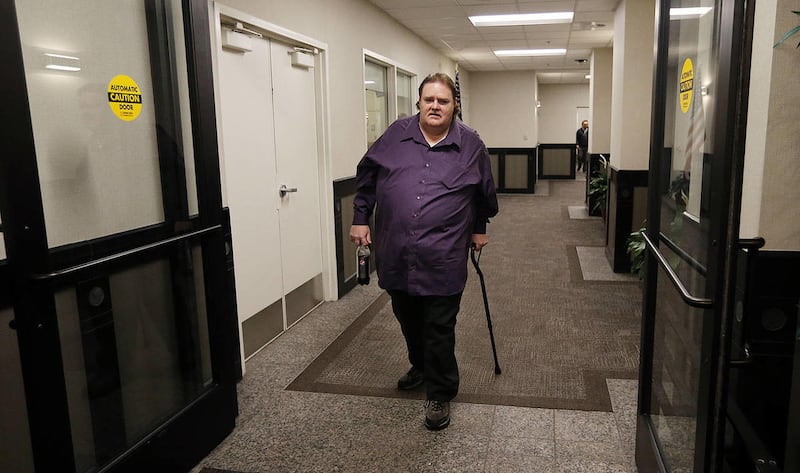
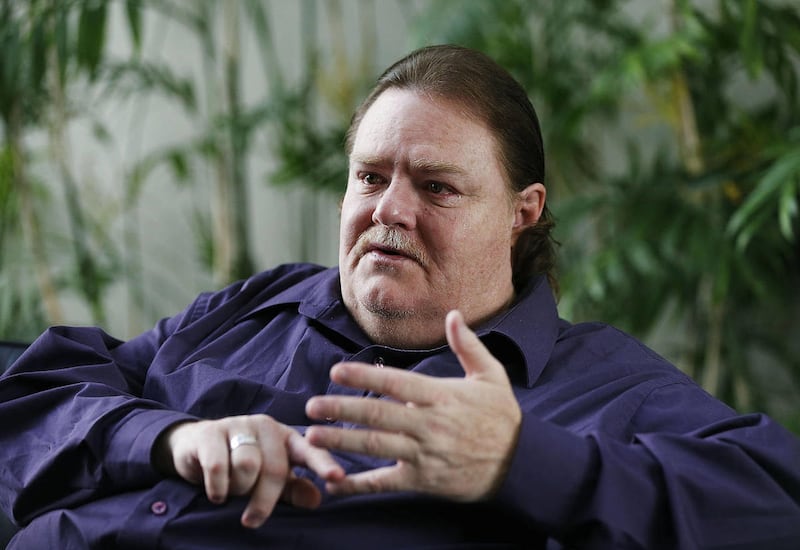
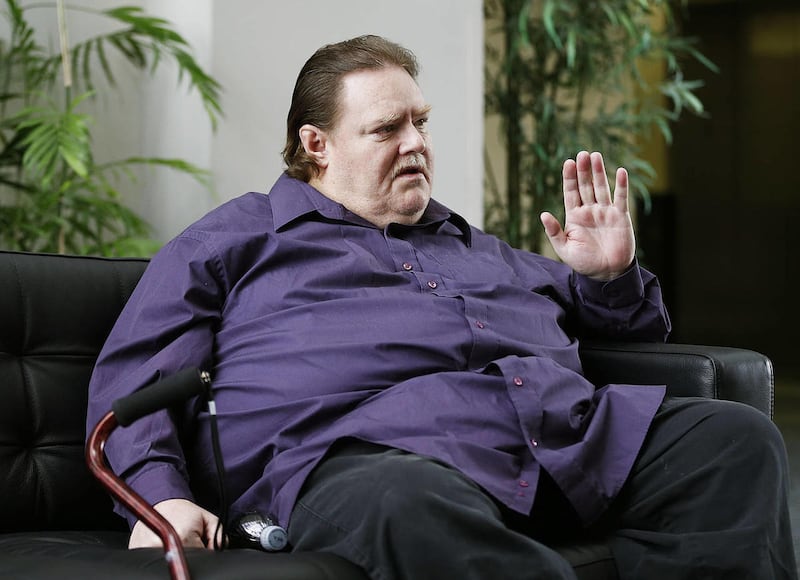
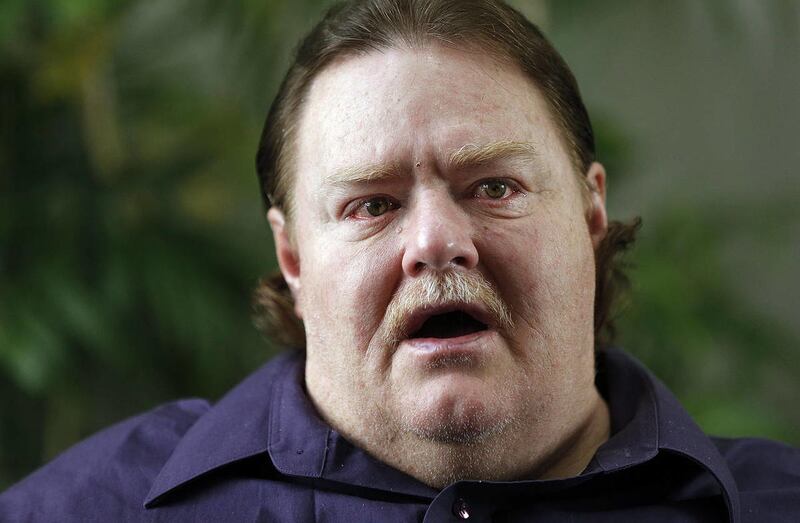
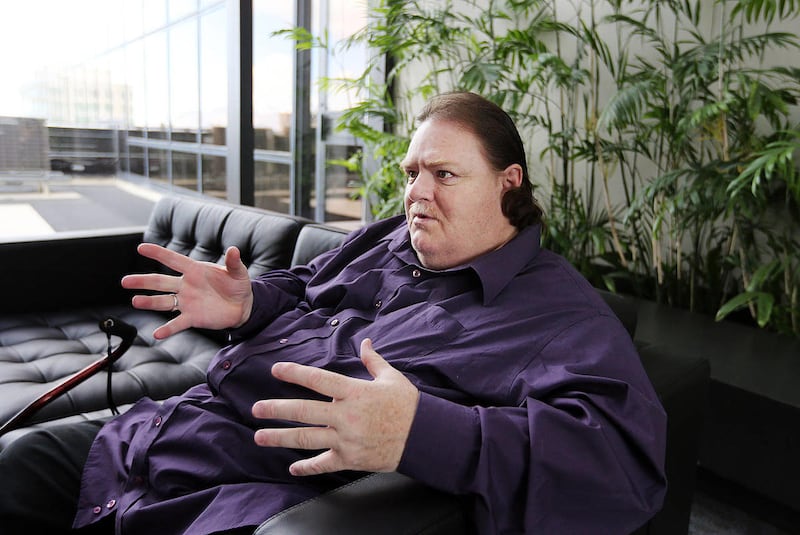
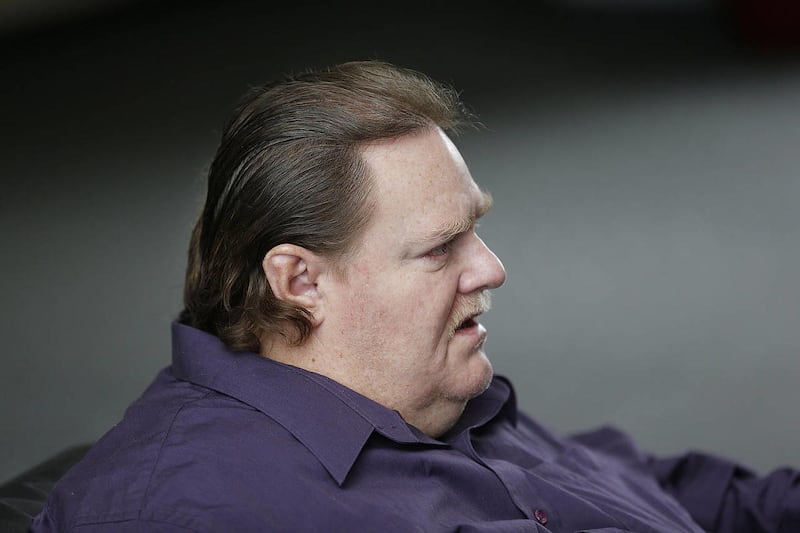
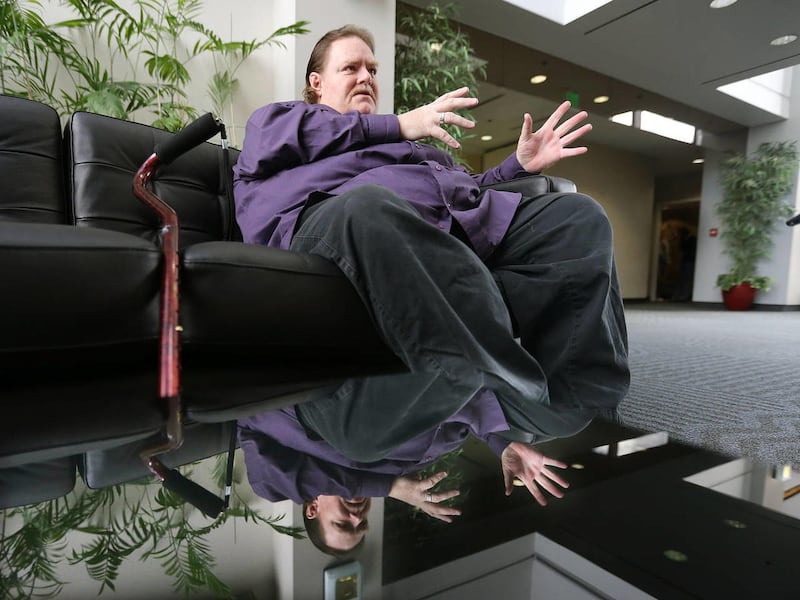
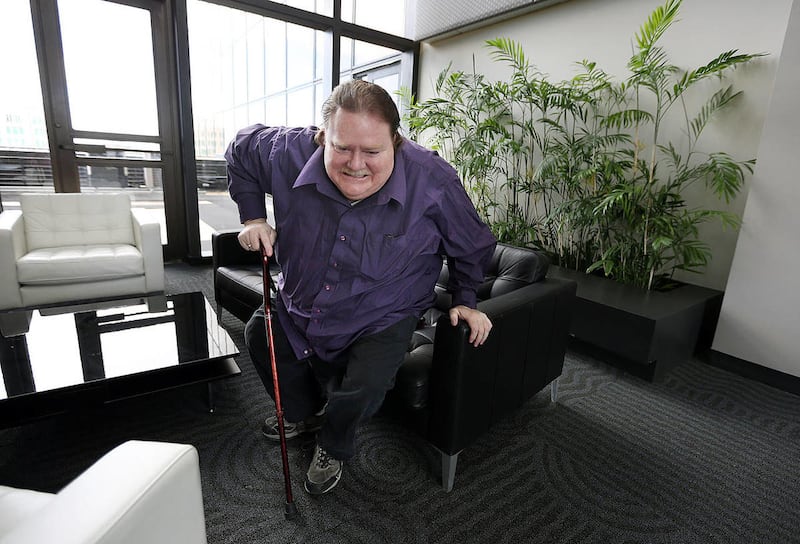
Today, the former veteran police officer who worked for both South Salt Lake, the sheriff's office, and briefly for the Utah Highway Patrol only partially resembles his former self. He has gained about 150 pounds since the shooting and is suffering from a variety of health problems due to his excessive weight gain, including diabetes, and he's been told he needs immediate back surgery.
He said he also suffers from Post Traumatic Stress Disorder, something that whether he realized it or not, began affecting him immediately following his shooting 17 years ago.
Shootings fallout
While not every police officer involved in a shooting will suffer from PTSD, it has only been in recent years that more and more police departments have begun to take steps to help an officer's psyche following a use of deadly force incident.
Just 20 years ago, up to 87 percent of officers involved in a shooting were leaving the profession within a few years of their incident, according to the Utah Fraternal Order of Police. That resulted in a loss of experienced police officers, said Ian Adams, a spokesman for the police union.
In 2003, a report by Paul G. Brown of the Criminal Justice Institute noted: "In the United States, two-thirds of officers involved in shootings suffer moderate or severe problems and about 70 percent leave the force within seven years of the incident. Police are admitted to hospitals at significantly higher rates than the general population and rank third among occupations in premature death rates. Perhaps the most tragic form of police casualty is police suicide. Twice as many officers — about 300 annually — die by their own hands as are killed in the line of duty."
But things have changed since then, thanks to increased awareness and even legislation passed this year by Utah lawmakers, according to Adams. "The vast majority of officers nowadays remain in the profession after a shooting," he said.
Jan. 4, 1998
Rawlings was on duty that day when a suspected car thief passed him going the other direction in Holladay. A high-speed chase ensued between the suspect and several sheriff's deputies after the driver refused to pull over.
Near the area of 1500 East and 3900 South, after hitting a parked car, deputies boxed the stolen Mazda Miata in. Still, the driver rammed two patrol cars in an attempt to escape.
"He rammed my car, which partially knocked me out the door cause I already had it open," Rawlings recalled.
As the driver continued to rev his engine, Rawlings and another officer stood outside their patrol cars with their guns pointed at the Mazda, yelling at the driver to stop. When the driver threw the car in reverse and spun his vehicle around, Rawlings found himself standing directly in front of the vehicle.
"It was obvious he was just going to try and run us down. So I fired two shots and the second one hit him in the head, subsequently killed him," he said.
Bryan L. Davis, 26, died about four hours later. The incident was one of the earliest officer-involved shootings in the sheriff's office captured on video from the police car's dashboard camera. After the shooting, Rawlings can be heard breathing heavily as he collects himself. He says he needs to call his wife.
The shooting was ruled justified by the Salt Lake County Attorney's Office and Rawlings said he was back to work eight days later — something almost unheard of today.
"It all happened so fast. So at the time, you know, I had the tunnel vision and the adrenaline, but I didn't realize what it had done to me at that point. Back then, they didn't have the psychological help for critical incidents like that like they have now in place," he said. "So there was no counseling, no debriefings or anything."
To this day, Rawlings said he does not second guess his decision to pull the trigger.
"It had to be done," he said. "It was a clear case of him wanting to kill us. It had to be done."
But what he didn't see at the time were the signs leading to a mental breakdown five years later.
PTSD
Although Rawlings was back to work in a week and personally felt like he was ready to return to duty, unbeknownst to him, anxiety and anger management issues were starting to take over.
"The first thing I noticed was my fuse was extremely short, which I had never had a short fuse with anybody," he told the Deseret News. "There wasn't a wall or a door in my house that didn't have a hole in it from me punching it or throwing something at it."
By 2005, Rawlings said he was drinking heavily, which was only adding to his problems, as well as constant eating as a coping mechanism.
"It changed a lot about me. I was always the happy-go-lucky guy, the jokester, the one that would go into a negative situation and make people laugh," he said.
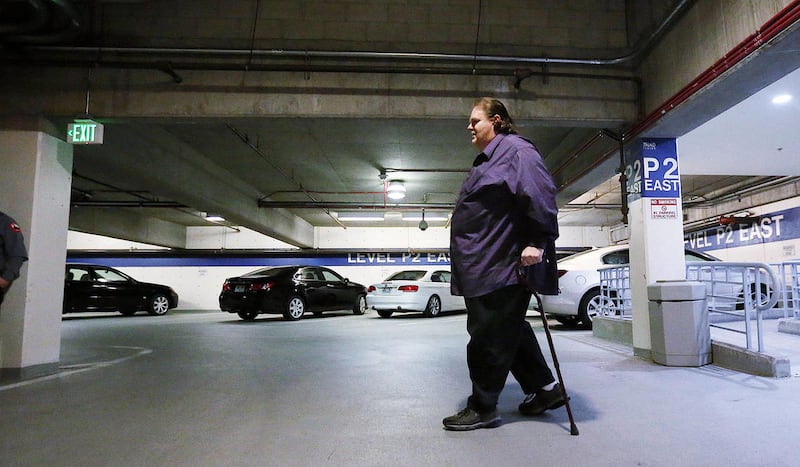
Today — needing the assistance of a cane to walk, which he can only do for short distances — Rawlings' weight problems have left him in need of a couple of major surgeries. He said he suffers from anxiety and depression on top of his PTSD.
"I'm pushing the bar and have been for about five years now," he said.
It has also affected his relationship with his family. Rawlings and his wife are currently separated.
"I have lost myself. I'm not able to enjoy things. I kind of hold back from people recently. And I'm in a position now where I need these surgeries to get my life back. If I don't have them within the next year or two, I don't think I'll be here."
Helping their own
Officer-involved shootings have become a hot topic both in Utah and the nation in recent months. Some critics have accused police officers of being quick-triggered and resorting to deadly force first rather than finding a less-lethal resolution to a scenario.
"I don't know of one officer, not one in my 18- to 20-year career, not one officer that went in with the mindset of, 'I can't wait to shoot somebody.' It's just the opposite. Officers fear having to shoot somebody," Rawlings said.
"It destroys your life. You may not see it at first. I didn't. I didn't see it until 2005. I mean, I guess looking back I see it because of, all of a sudden, the short temper, punching holes in walls. … Then I snapped, went cuckoo basically," he said.
"It destroys your life. You're good for a few years. And if you get the help early enough, chances are you're going to be good your whole life. But if you don't get that treatment early, you're not going to notice a lot of that effect coming on until it's too late."
At that time of his shooting, PTSD wasn't fully understood by many local departments and there was no requirement for mandatory mental health evaluations before returning to duty, he said.
But during this year's legislative session, Adams said the Utah Fraternal Order of Police helped draft and support a bill recently signed into law that requires all police departments to pay for at least two mental health counseling sessions for any officer involved in a shooting. Likewise, the new law also mandates that officers attend at least one session, Adams said, noting it is believed to be one of the first laws of its kind in the country.
Some departments already had those practices in place, he said. In fact, the law was modeled after some of the best practices already being offered by individual police agencies. Adams called it a "good start" for other police departments to provide the support that officers need.
But even before this year's legislative session, many police agencies had already begun taking steps to improve the way they check on an officer's psyche.
Today, the Unified Police Department has a Peer Support Team to regularly check on its own following a critical incident such as a shooting, said Lt. Justin Hoyal. There is constant communication between the support team and police supervisors, he said, so if an officer notices that another officer appears to be struggling, that can be reported and appropriate action can be taken.
Adams said some officers have previously been hesitant to talk to psychologists out of fear that whatever they say would be reported back to their supervisors and could be viewed as something negative on their record.
But today, the education process of how to deal with critical incidents — not just shootings but other deaths or cases when an officer comes in contact with a critically injured or abused child — starts with cadets in the classroom, Adams said.
Public scrutiny
As for an officer-involved shooting, it's not just the act of taking another person's life that is traumatic for a police officer, it's the scrutiny that comes with it. An officer suddenly becomes a suspect in a homicide investigation when a police shooting occurs, Adams said. The public scrutinizes everything you do.
"Every good deed you did for past 10 years suddenly disappears. The only thing important to the outside world is what you did during that quarter-second," Adams said. "The process is very damaging."
Rawlings admits that even today, he still finds himself occasionally looking over his shoulder because of the fear of retaliation from associates of the man whose life he took.
As he prepares for the next chapter in his life, Rawlings has set up a GoFundMe account to raise money for his surgeries at www.gofundme.com/ovthwo. He hopes he can turn his life back around so he can enjoy simple things like going to an amusement park with his children.
"It's embarrassing to hear them say, 'You gotta get off because you're too big,'" he said.
He would also like to share his experience with other officers.
"I wish I could get to a point where I could actually go out and help officers. I don't know how to do it. If I could do that, I'd do it in a heartbeat, help them know what to look for in the signs," Rawlings said.
The best advice he has for other officers who may find themselves involved in a critical incident is to set their personal pride aside and seek help.
"Even if they say they're fine, make them get counseling because it will catch up to you at one point or another," he said.
Email: preavy@deseretnews.com, Twitter: DNewsCrimeTeam