

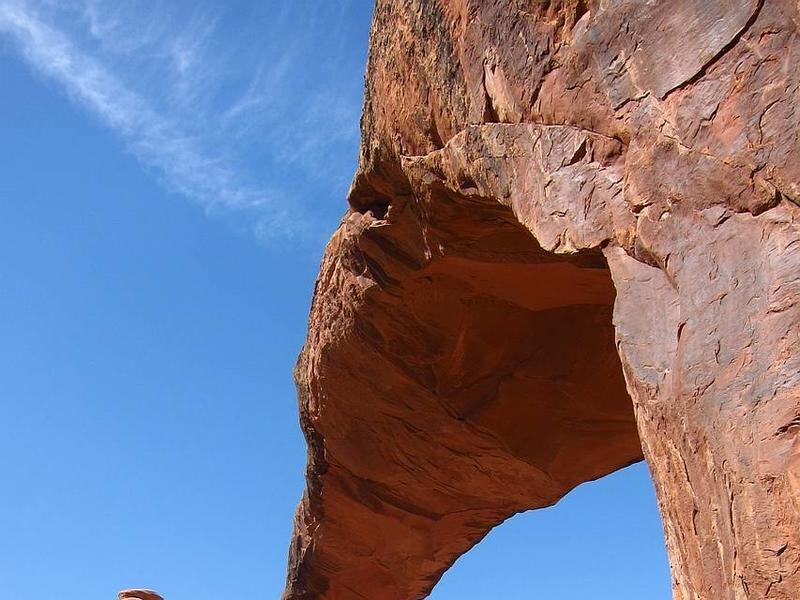
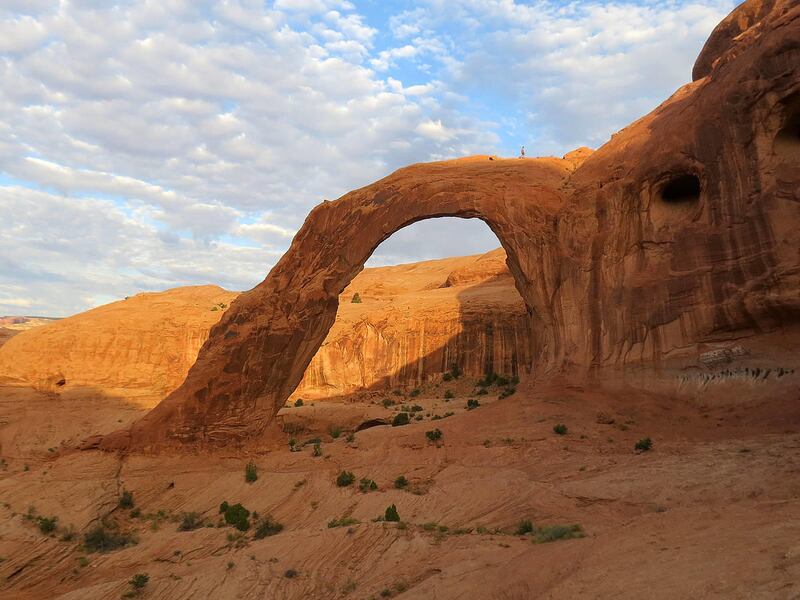
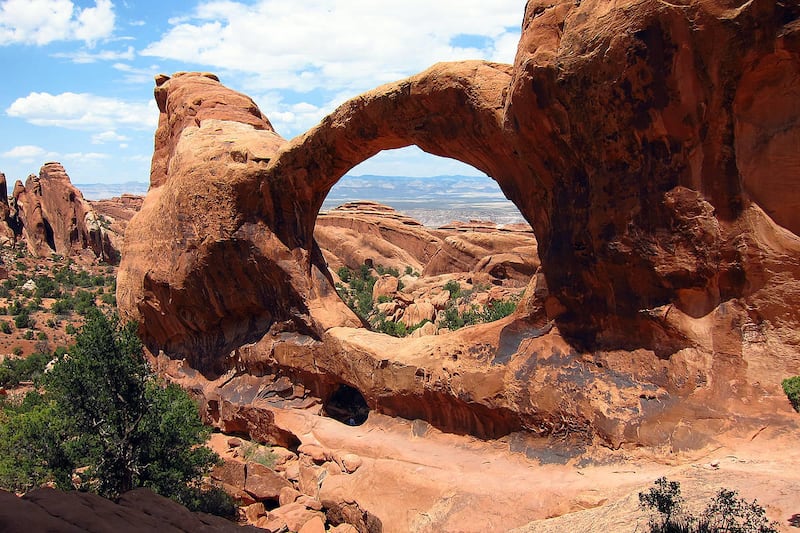
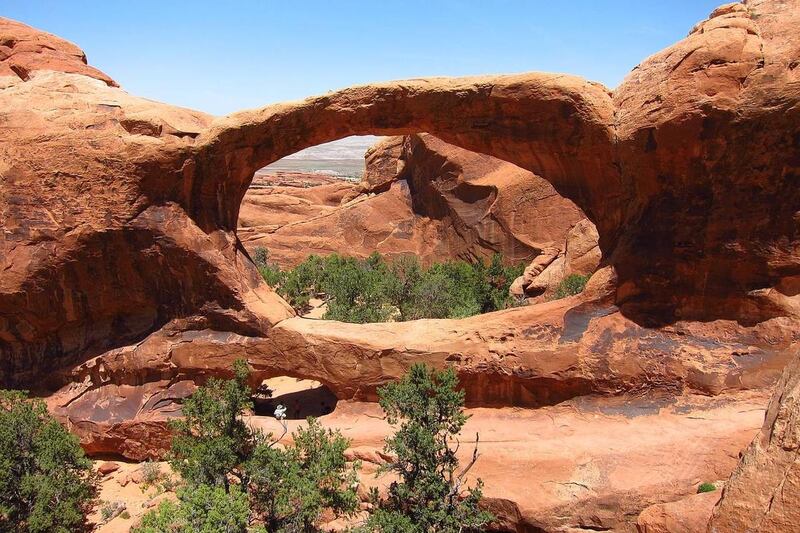

CANYONLANDS NATIONAL PARK — People who visit Utah's iconic natural arches usually do it for the natural beauty, and some probably for the peace and quiet.
But University of Utah geologist Jeff Moore visits them precisely because of how much noise they make.
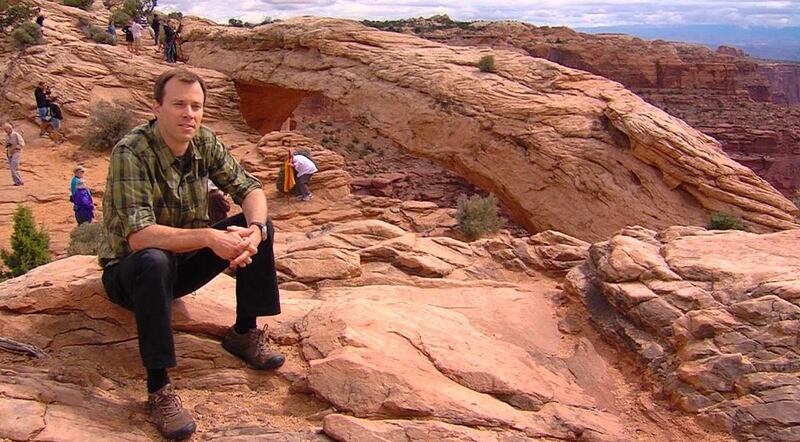
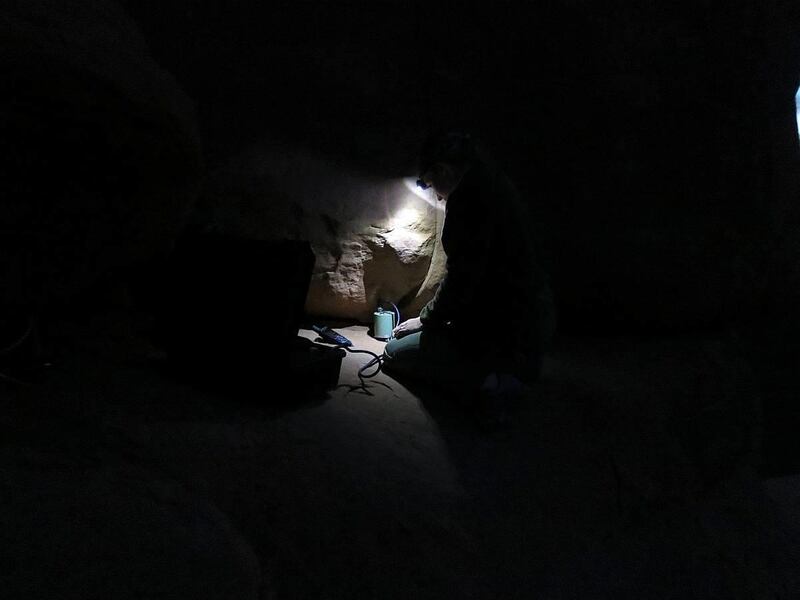
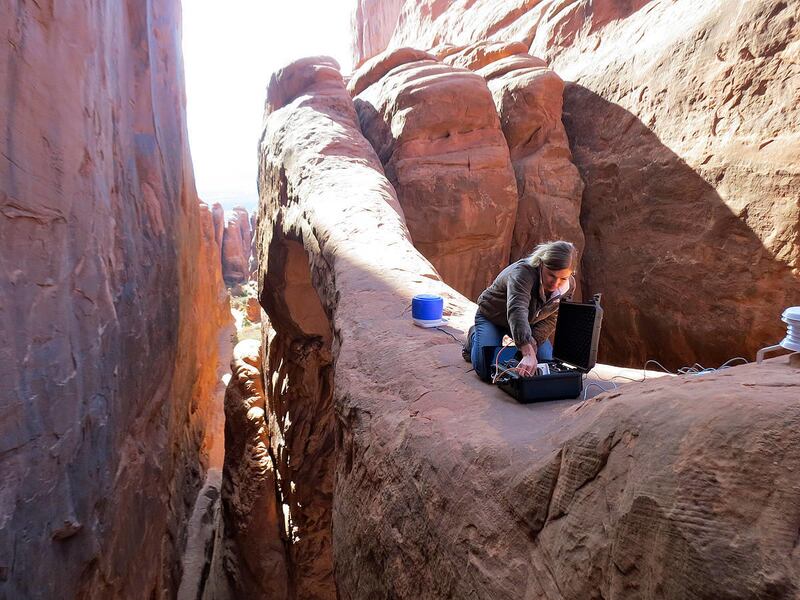
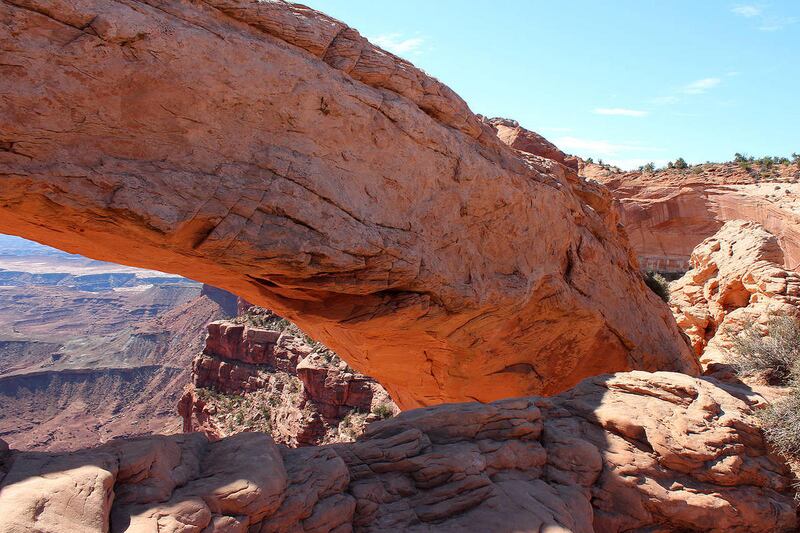
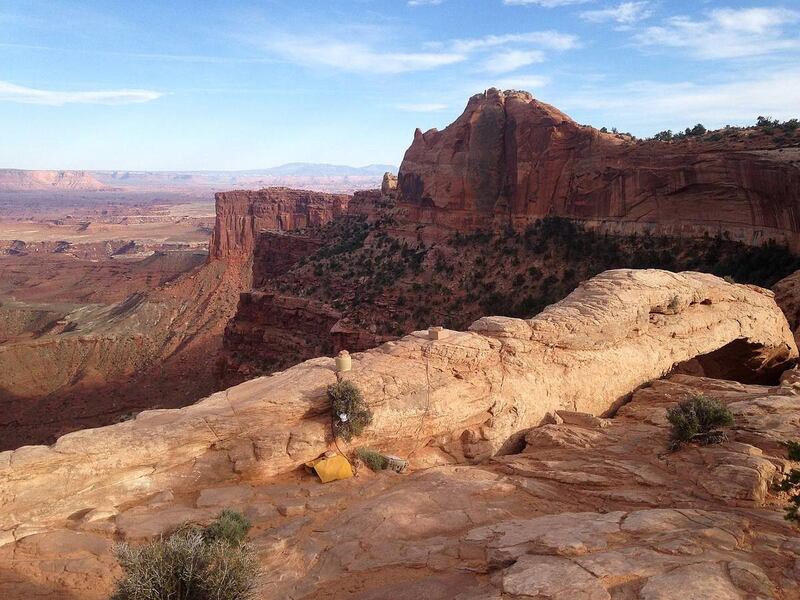
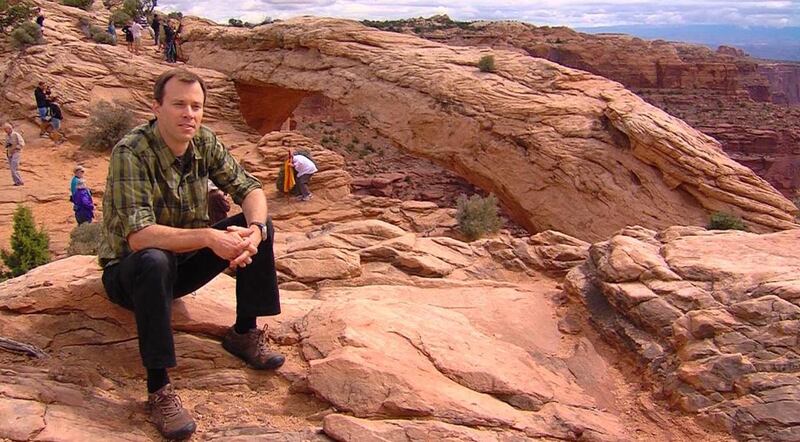
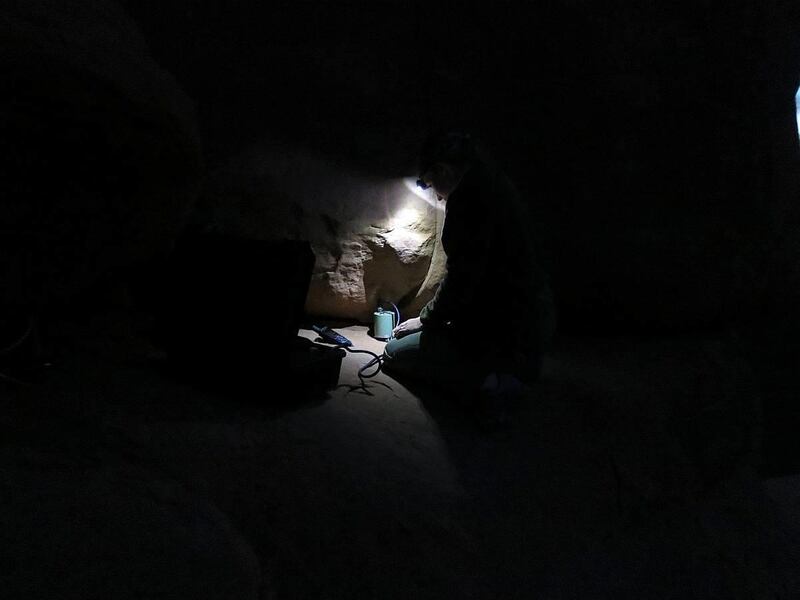
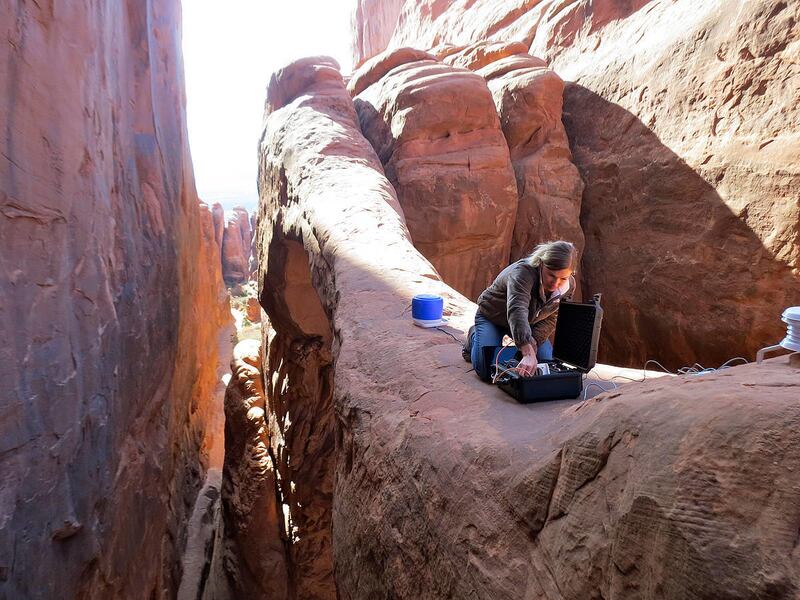
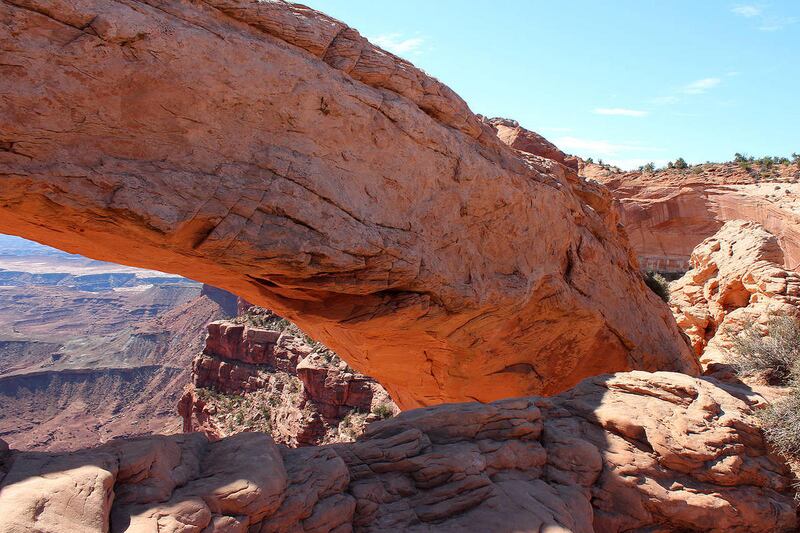
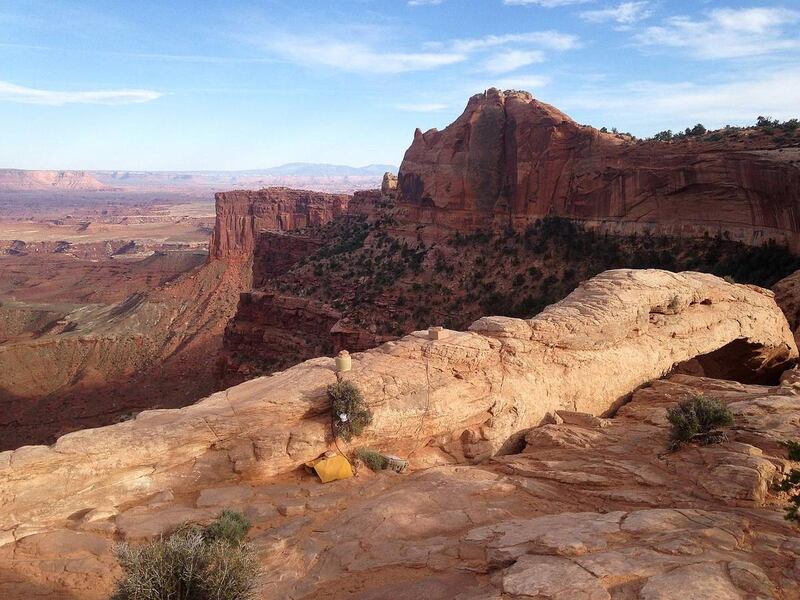
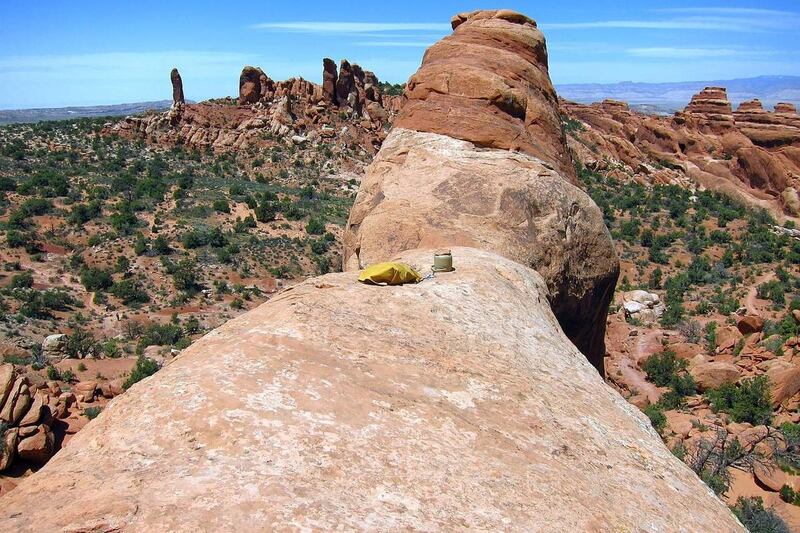
Moore was recently standing on top of Mesa Arch in Canyonlands National Park when a tourist asked him what he was doing up there. Moore was in the process of unpacking a couple of small cases containing specialized equipment, including a broadband seismometer, temperature sensors and GPS units.
“We're measuring how the arch vibrates, actually,” he said. “There's quite a bit of shaking going on.”
For the past couple of years, Moore has been “listening” to what the ground is saying, and he’s focused this unusual research on the natural sandstone arches that are so prevalent in southeastern Utah.
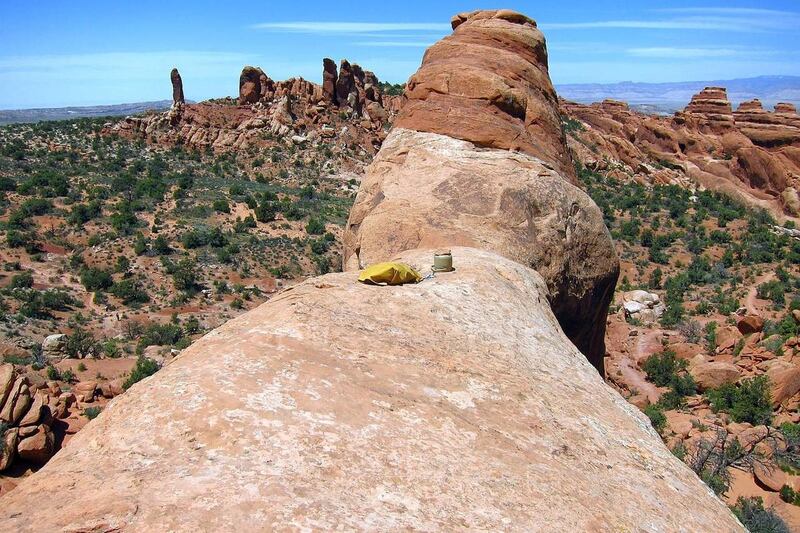
“Yeah, everything around us is resonating," he said. “The rock that we sit on, the (tall rock formation) tower in the distance, the arch here. They each have different resonate properties.”
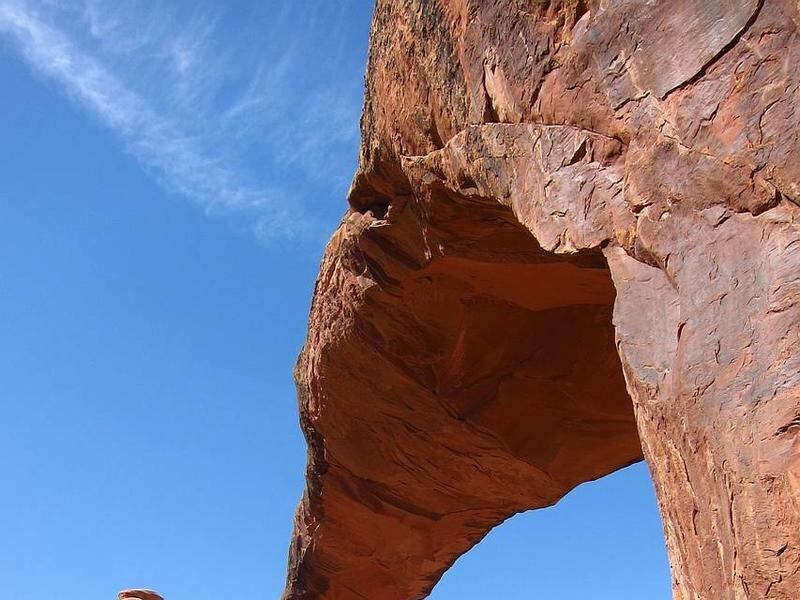
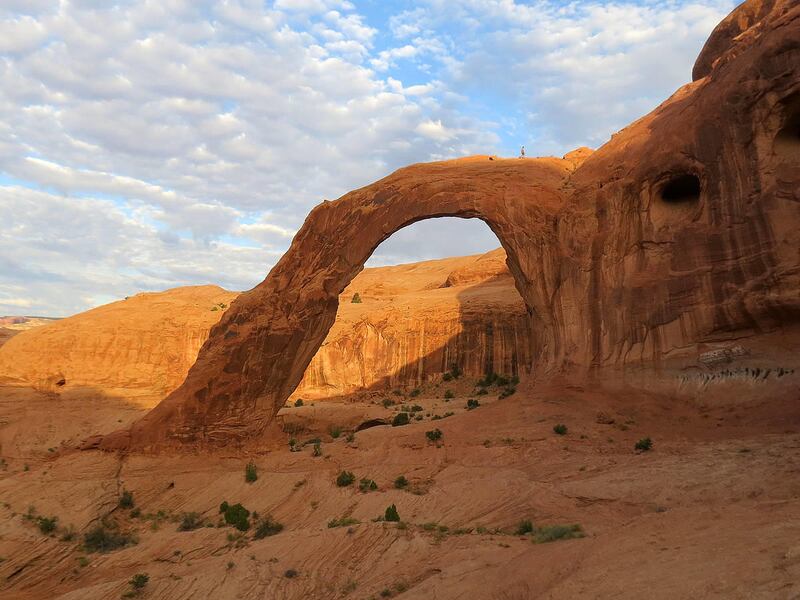
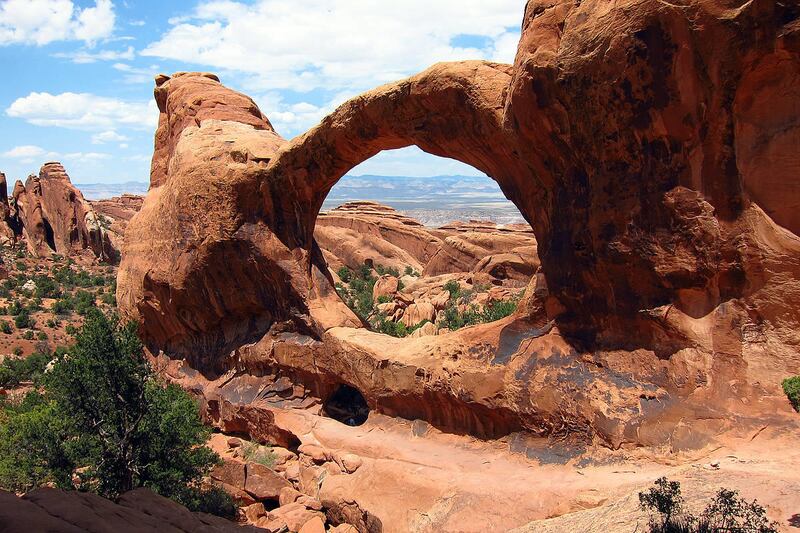
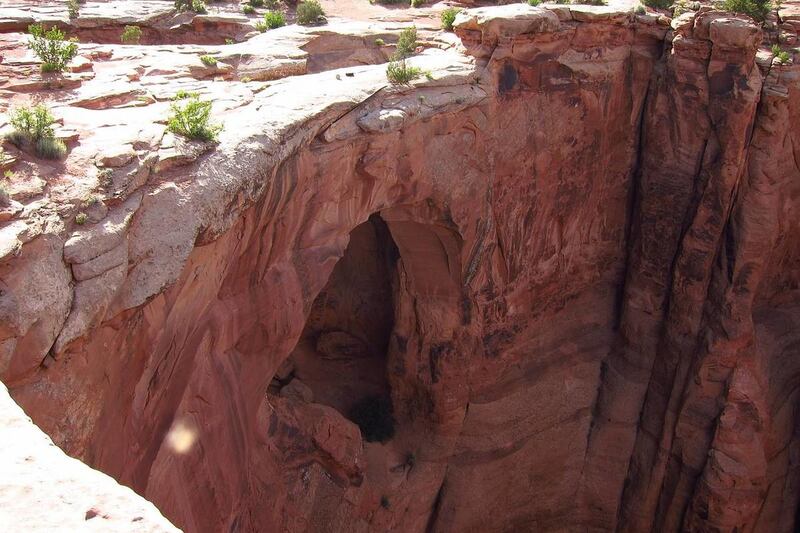
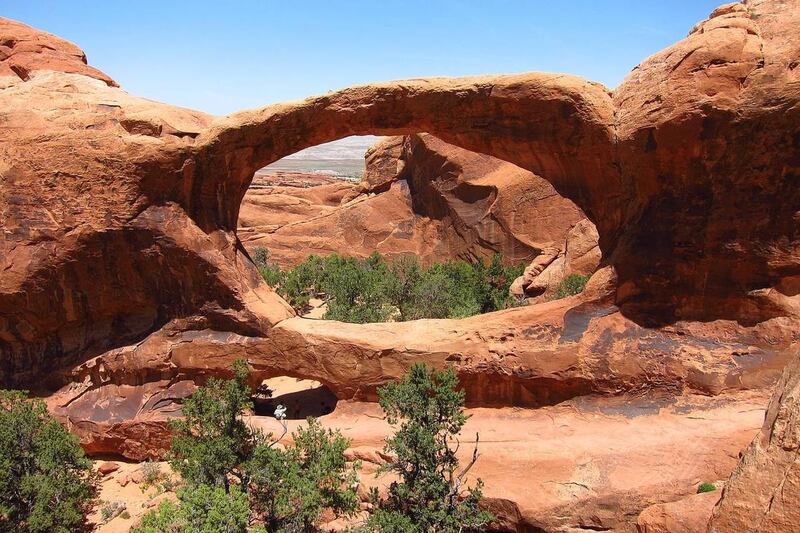
Moore has set up his monitoring equipment and recorded data from 12 arches throughout the region. Many are very well-known to tourists, including Corona, Landscape, Double O, Rainbow Bridge and Delicate Arch.
The monitoring equipment is expensive and very sensitive in terms of detecting movements and sounds, and it’s not intrusive to the ancient formations, meaning there's no drilling or damage. And it’s easy to set up, Moore said.
“We just set the instrument on the rock. We put it there for an hour, and when we're done, we pick it up and we take it away,” he said. “And through that hour's worth of measurement, we get this bulk sense of the material properties, the behavior of the arch.”
The equipment measures the tiniest of movements and vibrations and the ringing sounds those vibrations produce. And what do those sounds mean? Well, if they change in tone over time, it could signal that the arch itself is cracked or getting weaker.
“Our long-term goal,” Moore said, “is to try to sense changes that might precede collapse. Toward the end of the arch’s life cycle, there's a lot going on internally.”
Moore said arches are always moving, though people can’t see it with the naked eye. Data collected so far show that they rock back and forth, expand and contract, twist and contort constantly. All this movement produces sound waves, Moore explained, in the same way as a guitar string.
“If we pluck a guitar string, we hear primarily the sound it generates at the first resonate frequency, but there are many modes to that. And Mesa Arch (as well as the others) is doing the same thing. As a wind gust comes through, it actually plucks Mesa Arch. It really does.”
Last December, Moore presented some of his findings at the American Geophysical Union’s meeting in San Francisco. His research is a form of structural health monitoring that civil engineers use for testing the integrity of buildings and bridges. But no one has tried it on Navajo and Entrada Sandstone arches.
“As far as I know, this is one of a kind,” Moore said. “We're the first in the world doing precisely this kind of measurement to use vibrational properties to understand the dynamics and the life cycle of natural arches.”
So far, the sound recordings and the vibration data on the arches Moore has studied don’t indicate a collapse is coming anytime soon, he said. Someday, Mother Nature will take care of that. The idea is to establish benchmark data that, when compared with subsequent measurements in the years and decades ahead, could indicate that a major change is coming at one of these sites.
“And if we get to that point, we might come to a place where we can say it looks like this arch or any arch is at a point where it might collapse soon," Moore said. "So this is a long-term goal of our project for sure.”
Moore is sharing what he’s learned so far with the National Park Service and plans to publish some of his additional findings in the future. He and his students have documented data from a dozen arches to date and would like to include additional arches in the research in the years ahead.
After all, there are thousands of the iconic formations in southeastern Utah. Some, of course, are in better shape than others. But all can provide useful information.
“Often we just see this as a piece has fallen off the bottom or the arch collapses," Moore said. "But the question is: What's happened all throughout the preceding years, weeks, months leading up to that?”
Email: kmccord@deseretnews.com