

Happy Pioneer Day to you all. And as if to celebrate with us (albeit a little late), Warner Archive is releasing a movie next Tuesday from Hollywood’s golden age that depicts pioneer members of The Church of Jesus Christ of Latter-day Saints.
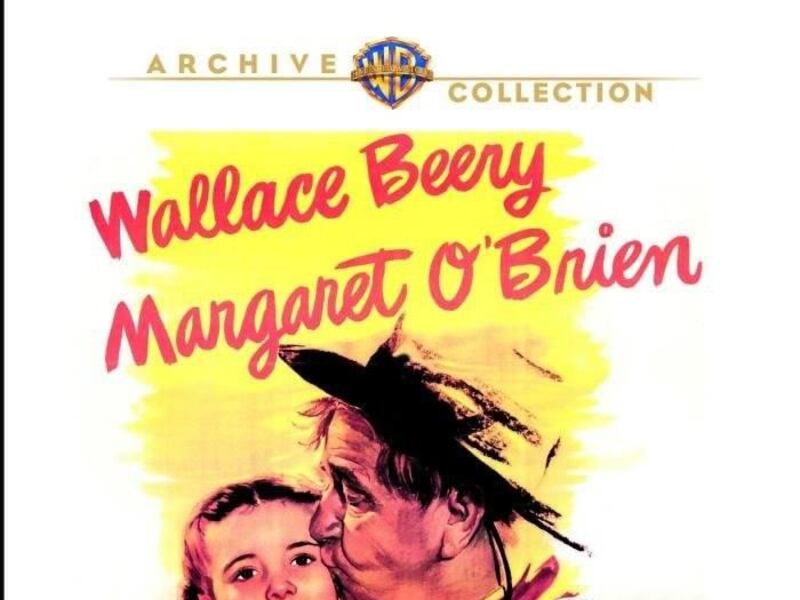
OK, it’s just a coincidence, I’m sure, but the 1946 Western “Bad Bascomb” — an MGM vehicle for Wallace Beery, Marjorie Main and Margaret O’Brien, all big-name stars at the time — is nonetheless making its home-video debut on DVD at Warner Archive’s online store (warnerarchive.com).
“Bad Bascomb” is one of a number of formula Westerns that portrayed Mormons as stoic pioneers often beset by bad guys or American Indians but pacifistic enough to let sympathetic outsiders do the rescuing.
This was a trend that began after the 1934 enforcement of Hollywood’s Production Code — the censorship arm that kept movies squeaky clean for the next couple of decades.
Before that, Mormons were portrayed as stock villains preying on unsuspecting women for their harems of wives (“Trapped By the Mormons,” “A Mormon Maid”), or as the butt of some polygamy joke (“The Covered Wagon,” “Hands Up!”).
But from 1934 through the next 20-plus years, religion could not be mocked or vilified in movies, so Mormons morphed into passive good guys, often as victims.
The best of these, and also the best-remembered, are the 1940 biographical film “Brigham Young” and John Ford’s comedy-drama “Wagon Master” (1950), and both are well worth watching.
“Bad Bascomb” is not as good as those, but it’s not bad, with some solid action and comedy that plays well — but there’s no denying that it lays on the sentiment with a trowel.
Beery plays the title bandit as one of his patented gruff-but-lovable lugs, and the film begins with his gang learning that federal marshals are coming after them in force.
With Bascomb are his right-hand man, a cold-blooded killer named Yancy (J. Carrol Naish), and a young Jimmy (Marshall Thompson), who is unsure of the outlaw life.
When a naive Mormon missionary — Elder Moab McCabe (Frank Darien) — happens upon them, he innocently provides them with the perfect escape, explaining that he’s looking for a small caravan of Saints headed for Utah. This leads to an amusing exchange — some cross-talk that would make Abbott & Costello proud — using titles commonly used by Mormons:
“You the oldest in the outfit?” Bascomb asks.
No, says McCabe, “Brother Elijah Walker is.”
“Your brother’s older than you?”
“He’s not my brother.”
“They call you ‘elder’ because you’re younger, and him ‘brother’ because he ain’t?”
Eventually, Bascomb and Yancy join the Mormons, pretending to be recent converts — the perfect cover, complete with a consistently moving hideout. Then the bulk of the film has to do with their attempts to blend in with the pioneers.
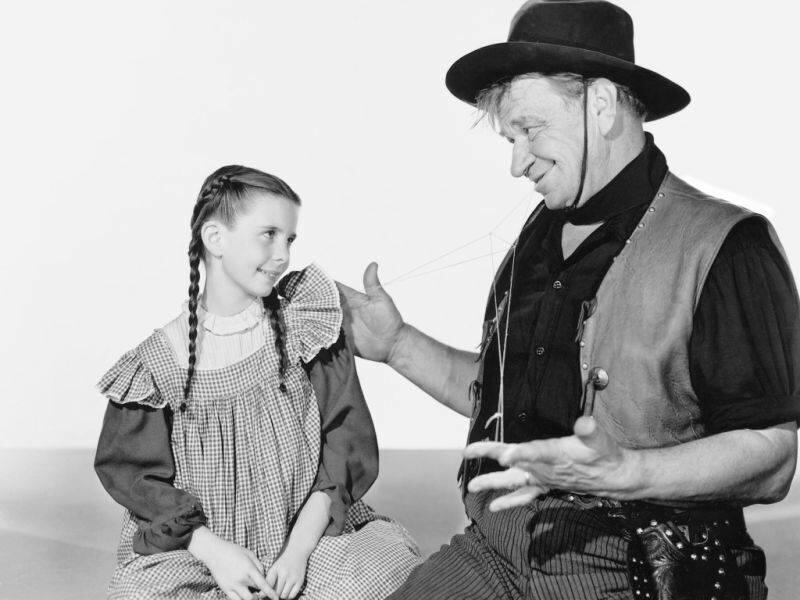
Bascomb is assigned to wagons with widows, where he finds himself unable to resist the charms of an orphan named Emmy (Margaret O’Brien) and meets his match in her tough grandmother Abbey (Marjorie Main), who works him mercilessly. “Well, when do I sleep?” a weary Bascomb asks. Abbey replies brusquely, “When we get to Utah.”
There are subplots about Bascomb and Yancy finding a cache of gold, Emmy falling ill and an Indian attack, all of which leads to an unexpected ending that is more realistic than one might expect in a film of this sort from the 1940s.
But “Bad Bascomb” is at its best with well-staged action sequences and especially the character interaction. Beery and Main are delightful comic adversaries in their sixth film together. They went on to co-star in a seventh film before Main’s stock went up two years when she began playing the distaff title role in the “Ma & Pa Kettle” films. (Her first outing as Ma Kettle, “The Egg and I,” earned Main an Academy Award nomination in 1948, and she played the role in nine sequels.)
Young O’Brien is also effective; at age 9 she was already a veteran of a dozen movies, including the classics “Journey for Margaret,” “Jane Eyre” and “Our Vines Have Tender Grapes.” (O’Brien won a special “child actress” award in 1945 for “Meet Me in St. Louis.”)
Main and O’Brien are scene-stealers to be sure, but this is Beery’s film, and his blustery bully-with-a-heart-of-gold persona gets the usual workout. (Beery won an Oscar in 1932 for the original version of “The Champ.”)
Although an A-film from a major studio, “Bad Bascomb” has fairly standard production values but benefits from location shooting in Wyoming.
Unfortunately, the Native Americans are portrayed in what was Hollywood’s stereotypical manner at the time, right down to greeting each other with “How.”
But the pioneers are portrayed as hardworking, good-hearted and faithful, and most of the dialogue seems to have been written by someone familiar with LDS-speak. (It’s interesting to note that, despite quite a bit of campfire singing, there are no Mormon hymns to be heard.)
In all, “Bad Bascomb” is a pleasant film to while away a couple of hours, and better than that for fans of the stars.
Chris Hicks is the author of "Has Hollywood Lost Its Mind? A Parent’s Guide to Movie Ratings." He also writes at www.hicksflicks.com and can be contacted at hicks@deseretnews.com.