

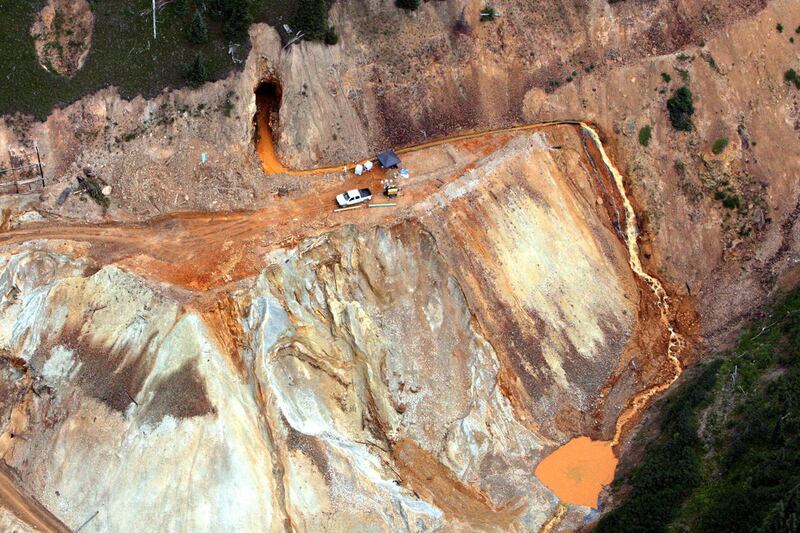
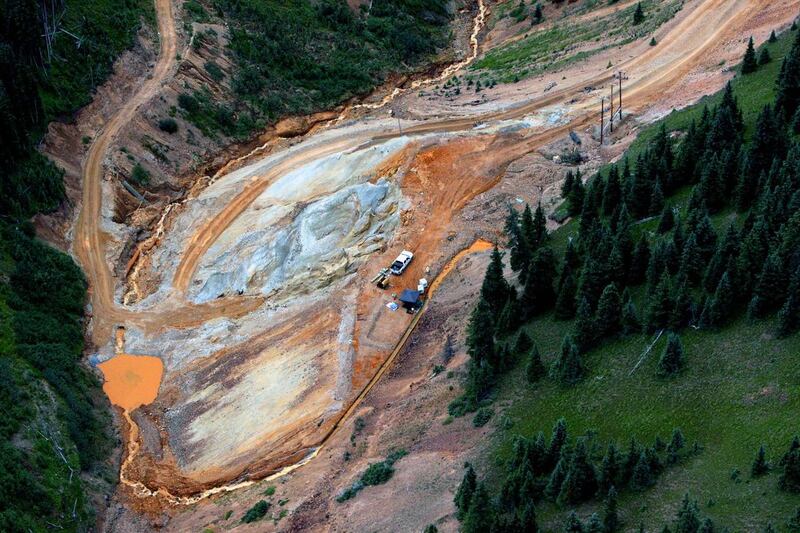

SALT LAKE CITY — Utah Attorney General Sean Reyes joined the attorney general from Colorado on Wednesday to tour the mine site where a massive toxic spill occurred earlier this month.
Reyes called it a "fact-finding tour" at the Gold King Mine in southwest Colorado, about 150 miles from the state's border with Utah, to assess the impacts on the area and determine the role of the Environmental Protection Agency in the disaster.
On Aug. 5, 3 million gallons of water containing lead, arsenic, zinc, mercury and cadmium were unleashed from the abandoned mine site into the nearby Animas River while EPA crews worked in the area.
The EPA reportedly caused the water to spill while attempting to measure the depth of the contaminated de facto reservoir.
Reyes said the EPA showed him and other government officials around the mine site, but the agency was wary about releasing specific information about the spill.
Reyes said earlier this month and reiterated Wednesday that he is considering legal action against the EPA, depending on both its responsibility for the spill and its response to it.
Citing an ongoing Department of the Interior investigation, EPA workers are delaying the release of some details about what precisely caused the Gold King Mine spill.
"Part of the reason we came here was to separate myth from fact," Reyes said in a conference call Wednesday. "I’ll be honest, the EPA was very accommodating, but their people were extremely careful and guarded, as you might expect, in the information they would share with us and often deferred to others in the agency or decided not to comment to potentially protect the agency. What information we did get was still very helpful to us."
Reyes said some residents in the Silverton, Colorado, area are suspicious that the EPA, wanting to make a political statement, intentionally caused the 3 million gallons of toxic water to spill from the abandoned mine. For many years, the EPA reportedly considered the area around the Gold King Mine as a potential Superfund environmental cleanup site, but the agency met opposition and eventually relented.
No evidence currently points to the spill being intentional, Reyes said, but he noted he and his legal team are still gathering what information they can.
"I actually asked them point-blank if they were aware of any evidence that might support the suspicion that people have about purposeful motives, and they categorically denied any of that," he said.
The scope of the site where the spill occurred is visually stunning, according to Reyes.
"Where the release occurred, there was a large gaping hole. I don’t want to even guess the dimensions," he said.
The yellow sludge that polluted the San Juan River and threatened Lake Powell in Utah after the spill has dissipated and is no longer visible. Acidity levels in those Utah water bodies are measuring normally, according to Donna Spangler, spokeswoman for the Department of Environmental Quality.
Still, environmental and wildlife officials in the region are concerned that water sources and multiple species will need to be monitored closely for a matter of years to detect the possible effects of the toxic water on fish and other wildlife.
"It disrupted and halted recreation, swimming, boating, fishing," Reyes said. "It's impacted irrigation farming and ranching, tourism and our recreation-based economy."
Farmers in Kane and San Juan counties have said they're nervous about how to water their crops and feed their livestock and other animals, the attorney general said.
Reyes promised repercussions for the EPA if the agency skirts its obligations the environmental disaster's aftermath.
"(We will) discuss the possibility of legal actions if the EPA does not live up to its commitment to be fully accountable for the injuries and damages that they incurred," he said.
Email: blockhart@deseretnews.com
Twitter: benlockhartnews