

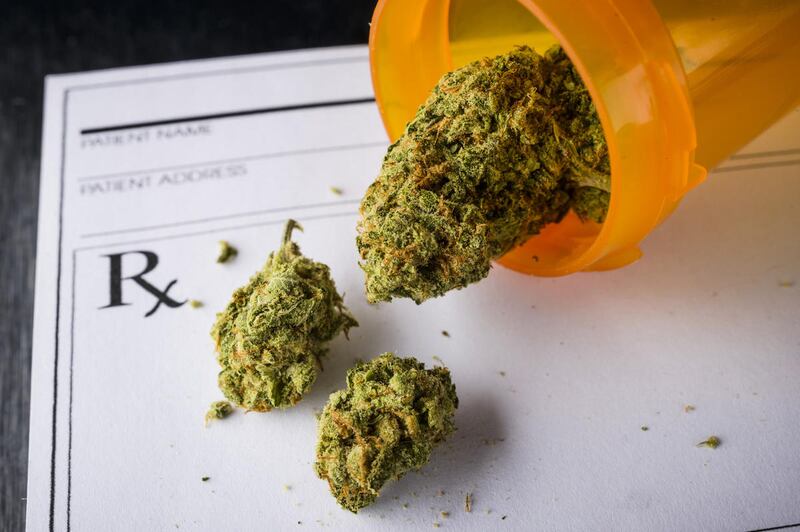
Marijuana advocates threaten public health by trying to “legalize” pot through state legislatures.
Other drugs must pass scientific screening. But pot advocates, backed by hundreds of millions of dollars, insist on bypassing this safeguard. They pressure politicians, spread misinformation, appeal to misplaced sympathy and rely on media bias.
Clear and growing medical research warns of brain damage to pot users, especially children, teens and young adults.
Rather than report this threat, many media rush to interview suffering patients, who often are used by well-financed advocates who persuade them that “medical” marijuana might relieve their pain. Yet thousands of legitimate medications, also intended to relieve suffering, must pass strict safety reviews by the Food and Drug Administration.
The beneficial ingredients of marijuana are already available. Decades ago they were isolated and approved in prescription drugs such as Marinol — medications without the carcinogens and unsafe impurities found in the marijuana plant.
Cannabis advocates also ignore our country’s official and leading medical researchers, the National Institutes of Health. NIH includes the National Institute for Drug Abuse (NIDA), which reports on its website: “… a growing number of studies in humans indicate that marijuana exposure during development can cause long-term or possibly permanent adverse changes in the brain.”
Translation: The “stoner mentality” is not a myth. Marijuana impairs the ability to think, an impairment that lingers long after a “high.” NIDA elaborates about the latest research:
“Marijuana also affects brain development. When marijuana users begin using as teenagers, the drug may reduce thinking, memory and learning functions and affect how the brain builds connections between the areas necessary for these functions.
“Marijuana’s effects on these abilities may last a long time or even be permanent.
“For example, a study showed that people who started smoking marijuana heavily in their teens and had an ongoing cannabis use disorder lost an average of eight IQ points between ages 13 and 38. The lost mental abilities did not fully return in those who quit marijuana as adults. “
The Office of National Drug Control Policy (ONDCP) also warns us. Although President Barack Obama is lax about enforcing marijuana laws, the White House website includes ONDCP’s official marijuana warnings, which include:
- “Based on available data, it is clear that most users of state-based marijuana programs do not suffer from chronic, life-threatening diseases.
- “‘Medical’ marijuana contributes to softer attitudes and greater use of marijuana.
- “Marijuana, as a whole plant, has thousands of unknown and carcinogenic components and has not met the rigorous standards of medicine set forth by the Food and Drug Administration (FDA).
- “Some constituents of marijuana, including THC, are available today in pill form (Marinol); some synthetic mimics of those constituents are also available (Cesamet). Research is also investigating other safe delivery methods for these types of medications.
- “Currently the National Institutes of Health (NIH) is engaged in a robust research effort to determine what other constituents might have medical use.”
Legislators should heed these warnings. And so-called “medical marijuana” should meet FDA standards like other drugs.
No state can override the federal law that makes marijuana illegal. The U.S. Supreme Court upheld the supremacy of that law (Gonzalez v Raich, 2005) and unanimously ruled that state “medical marijuana” must yield to federal law (United States v. Oakland Cannabis Buyers' Cooperative, 2001).
Our entire society is threatened if we encourage scofflaws to disobey any law they don’t like. State lawmakers who vote to legalize pot — for any purpose — are voting to abandon the rule of law. The only proper course for marijuana advocates is to take their fight to Washington, D.C. Any other approach is advocating anarchy.
Former U.S. Congressman Ernest Istook worked directly with the Office of National Drug Control Policy and National Institute on Drug Abuse during his 14 years in Congress. He now teaches political science at Utah Valley University.