


I am deeply impressed by his life path, how he found his way more or less by himself. – President Uchtdorf
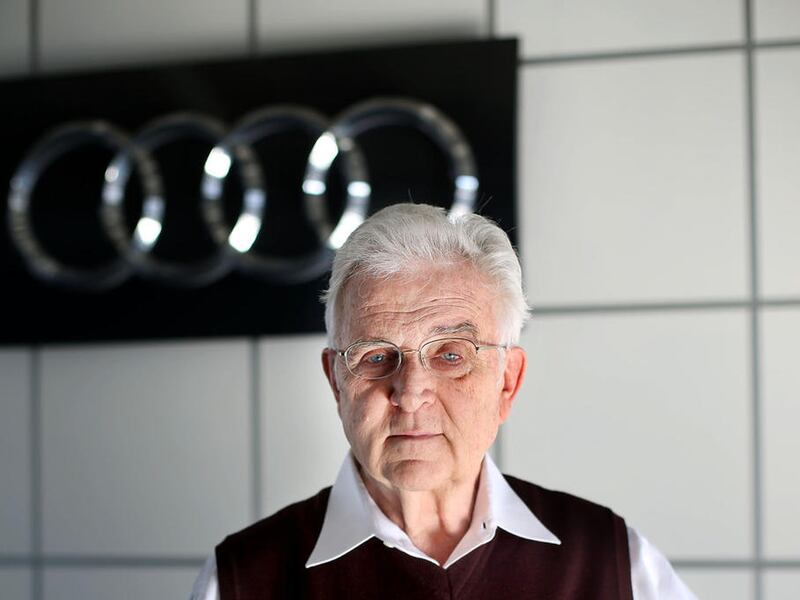
SALT LAKE CITY — Dwight Eisenhower was president of the United States, Nikita Khrushchev was premier of the Soviet Union, and Germany was a divided land when the Cold War blew 18-year-old Joachim Schenk in the front door of the L.H. Strong Volkswagen dealership on Main Street.
He wasn’t looking for a car; that would have been a problem, since there was a nine-month waiting list for Volkswagen Beetles at the time. He was looking for work.
L.H.’s son, Dave Strong, at 21 and not much older than the person standing in front of him, conducted the world’s shortest job interview — largely because he didn’t speak German and Joachim Schenk didn’t speak English. Based on the information that the young man had been a Volkswagen mechanic in Germany, and an instinct that Schenk was an honest kid, Strong hired him on the spot.
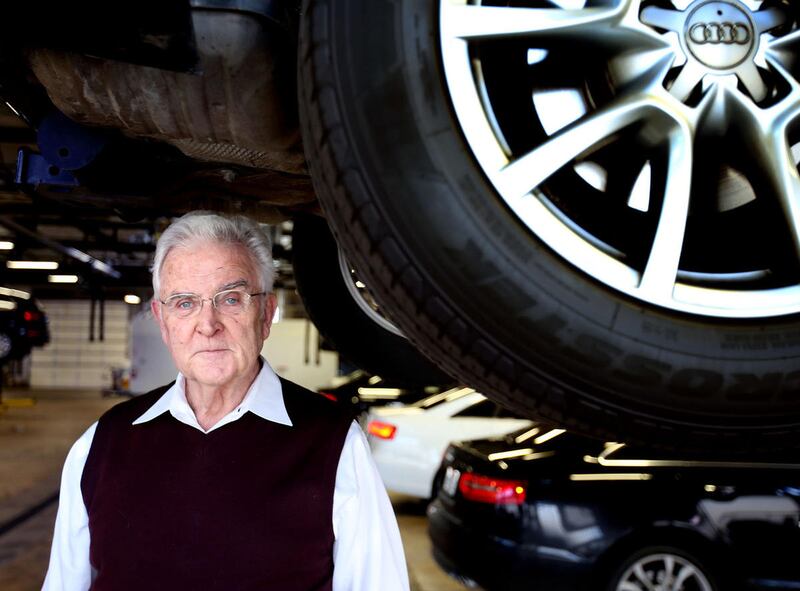
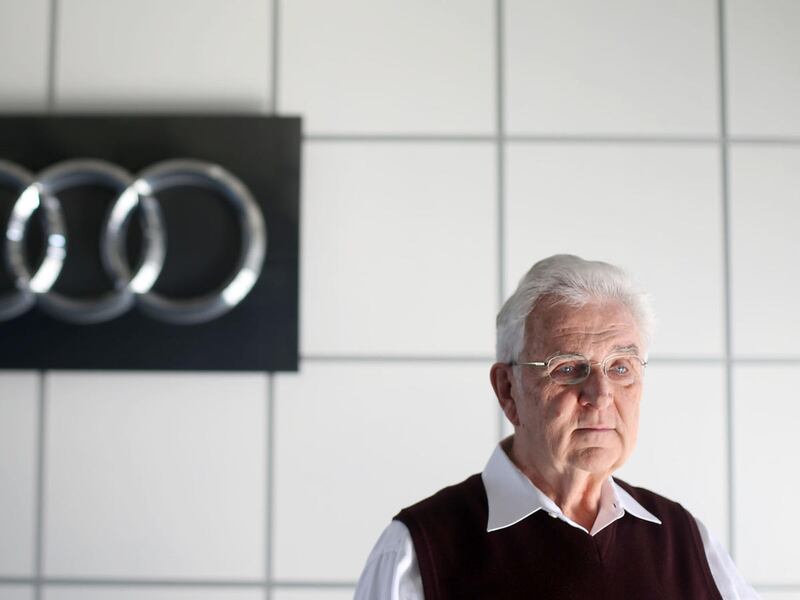
That was on Apr. 9, 1957 — and Joachim’s still there. This Saturday will make 59 straight years on the job.
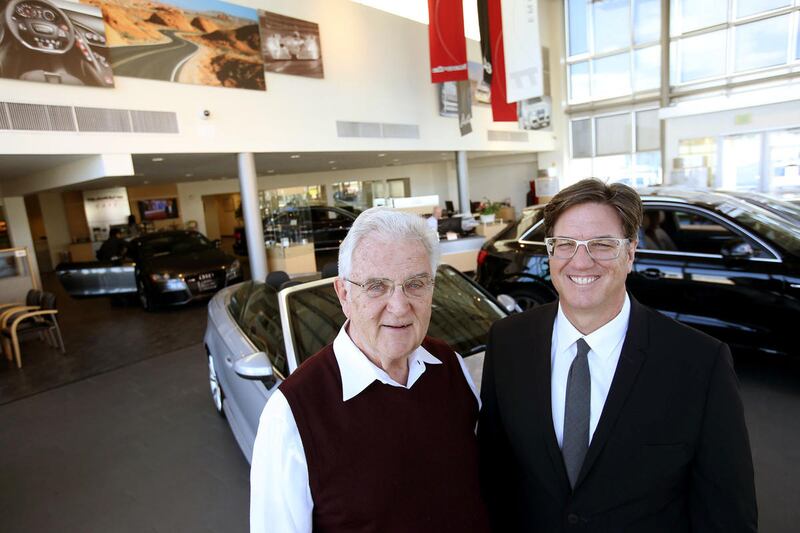
“I’d have to say that’s the best hire of my whole career,” beams Dave Strong, who’s 81 now and retired. Ten years ago he turned the Strong family dealerships over to his sons Blake and Brad — which means Joachim Schenk can tell his current bosses he can remember when they were born.
The irony is that the same person who was responsible for his troubles was also responsible for his career.
Adolf Hitler led Germany into war in 1939, a year after Joachim was born to Rudi and Elly Schenk in Zwickau, an industrial town in the eastern part of the country. Joachim was 3 years old when his dad was sent to the Russian front, 4 when his father died, and 7 when the Nazis surrendered in 1945 and the Soviet Union took control of East Germany. Hitler caused all that. But it was also Hitler who, in 1937, ordered the production of a low-cost, high-quality car for the masses — a people’s car, called a Volkswagen.
If the Communists weren’t worse than the Nazis, they weren’t any better. After 10 years of a starvation diet and no freedom, Joachim and his mother had had enough. In 1956 they packed everything they owned in one small suitcase each and fled to the divided city of Berlin, risking their lives to make it to the western sector, where they sought political asylum. (So many people escaped East Germany like this that the Soviets erected the Berlin Wall in 1961 to stem the tide.)
A U.S. military plane flew mother and son to a refugee camp in Hasfurt, West Germany, where Joachim found work at the local Volkswagen dealership as an apprentice mechanic.
A year later, the Schenks flew on another plane to Salt Lake City, sponsored to America by Henry D. Moyle, the missionary who had converted Elly Schenk’s mother to The Church of Jesus Christ of Latter-day Saints when he was serving in Zwickau in 1910.
By 1957, Elder Moyle was a member of the Quorum of the Twelve Apostles. Two years later he would join the First Presidency as a counselor to President David O. McKay.
Elly and Joachim, carrying the same two suitcases they’d left Zwickau with, arrived in Salt Lake on Sunday, Apr. 7, 1957, while the church’s general conference was going on in the Tabernacle. Elder Moyle was unavailable at the time, but his secretary made sure the two newcomers were welcomed and taken care of.
Two days later, Joachim started looking for a job. He didn’t understand the language, he had no friends, he couldn’t begin to comprehend the food. But, as Dave Strong discovered, he knew how to work on Volkswagens.
“That sounded good to me,” remembers Dave, whose father had acquired one of America’s first VW franchises just 18 months earlier, after Hudsons went out of business. “We put him as an apprentice to a German who was our top mechanic, John Menzel, who also translated for him. So he learned from the best right from the start.”
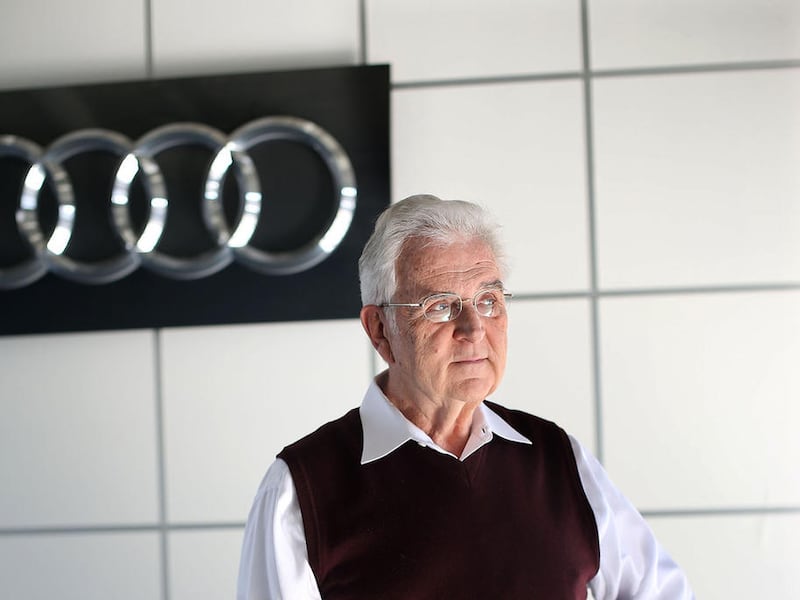
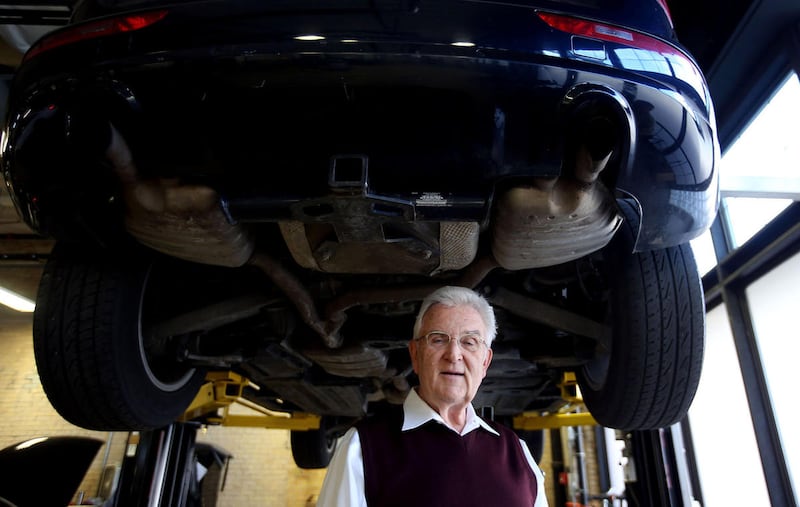
Joachim was a line mechanic for 12 years, shop foreman for 19 years, and, after Porsche and Audi were added to Strong Motors, manager of Strong’s Audi service department for 24 years. The last four years, since scaling down to three and a half days a week, he’s served as warranty administrator, aka the man who knows everything. And everyone.
“He’s so useful, so helpful, so knowledgeable, so popular with the thousands of customers he’s built relationships with — he’s impossible to replace,” says Blake Strong.
Joachim may have left Germany, but Germany never left him. He helped start the Berlin soccer club and played with the team for years in the Utah Soccer League. He met his wife, Trudy, at an LDS German dance at the University of Utah in 1958 (she’d emigrated to America from West Germany six months earlier). And he always was on the lookout to befriend immigrants like himself.
In 1999, that included his boyhood friend Dieter Uchtdorf, who moved to Salt Lake City that year as an LDS general authority in the First Quorum of Seventy and who is now a counselor to President Thomas S. Monson in the First Presidency.
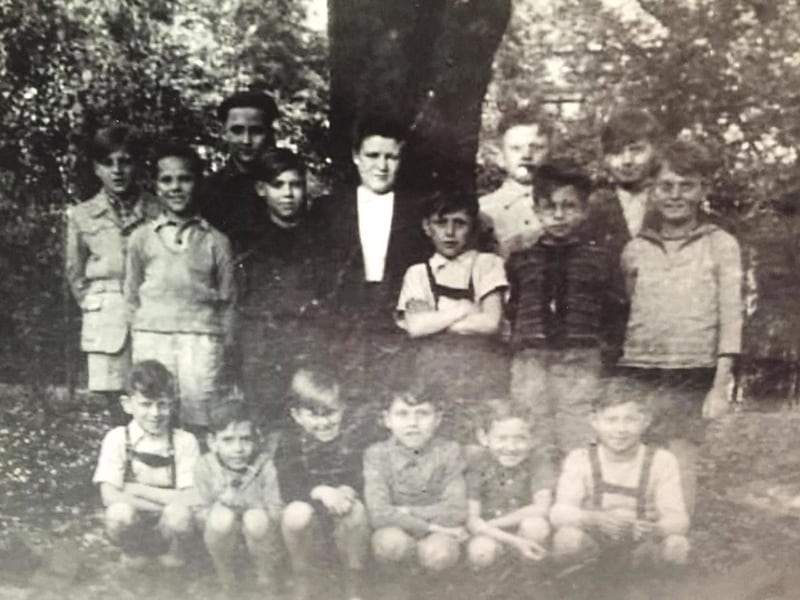
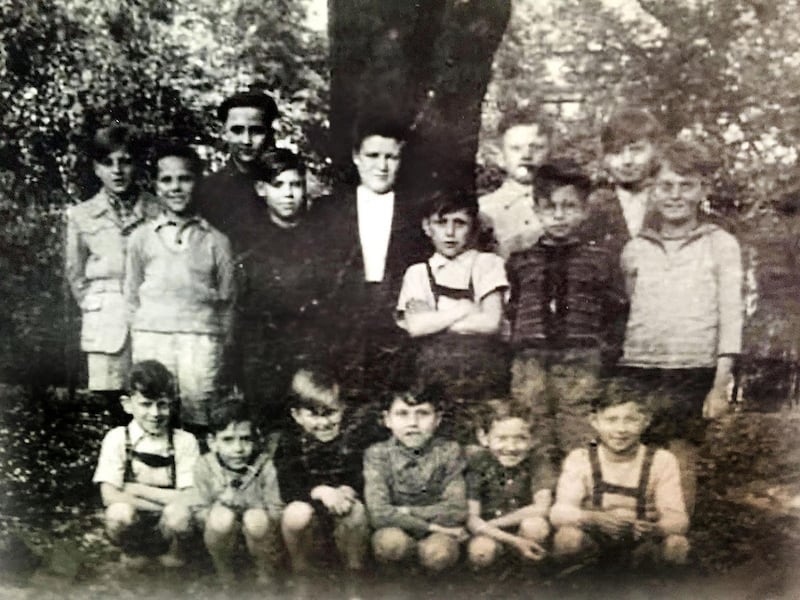
Joachim and Dieter were members of the Zwickau branch when they were kids. They attended Primary classes and activities together, until Dieter and his family escaped to West Germany in 1952 — four years before the Schenks.
They lost track of each other until 1996, when Joachim and Trudy were vacationing in Germany and attended church in Zwickau.
Elder Uchtdorf and his wife, Harriet, also on vacation, attended services the same day. It was the first time either man had been back to Zwickau for church.
Their friendship was renewed, and accelerated three years later when the Uchtdorfs moved from Germany to Utah.
“I am deeply impressed by his life path, how he found his way more or less by himself,” says President Uchtdorf of his old/new friend. “I still have a photo from back when he was a young 18-year-old. He is a mechanic and he’s in his overalls, putting his foot on a Volkswagen Beetle. He built his own vocation, served the church and integrated into this new culture.”
And what does Joachim Schenk think of anyone making a fuss about him surviving the Nazis and the Communists, assimilating into a foreign land, making untold thousands of friends, and holding down the same job for 59 years?
He says the story deserves just five words.
“Just write: ‘He came. He’s still here,’” he says.
German to the end.
Lee Benson's About Utah column runs Mondays. Email: benson@deseretnews.com