

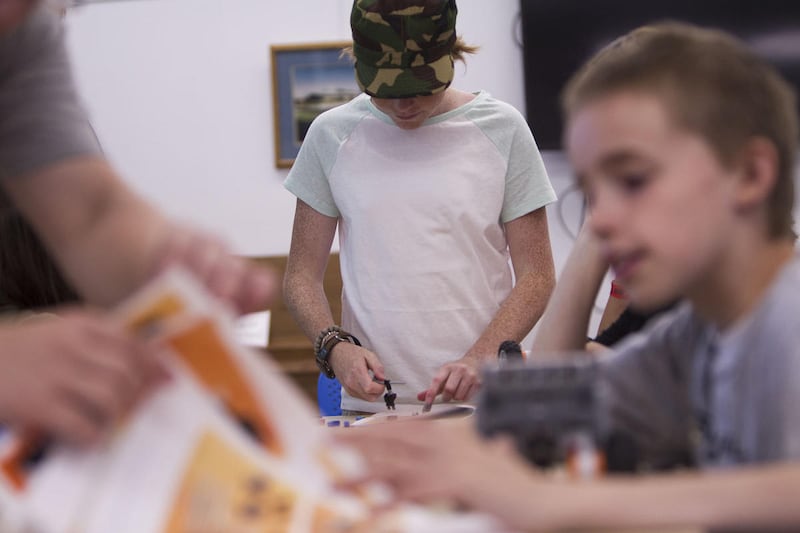

RIVERTON — Gabriel Rethlake’s dimples show as he demonstrates how turning the wheels on the car he’s just built will provide tension to make it move. The wheels — game chips, actually — are mounted on thin skewers that serve as axles, attached to the decorated mousetrap that is the car’s body.
When the spring is flipped, if the string’s wound right, the car will surge forward a few inches or perhaps even a foot, the 12-year-old explains happily.
Across the room, Livia Anderson stares at what seems to be five drinking straws glued in a fan shape onto a popsicle stick. Each straw has small holes cut out in several spots and she’s tying string through the top one and trying to thread it all the way through to the bottom.
It’s not as easy as it looks, and the instructor, April Stocks, commiserates when the thread pulls loose. “Science is all trial and error, right?” said Stocks, and Livia, 12, nods solemnly.
Soon, though, she's brandishing what resembles a somewhat arthritic human hand, the knuckles bending at odd angles as she pulls the strings. “Gravity helped me this time,” she proclaims, and her friend Kameryn Grose, also 12, nods happily at her as she threads her own straw hand.
The youths are part of summer STEM camps through the Salt Lake County Library system in partnership with Utah State University, which has provided instructors like Stocks. Over the course of the summer, the free sessions at different library branches will take kids to Mars, help them explore robotics and the human body and engage them in other hands-on activities.
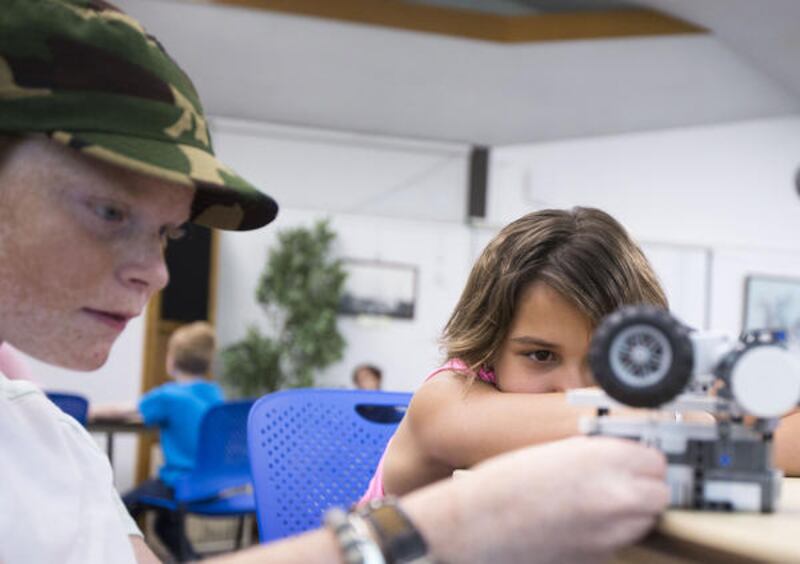
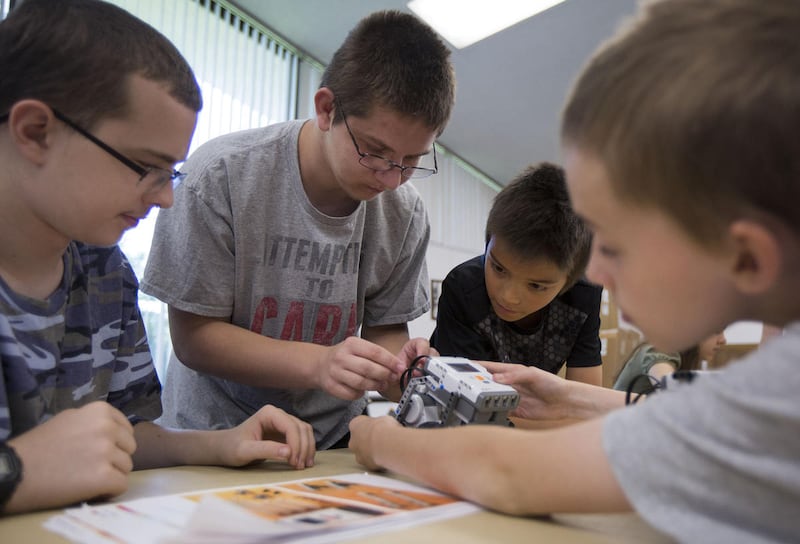
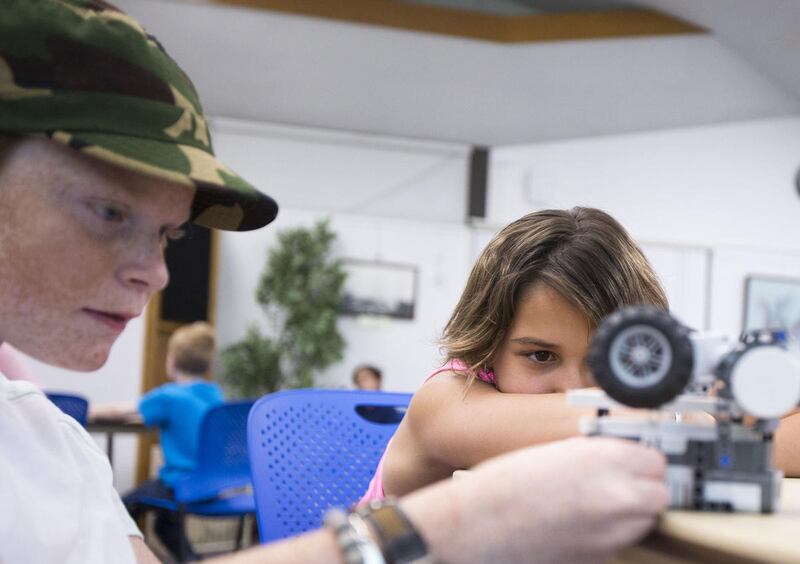
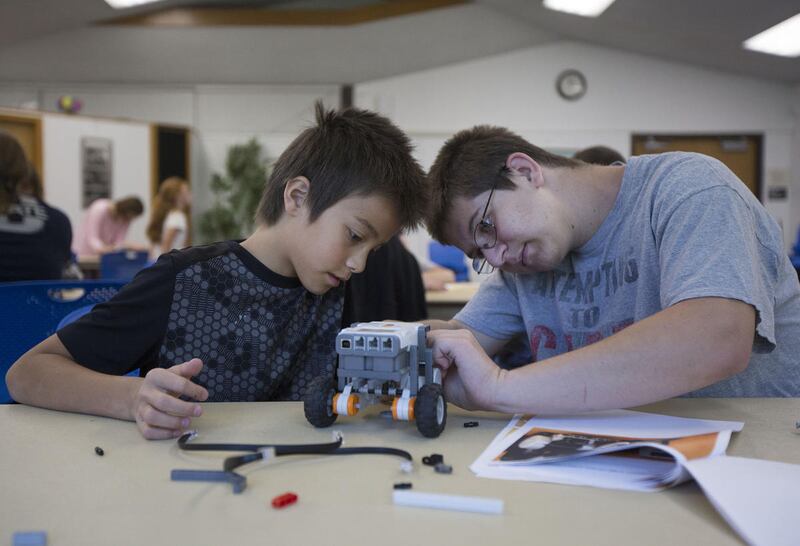
Maddie Gabbitas, 13, left, and Liliana Pliego, 11, examine their robot while attending the STEM summer camp at the Ruth Vine Tyler Library in Midvale, Friday, June 9, 2017. | Kelsey Brunner, Deseret News
This gathering of 15 kids at the Riverton branch is just one example of how STEM — science, technology, engineering and math — and sometimes STEAM, which adds arts, is on the schedule in many summer programs for kids across the country.
Kids are flocking to programs sponsored by libraries, schools, organizations, businesses and universities that believe the free time of summer, fun activities and a dose of how-it-works learning can combine to keep kids sharp. The camps range from free to quite costly, from low-tech to high-tech. Some last a few hours, while others spread out over days or even weeks. They are tailored to different ages and interests, but they're all geared to let curious kids explore.
So in Dandridge, Tennessee, students in the fourth through eighth grades recently made solar ovens one day and cooked s’mores in them the next during a weeklong free camp sponsored by Jefferson County schools.
At the northeast campus of the Tulsa (Oklahoma) Community College, teens built a catapult of popsicle sticks and rubber bands and made a tower of drinking straws strong enough to withstand winds and an earthquake. Other camps there will soon offer students the chance to explore robotics and play with drones, according to Tulsa World.
And many organizations, including Seattle-based Amazon.com, are asking kids to be inventors and entrepreneurs, using their sharp young minds to come up with new ideas or solve old problems.
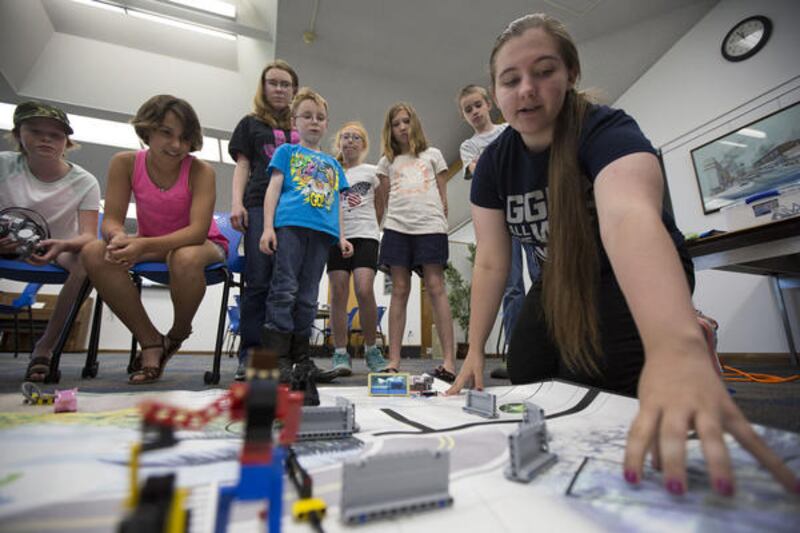
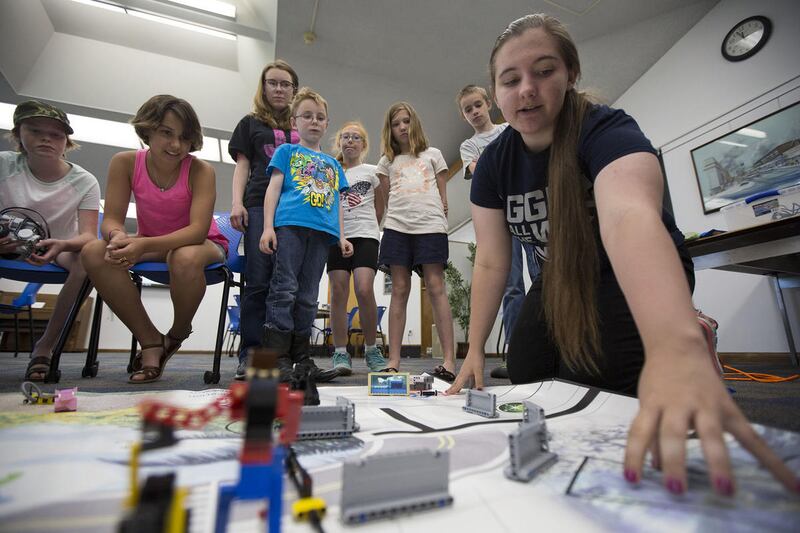
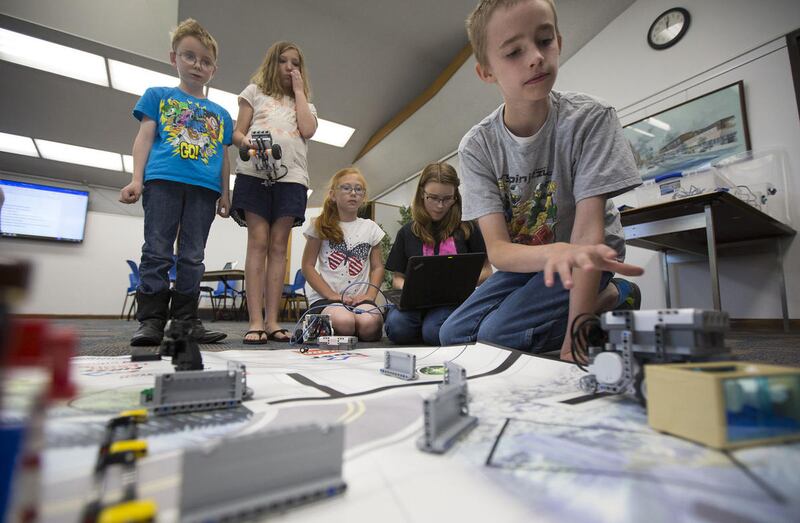
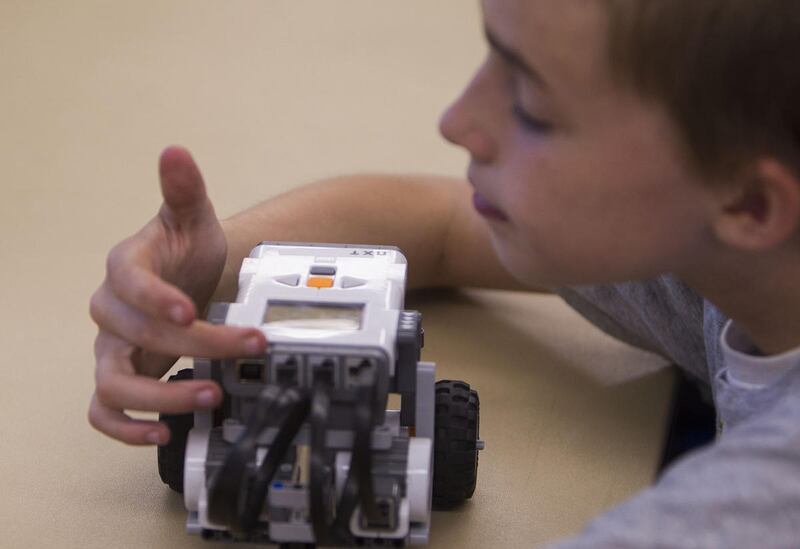
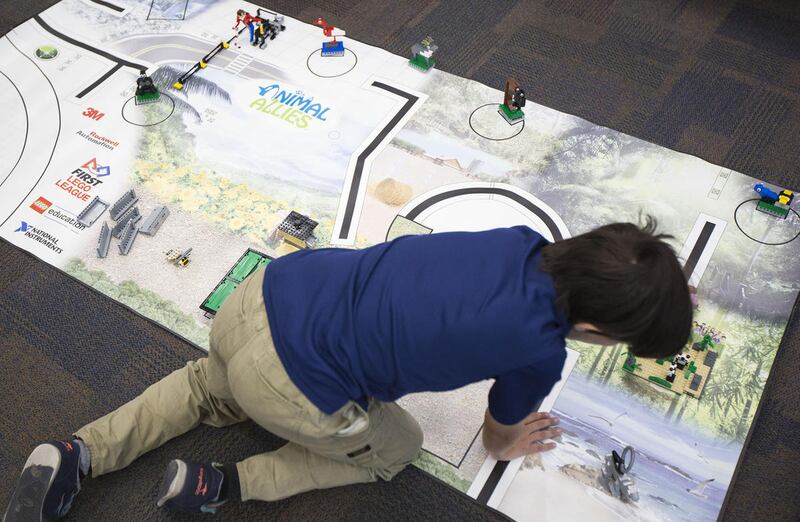
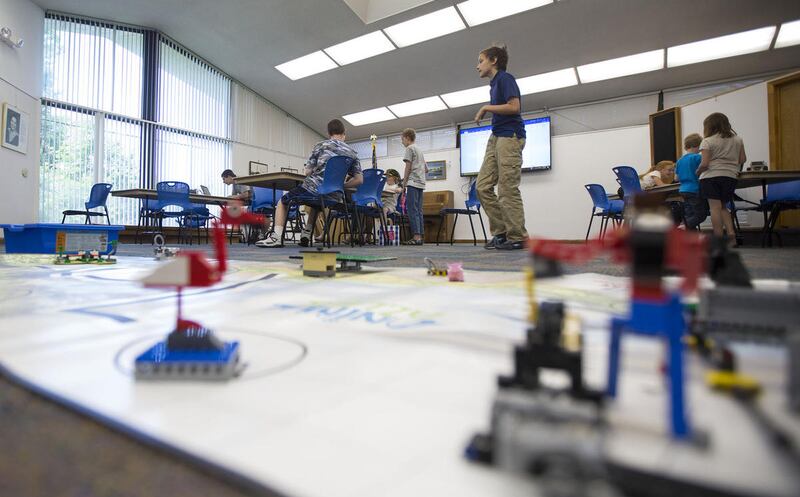
Camp coordinator Melissa Ivie explains the challenges the campers will have to complete with their newly constructed Lego robots while attending the STEM summer camp at the Ruth Vine Tyler Library in Midvale, Friday, June 9, 2017. | Kelsey Brunner, Deseret News
Overcoming a bumpy start
Innovators and educators emphasize the need to introduce American kids to more science, technology, engineering and math.
In a guest column for Forbes, IBM senior vice president Rodney C. Adkins wrote about the changing landscape — and the scramble to adapt. In 2012, the U.S. Department of Labor said just 5 percent of American workers were employed in STEM-fields while accounting for "more than 50 percent of our sustained economic expansion." To be competitive, the STEM pipeline needs to grow.
"When I graduated from college, about 40 percent of the world’s scientists and engineers resided in the U.S. Today that number has shrunk to about 15 percent," Adkins wrote.
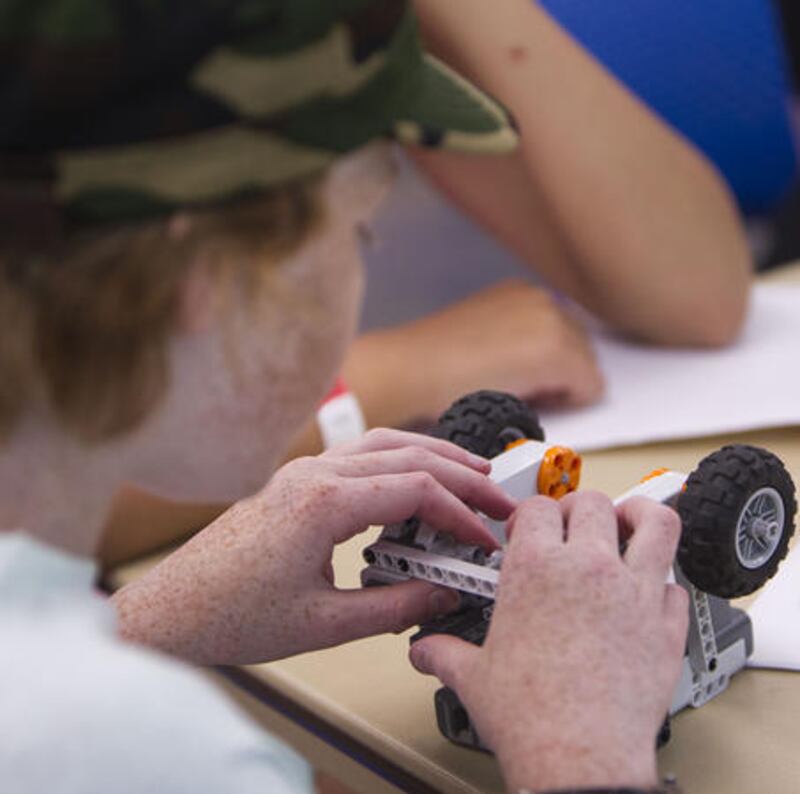
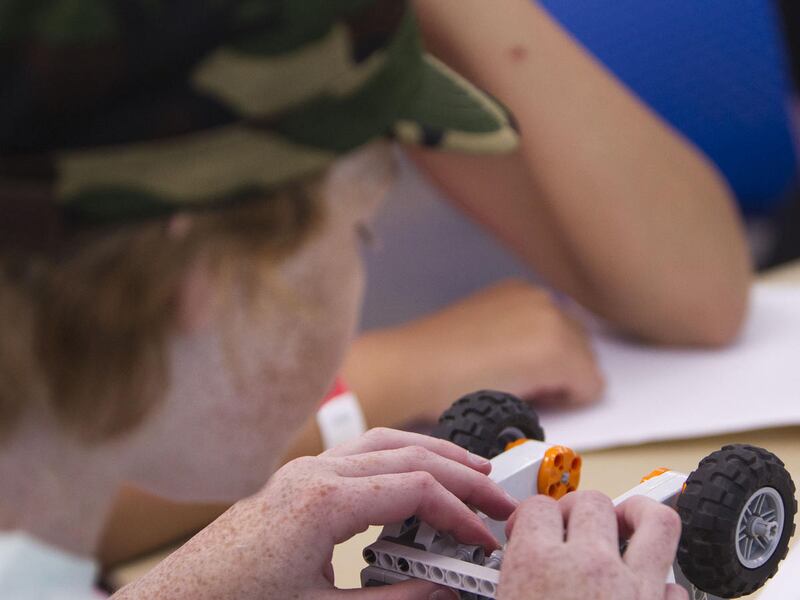
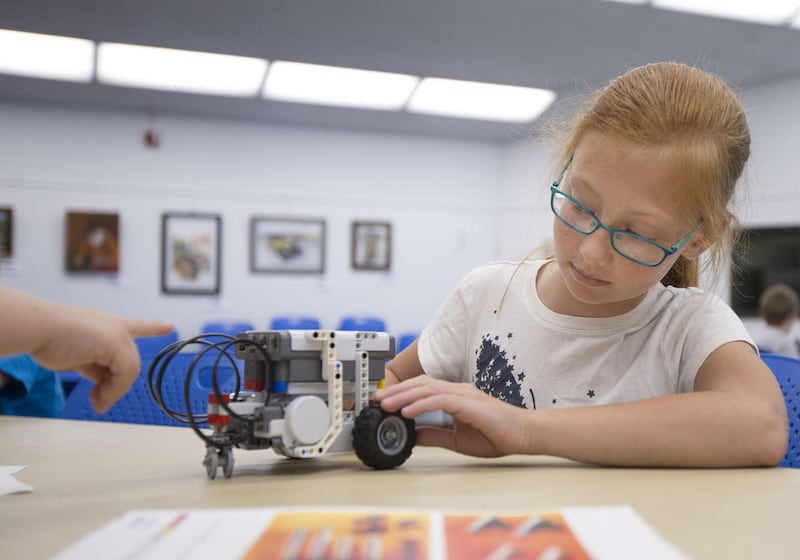
Maddie Gabbitas, 13, works to complete the construction of her Lego robot while attending the STEM summer camp at the Ruth Vine Tyler Library in Midvale, Friday, June 9, 2017. | Kelsey Brunner, Deseret News
Parents are catching on that when their kids develop interest and mastery in those areas, doors to their futures open wider.
The North American Association for Environmental Education emphasizes that STEM learning crosses disciplines and taps into the innate curiosity and wonder of children, even at a very young age. The group notes that as far back as 2007, a Carnegie Foundation commission reported "the nation’s capacity to innovate and thrive in the modern workforce depends on a foundation of math and science learning. They conclude that a sustained, vibrant democracy is dependent upon this foundation in STEM."
Instead of rote learning, STEM camps free youngsters to explore and experiment, to create and question and problem-solve by innovating. It's a very hands-on experience, whether they're learning properties of mud or building robots. STEM can be low-tech or high-tech, but it's always heavy on both creativity and curiosity.
STEM is also a perfect antidote to a problem that can plague kids over summer school breaks. The National Summer Learning Association said students can lose some of what they've already learned, the greatest loss felt by low-income kids. Math takes the biggest dive, as some kids lose close to three months of grade-level skills by the time they return to school after break. Children may lose reading and spelling skills, too.
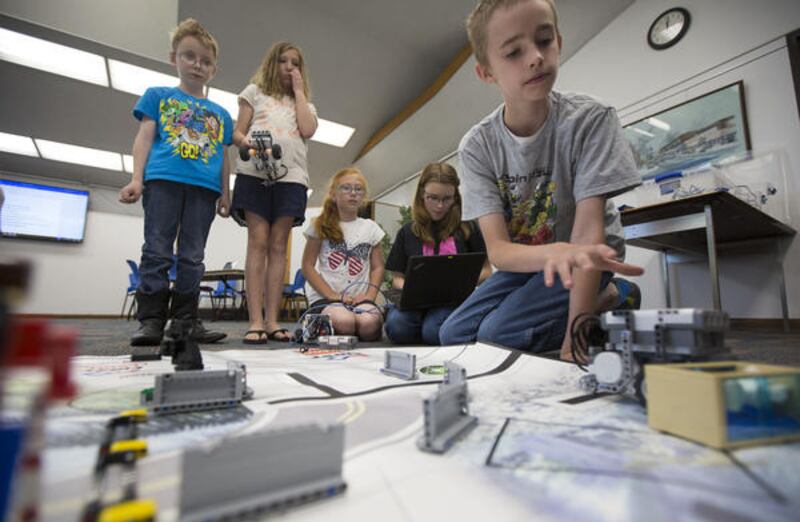
Campers attempt to move a Lego shark tank to a different end of the map using their newly constructed and programmed Lego robots while attending the STEM summer camp at the Ruth Vine Tyler Library in Midvale, Friday, June 9, 2017.| Kelsey Brunner, Deseret News
That's an issue Susan Spicer, early learning program manager for Salt Lake County Library Services, knows all too well, particularly for children starting their education at a disadvantage. Spicer said 40 percent aren’t prepared for kindergarten and keep losing ground because of summer breaks, with devastating results. “If you come into kindergarten behind and then continue to be behind in third grade, what we know for sure is that lots of those kids in ninth grade drop out of school.”
Efforts to correct that lag traditionally focused on literacy, but that doesn't address the whole problem. "The same kids have difficulty with counting. It’s all interrelated,” so experts increasingly fold STEM into learning opportunities like story time, she said.
In addition to math skills, STEM activities encourage the kids to work and plan and play together. “There are a whole bunch of life skills if you interact with a group of kids,” she adds.
Five elements support early learning: talking, singing, reading, writing and playing. Something as simple as making mud — which delights kids — enhances learning. The kids develop fine motor skills, which let them hold a pencil and write and turn pages in books. Skills develop in a way that’s playful and dirty and just fun, said Spicer. “I encourage parents to make the learning part of being a child absolutely fun." That’s the idea behind STEM camps, too.
STEM is also a way to help kids who've been somehow disadvantaged catch up and prepare for college and a career, notes Jordan Gerton, associate professor in the department of physics and astronomy and director of the University of Utah Center for Science and Mathematics Education. The center's STEM camp is funded by the state’s Department of Workforce Services. Most of the 40 participants are refugees who spend three days a week at camp learning computer coding and problem-solving. The youths receive some math tutoring, and on Saturdays they prep for future college entrance exams.
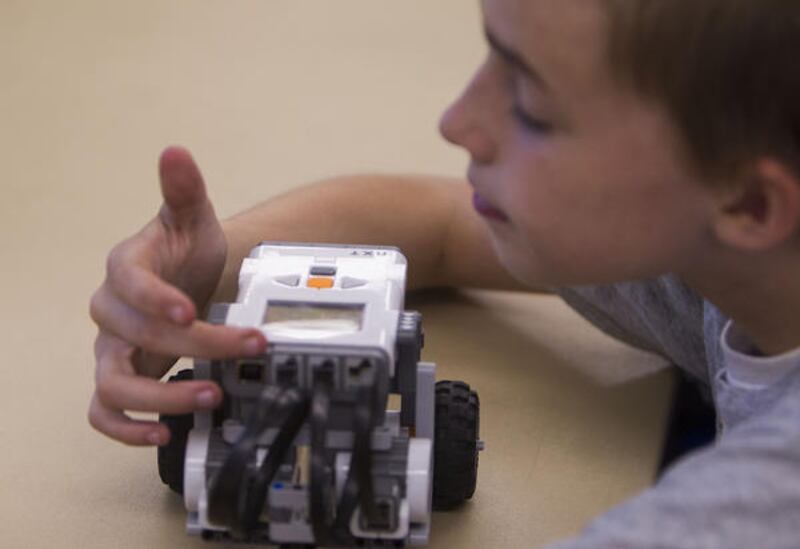
Joseph Digerness, 12, examines his recently completed Lego robot while attending the STEM summer camp at the Ruth Vine Tyler Library in Midvale, Friday, June 9, 2017. | Kelsey Brunner, Deseret News
“We focus on under-represented students because many are first-generation, new arrivals who are dropped into an educational system that is not familiar and there is often not support at home because their parents have not gone through the same educational system and many have had their education interrupted,” said Gerton.
Meeting future needs
Boosting STEM skills by adding interactive learning to summer activities is a natural, said Jayme Cellitioci, senior creative content specialist for the National Investor's Hall of Fame, which partners with others to host weeklong “Camp Invention” programs. Curriculum includes STEM skills and team skills, with an emphasis on entrepreneurship, bolstered by a partnership with the U.S. Patent and Trademark Office.
Besides raising youthful interest in STEM subjects, it points kids toward future career paths, which is essential, she said. “There will be almost no part of our future jobs or our lives that will not be touched by STEM.”
Karen Liu, the Riverton Library youth services librarian, believes America's future depends in part on getting kids excited about STEM. She said the U.S. Department of Labor reports American universities are on track to graduate qualified candidates to fill only 29 percent of computer specialist job openings in the near future, for instance.
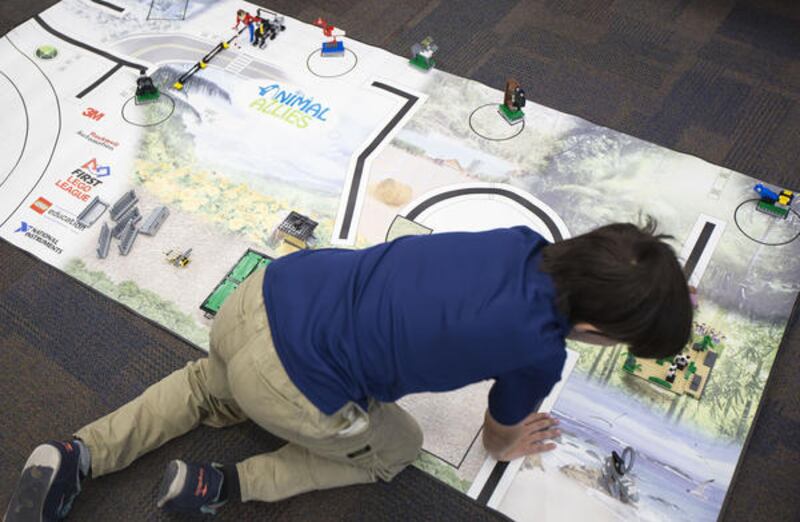
Seth Ivie, 12, helps the camp coordinators lay out the obstacles on the map that the campers will use to test their robots while attending the STEM summer camp at the Ruth Vine Tyler Library in Midvale, Friday, June 9, 2017.| Kelsey Brunner, Deseret News
Liu sees the hands-on experience helping fill that gap and boosting America's global competitiveness in the future as the need for those who have mastered STEM subjects grows.
The camps can help kids see themselves in a more creative and capable light, too. Besides teaching some of the fundamentals of STEM subjects, children are encouraged to be creative problem solvers, which is at the heart of innovation, Cellitioci said. “Do they see themselves as innovators or inventors and/or creative problem solvers? And if not, how might we help them see themselves that way?”
San Antonio-based VentureLab runs summer camps that serve as an introduction to STEM learning, said founder and CEO Cristal Glangchai.
“Technology is changing so rapidly. In the future, I think every career, everything we do is going to be technologically enabled. Everyone needs some comfort with it or they will be left behind,” she said, adding the World Economic Forum has predicted that 65 percent of kids now in grade school will have jobs we cannot at this point imagine.
“I could see virtual reality being a big deal — using it to design prosthetics or organs. We might even print 3D organs we can put inside people," she predicted.
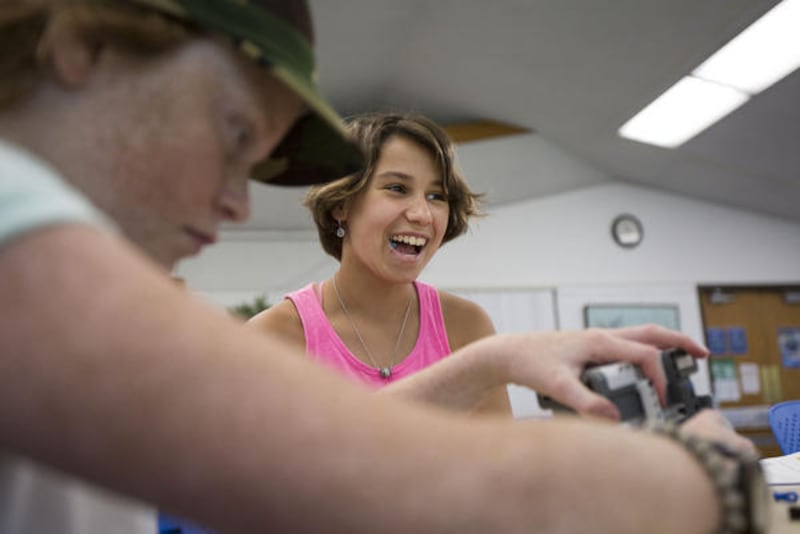
Maddie Gabbitas, 13, left, and Liliana Pliego, 11, finish their robot while attending the STEM summer camp at the Ruth Vine Tyler Library in Midvale, Friday, June 9, 2017. | Kelsey Brunner, Deseret News
Early next year, HarperCollins will release her book, “Venture Girls,” with tips and activities to encourage girls to love STEM. Her first suggestion in “7 Tips for Raising Entrepreneurial Girls” is to “make play time curiosity time.”
Touch and absorb
The hands-on setting for students at STEM camps offer varied benefits over the lecture hall. “Until they apply it, it may not impact them in the same way as when they are creating and designing and building hands on,” said Liu. “They learn through this process. There’s also a socialization aspect that we are missing in parts of our society.”
Like other STEM proponents, Glangchai said kids need to be able to get messy. And to fail. And to try again.
“There’s a lot of freedom in STEM camp activities because you’re not tied to and held accountable for state standards and testing,” said Gerton, noting that freedom to explore is largely missing from schools.
Gerton believes those who go into STEM careers learn to be independent thinkers and problem solvers. They are creative. They also learn to be part of a team.
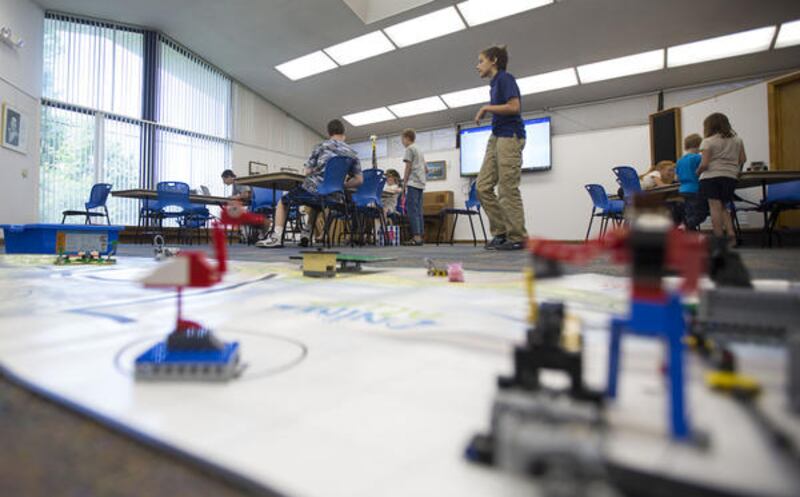
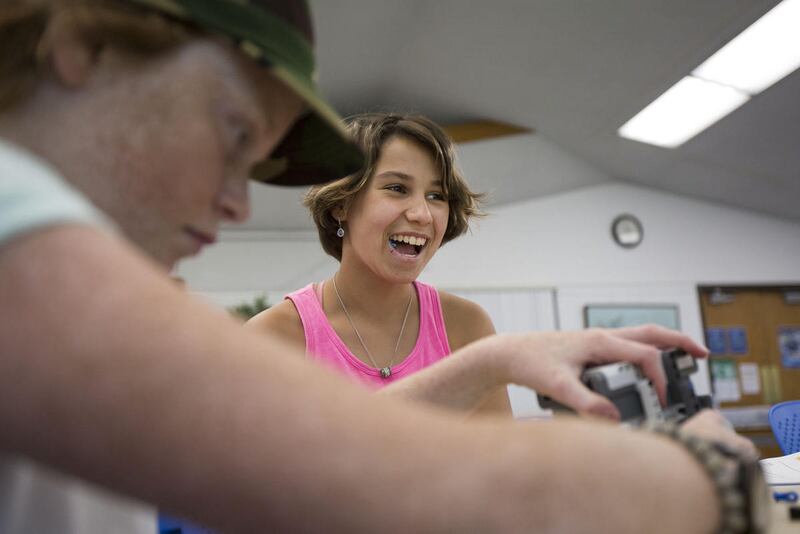
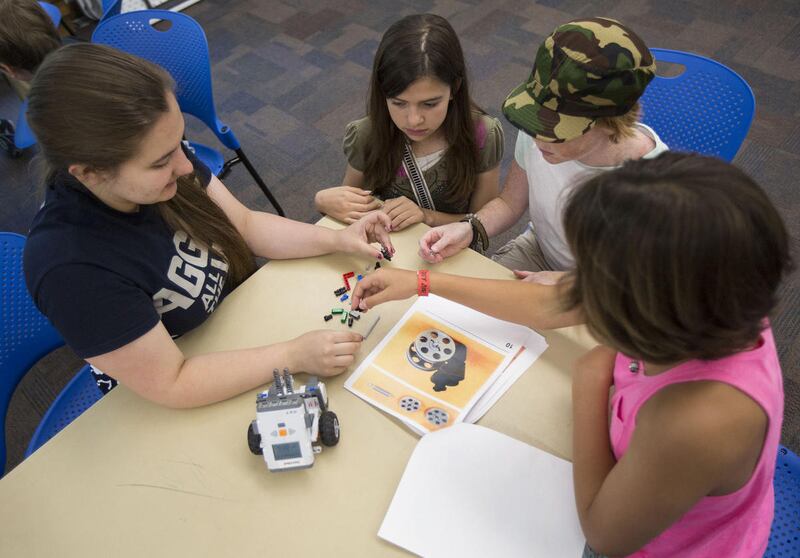
Campers work in teams to build Lego robots that will be used to finish challenges on a map while attending the STEM summer camp at the Ruth Vine Tyler Library in Midvale, Friday, June 9, 2017. | Kelsey Brunner, Deseret News
One of Glangchai’s goals has been to give girls confidence at a young age in STEM subjects. But she notes schools teach children to fear failure. “Failure’s bad. A C is bad. Get good grades to get into college.
“For me, failure is honestly just part of the scientific process. It works or it doesn’t. But it’s not a reflection of you personally. Your hypothesis wasn’t correct. You have to try again. It’s really giving kids the confidence to try something new and get out of their comfort zone.”
When collaboration — bouncing ideas off each other and finding solutions — is fun, the lessons stick in a different way, Glangchai said. Kids can have a great time and stretch both imagination and skills. It's an aspect VentureLab has tried to build into its camps — youths working together to solve real-world problems, create products and potentially start a business.
Boys and girls approach things differently. Boys will tackle tasks like building or taking things apart for the sake of doing it.
“Girls need to see how their learning of STEM can help society," Glangchai said. "If you can teach girls why it’s important to code or to 3D print and show them how they can solve a problem by learning that skill, they understand why it’s important."
Finding a fit
There are many approaches to involving kids in STEM, or STEAM. Just in Salt Lake County, for example, Red Butte Garden teamed with Discovery Gateway to let first- and second-graders explore the natural world, spending part of each day in the gardens, then doing experiments and creating art.
The Leonardo offers three camps for kids K-3 looking at the physics behind light and color, with an emphasis on the science of color and making art.
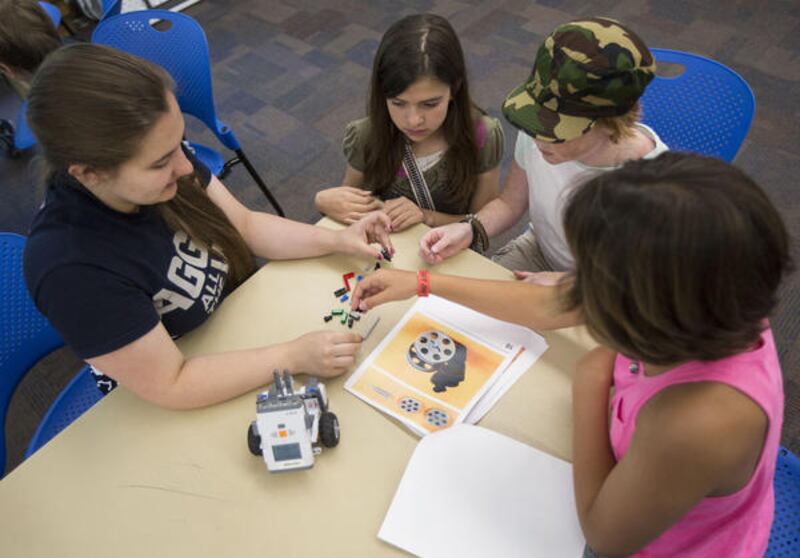
Camp Coordinator Melissa Ivie, left, helps campers Camila Zuniga, 12, Maddie Gabbitas, 13, and Liliana Pliego, 11, look at the instructions to complete the Lego robot while attending the STEM summer camp at the Ruth Vine Tyler Library in Midvale, Friday, June 9, 2017. | Kelsey Brunner, Deseret News
The Clark Planetarium created a STEM camp for students in grades 4-6 on the theme of space exploration.
Back at the Riverton Library, Gabriel said he never thought of himself as a creative person, but his parents surprised him by signing him up for the STEM camp and he’s been pleased to find he can be creative. He’s also made new friends.
Kameryn said she signed up because she likes to build things and thinks engineering is a great hobby for anyone. She talked Livia into coming with her, but her pal’s no stranger to STEM camps. Livia thinks this one, though, might be the best because she's building new things with stuff she probably has at home and she can do more of it whenever she wants. “Fun with everyday things,” said the girl.
That’s part of the point, said Riverton librarian Liu. “People are intimidated," thinking science has to be high-tech and may be out of reach. "We're using low-tech stuff they have at home to teach science in a fun and engaging manner.”
Livia’s dad, Dean Anderson, is happy whenever he sees Livia and her older brother, Owen, excited about learning. Any time he can get his kids involved in something involving academics, science, teamwork and a common goal, “I’m all for it.”
Email: lois@deseretnews.com, Twitter: Loisco