



Good movies can get you in the mood for more, often sending film-watchers in search of similar flicks to feed the hunger.
So it is with “Dunkirk,” which is a mind-blowing, visceral film, especially on an Imax screen. In fact, the company’s trademarked catchphrase — “The Imax Experience” — is apropos in this instance. It really is an experience.
“Dunkirk” is one of those rare movies created with the huge Imax screens and high-definition projection systems in mind.
Writer-director Christopher Nolan, who has filmed portions of some of his earlier films with Imax cameras — most notably some key action scenes in “The Dark Knight” — went all the way here. Well, three-quarters of the way.
According to Nolan in various interviews before the film’s release last weekend, 75 percent of “Dunkirk” was shot on film with 65mm Imax cameras — unusual in this age of nearly everything being shot digitally. (Films aren’t really “films” anymore; they’re “digitals,” or perhaps “pixels.”)
None of which is to suggest the film is perfect. As with other Nolan films, the dialogue is often garbled or drowned out by the incessant rumbling music; the timeline jumps around, sometimes incomprehensibly, and the story is paper-thin, with characters that are merely cardboard stereotypes.
But if you’re happy with immersive visuals on a grand scale, this is the picture for you.
Still, it left me wanting to return to some of my old favorites, great old movies that relate true stories about World War II — and which actually have, you know, a story and fleshed-out characters.
So here are some suggestions. You won’t find anything post-1970, however — no “Hacksaw Ridge” or “The Zookeeper’s Wife” or “Unbroken” or “Schindler’s List” or any other of the perfectly acceptable World War II films of the past 40-plus years.
All these are among my personal favorites, and if you haven’t seen them, consider this a recommendation. Again, all are based on true stories.
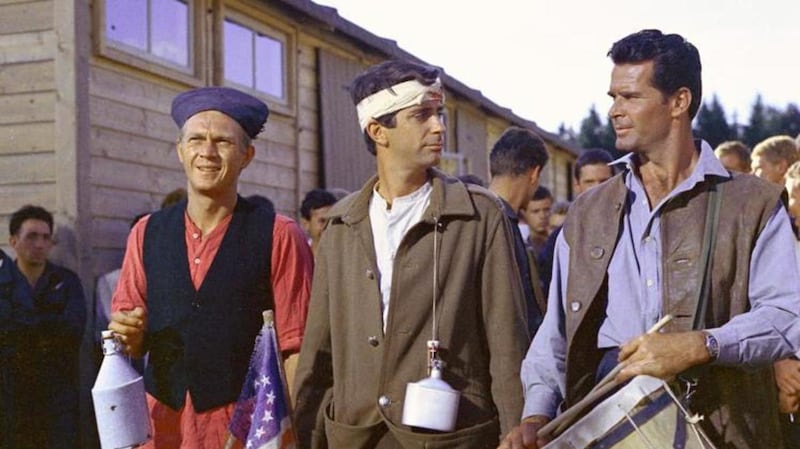
“The Great Escape” (1963). For pure entertainment, few films beat this one, with exciting action, humor and heart and an all-star cast that includes Steve McQueen, James Garner, Richard Attenborough, Charles Bronson and James Coburn. (A similar British film that’s worth seeing is “The Password Is Courage,” which was released just a few months before this one.)
“Tora! Tora! Tora!” (1970). If you’re interested in a detailed examination of the attack on Pearl Harbor, nothing matches this meticulous re-creation, told from both the American and Japanese viewpoints.
“To Hell and Back” (1955). Audie Murphy was one of the most decorated combat soldiers of World War II, and this movie, based on his autobiography, is a vivid account of his service. Murphy, who became a movie star in the early 1950s, plays himself.
“Reach for the Sky” (1956, b/w). The life of athletic British Royal Air Force pilot Douglas Bader (Kenneth More) is a story of courage, determination and sheer stubbornness, as he loses his legs in a plane crash but remains determined to fly again when war breaks out.
“Patton” (1970). General George S. Patton was a highly effective leader and strategist and one of the war’s more controversial figures, and this no-holds-barred look at his career benefits from Francis Ford Coppola’s Oscar-winning script and the powerhouse performance by George C. Scott, who also won, and famously declined, the best actor Academy Award.
“Thirty Seconds Over Tokyo” (1944, b/w). The plotting and execution of America’s first air strike on Japan, four months after the raid on Pearl Harbor — which came to be known as “The Doolittle Raid” — is chronicled here, with Spencer Tracy as Lt. Col. James Doolittle, supported by Van Johnson, Robert Walker and Robert Mitchum. It's notable for its painstaking attention to historical detail and use of real combat footage.
“The Man Who Never Was” (1956). Clifton Webb stars as British Lt. Commander Ewen Montagu, who came up with a scheme to use a nonexistent soldier to dupe the Nazis into believing the Allied invasion of Sicily would actually take place in Greece. Suspense builds as it plays out, bolstered by an expert cast that includes Gloria Grahame and Stephen Boyd.
“The Longest Day” (1962, b/w). There were many bloated, star-studded, widescreen World War II epics designed to get TV watchers out of their homes, but this one is by far the best, a faithful re-creation of the Invasion of Normandy, told from both the Allied and German points of view. Three directors put many stars through their paces, most in cameos.
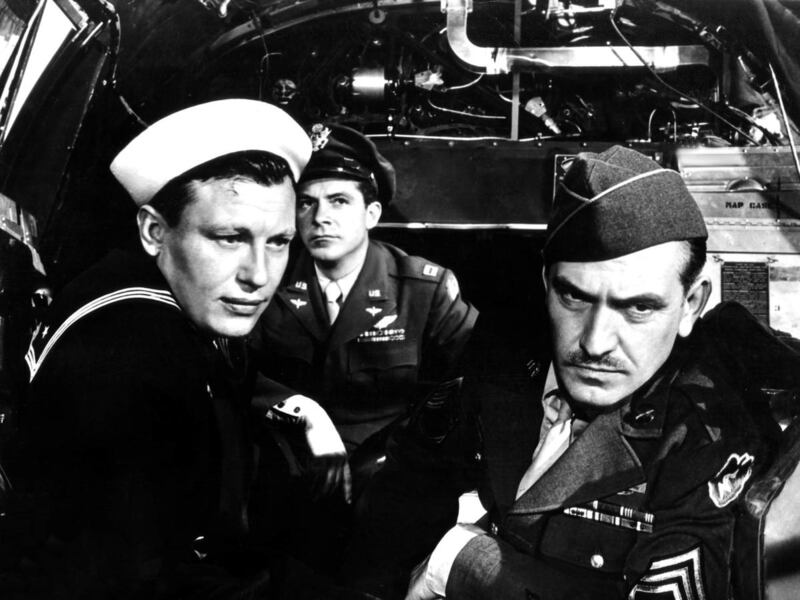
“The Best Years of Our Lives” (1946). Consider this a bonus. It’s not actually a true story, though it’s based loosely on real life, but no film has ever handled the postwar transition to civilian life better. Three WWII veterans return home, a sailor (Harold Russell) who has lost his forearms, a banker (Fredric March) struggling with alcoholism and a blue-collar Joe (Dana Andrews) who loses his wife and can’t find a job. It is a heartfelt exploration of post-traumatic stress disorder before we had a name for it, and one of the best movies ever made.