

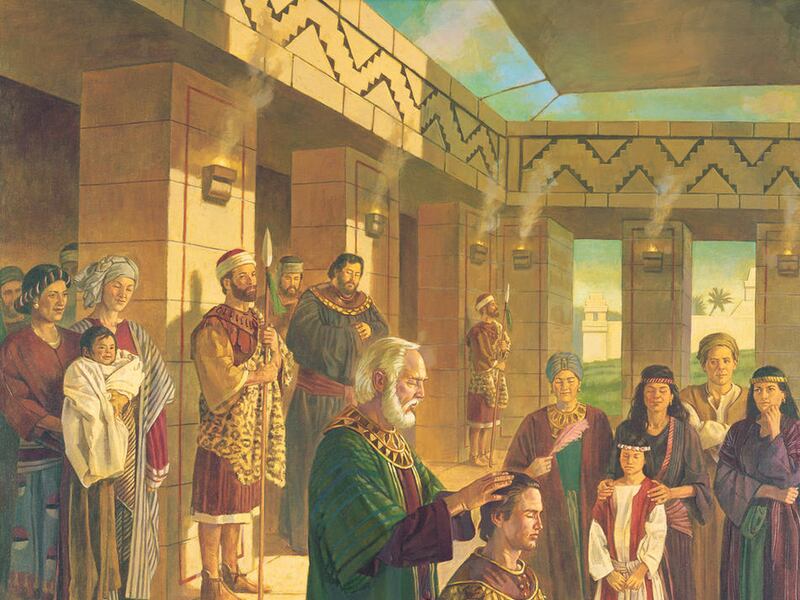
Realizing that none of his sons will accept the throne, the Book of Mormon’s King Mosiah proposes to abolish the Nephite monarchy, arguing from human equality. Some skeptics regard that as plain evidence that the Book of Mormon was written in modern democratic America. Closer inspection, though, suggests otherwise.
“I command you,” Mosiah says, “that ye have no king; that if these people commit sins and iniquities they shall be answered upon their own heads. For behold I say unto you, the sins of many people have been caused by the iniquities of their kings; therefore their iniquities are answered upon the heads of their kings. And now I desire that this inequality should be no more in this land, especially among this my people. … And many more things did king Mosiah write unto them, unfolding unto them all the trials and troubles of a righteous king, yea, all the travails of soul for their people, and also all the murmurings of the people to their king; and he explained it all unto them. And he told them that these things ought not to be; but that the burden should come upon all the people, that every man might bear his part” (Mosiah 29:30–34).
In other words, Mosiah approaches the question from a monarch’s perspective, not a democrat’s. The undue burden that kingship imposes even on righteous kings worries him. Inequality is inherent in the Nephite monarchical system, and, because rulers bear responsibility for the mistakes of their subjects as well as their own, kings are its victims.
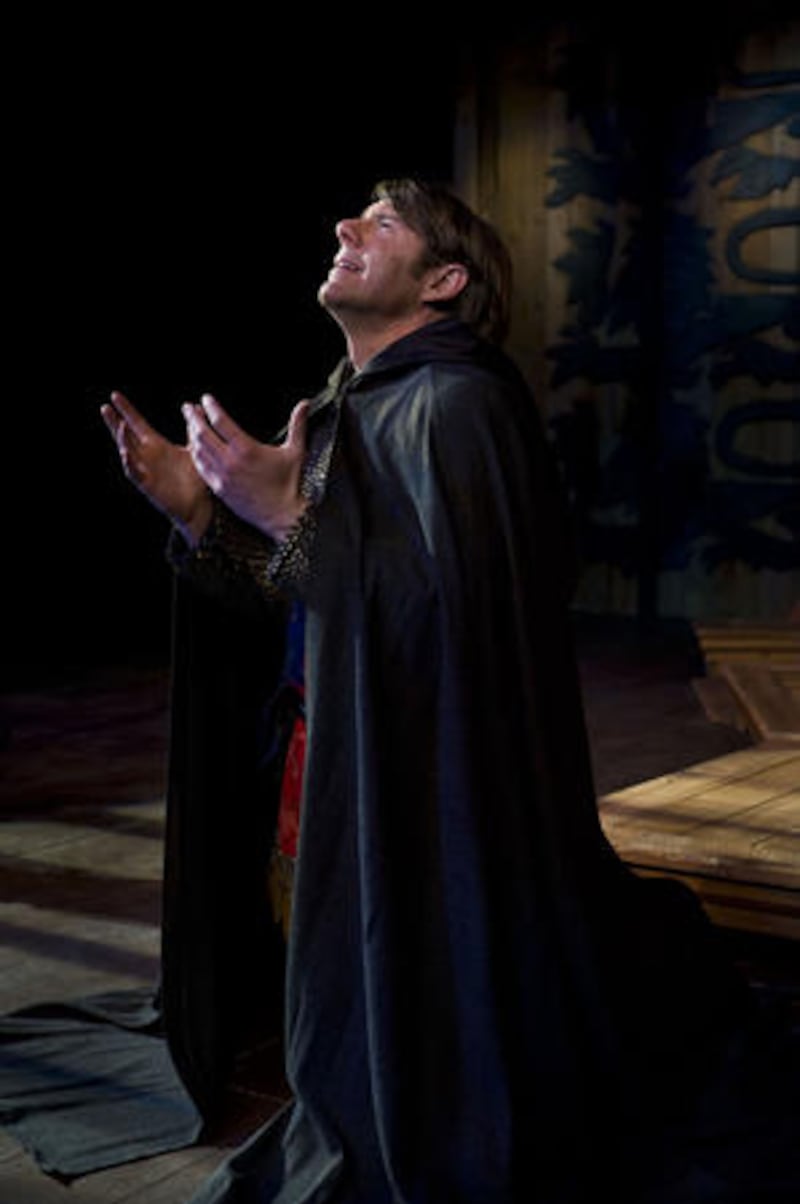
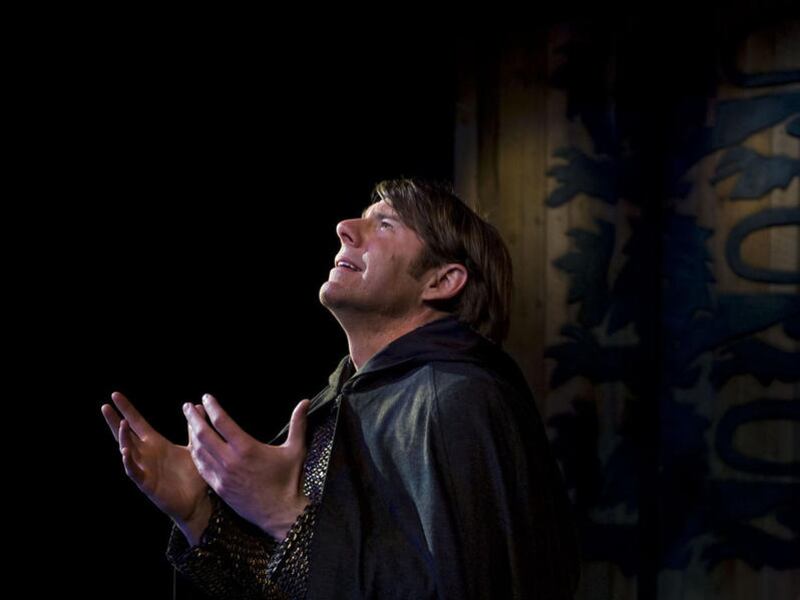
Brian Vaughn as King Henry V in the Utah Shakespearean Festivals 2009 production of "Henry V."| Utah Shakespearean Festival
Both king and commoners express similar views in Shakespeare’s historical play “Henry V” (4.1.105–301). Unable to sleep on the eve of the momentous battle of Agincourt (1415), Henry wanders among his heavily outnumbered troops, disguised as an ordinary soldier. Conversing with some of them, he’s unprepared for what he hears.
“If his cause be wrong,” says one, “our obedience to the king wipes the crime of it out of us.”
“But if the cause be not good,” responds another, “the king himself hath a heavy reckoning to make. …(I)f these men do not die well, it will be a black matter for the king that led them to it.”
Understandably, such talk troubles Henry. Even after his men have gone off to bed we see him among the slumbering soldiers, speaking with somewhat bitter envy to himself of their simple lives, so free of responsibility:
“Upon the king! let us our lives, our souls,
Our debts, our careful wives,
Our children and our sins lay on the king!
We must bear all. …
What infinite heart’s-ease
Must kings neglect, that private men enjoy! …
I am a king … and I know … (that no king)
Can sleep so soundly as the wretched slave,
Who with a body fill’d and vacant mind
Gets him to rest.”
Whether regarded as Henry’s or Shakespeare’s, these are a king’s thoughts, not a commoner’s — as are Mosiah’s.
Shakespeare’s Henry is acutely aware that kings, although bearing extraordinary responsibility, are merely human. Thus, his ironic words (spoken while he’s still disguised) convey a serious point:
“I think the king is but a man, as I am: the violet smells to him as it doth to me; the element shows to him as it doth to me; all his senses have but human conditions: his ceremonies laid by, in his nakedness he appears but a man; and though his affections are higher mounted than ours, yet, when they stoop, they stoop with the like wing. Therefore when he sees reason of fears, as we do, his fears, out of doubt, be of the same relish as ours are.”
Compare the sentiments of King Benjamin, Mosiah’s father:
“I am like as yourselves, subject to all manner of infirmities in body and mind; yet I have been chosen by this people, and consecrated by my father, and was suffered by the hand of the Lord that I should be a ruler and a king over this people” (see Mosiah 2:10–11).
Moved by Mosiah’s deep feelings, the people “relinquished their desires for a king, and became exceedingly anxious that every man” — even kings — “should have an equal chance throughout all the land; yea, and every man expressed a willingness to answer for his own sins” (Mosiah 29:38).
(For further reading, see Daniel Peterson, “Authority in the Book of Mosiah” publications.mi.byu.edu/.)