

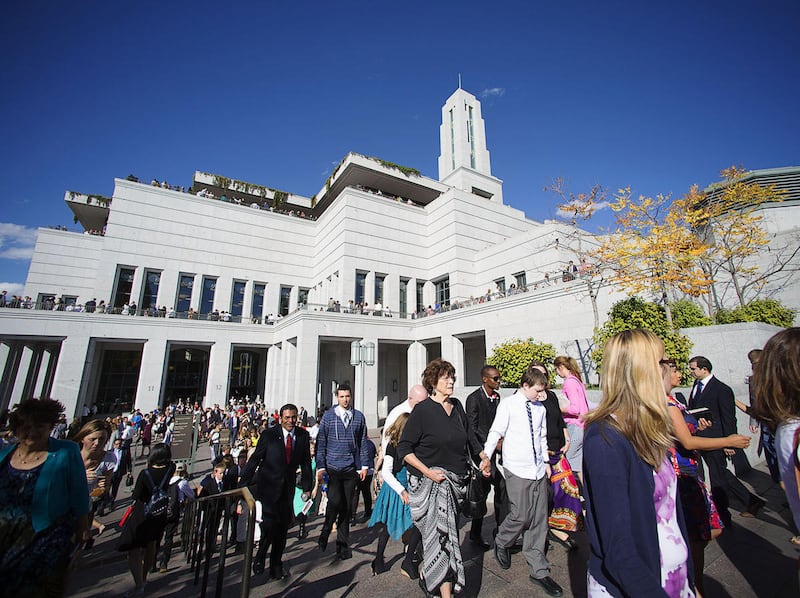
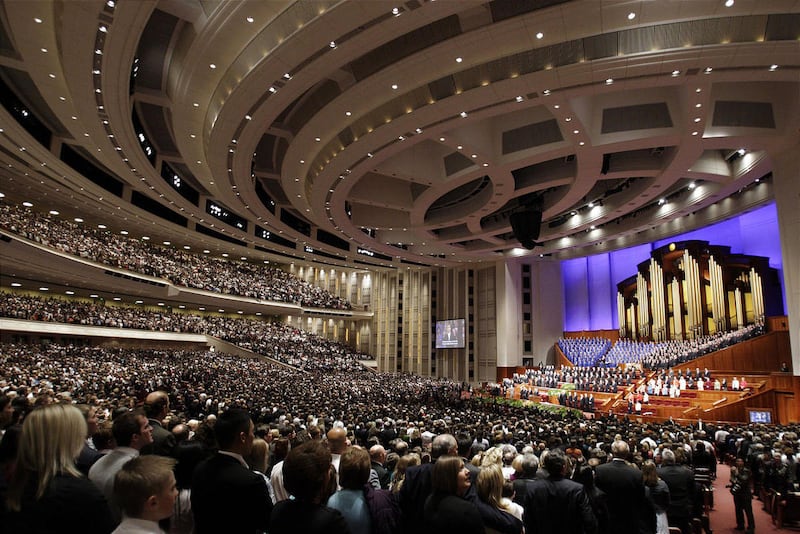
This weekend, Temple Square in Salt Lake City will be filled with throngs of people attending the general conference of The Church of Jesus Christ of Latter-day Saints. Crowds of 21,000 will assemble for each of the five sessions, thousands more will wander the grounds and millions around the world will gather in remote chapels or around screens to be part of this unique gathering. Gathering is a good thing for all people.
American chef and author Alice Waters said, “This is the power of gathering: It inspires us, delightfully, to be more hopeful, more joyful, more thoughtful: In a word, more alive.”
Humans have a need to gather.
People gather at the obvious places like coffee shops, parks, playgrounds, reunions and family funerals. They also come together in unique ways at sporting events and symphonies. In times of tragedy, nationally or locally, people gather at vigils to grieve, mourn and collectively heal. There is simply something magical to gathering. Even the most introverted of introverts are profoundly stirred emotionally when they are part of something bigger than themselves.
That longing to connect, to be part of a story, a movement or a family is hardwired in humans. Researchers Shira Gabriel, Jennifer Valenti, Kristin Naragon-Gainey and Ariana Young shared in a 2017 paper their research showing how gathering, or collective assembly as they framed it, contributed to a sense of meaning to the lives of those they studied.
The internet and digital devices have, in many ways, short-circuited gathering. It's easier to just post a picture than to drive across town to interact or assemble. While getting “FaceTimed” into a child’s recital or soccer game is great for those far away, it can never replace the power of being there.
While getting “FaceTimed” into a child’s recital or soccer game is great for those far away, it can never replace the power of being there.
University of Houston research professor Brene Brown wisely challenged her readers to “show up for collective moments of joy and pain so we can actually bear witness to inextricable human connection.” Collective human connection through gathering, in celebration or sorrow, is the fabric that binds individuals to each other, to their communities and to important institutions.
Russell M. Nelson, president of The Church of Jesus Christ of Latter-day Saints, which owns this paper, understands the sense of sacredness and connection that is found in coming together. He crisscrosses the globe, gathering members of the faith together in buildings, convention halls and sporting arenas. Some gatherings are for a few hundred in a remote part of the world while others assemble thousands. A few weeks ago at Safeco Field in Seattle, nearly 50,000 came together.
As President Nelson entered the stadium, the members respectfully stood to honor the convener of a most unique and historic gathering. In an instant, the massive crowd was united in a moment that produced a sense of the sacred that forever connected them all. Brown, in her book "Braving the Wilderness," posited, “Crying with strangers in person could save the world.” That seems to be a driving force of President Nelson’s exhaustive global travel schedule.
Some may question a 94-year-old going to such lengths to be with members of a church. As a world religious leader, President Nelson demonstrates a principle shared by poet John O’Donohue, “The work of holiness in not about perfection or niceness; it is about belonging.” This weekend will likely be filled with such messages and such moments of belonging.
While gatherings naturally happen within religious organizations and during the holiday season, the reality is gathering is an ongoing necessity for human flourishing.
So while the world continues to isolate itself, we suggest gathering instead. The result will be a society of connected individuals, “more hopeful, more joyful, more thoughtful: In a word, more alive.”