

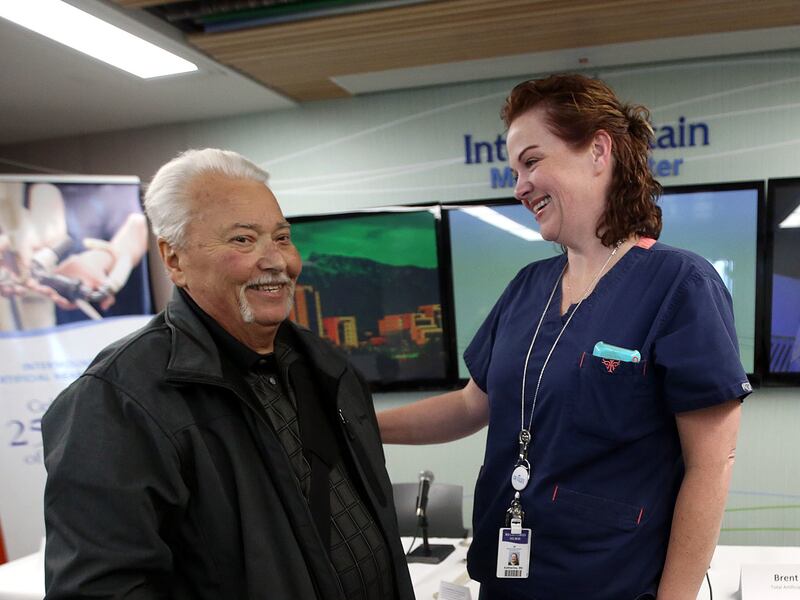

SALT LAKE CITY — For a time, Brent Haupt's cardiomyopathy robbed him of the heart he was born with, but it never deprived him of his sense of humor.
While Haupt spent much of 2015 cooped up at Intermountain Medical Center with an entirely artificial heart, he kept a statue of the Tin Man from “The Wizard of Oz” in his hospital room as a reminder of his end goal.
"I was just a man in search of a heart," Haupt says wryly.
In October 2015, after six months of waiting, an organ donor's heart became available for transplant, and Haupt's search came to an end. After a week of getting used to his real, live human heart, Haupt was able to leave the hospital. Three days after that — perhaps sooner than his doctors would have liked — he was back at work.
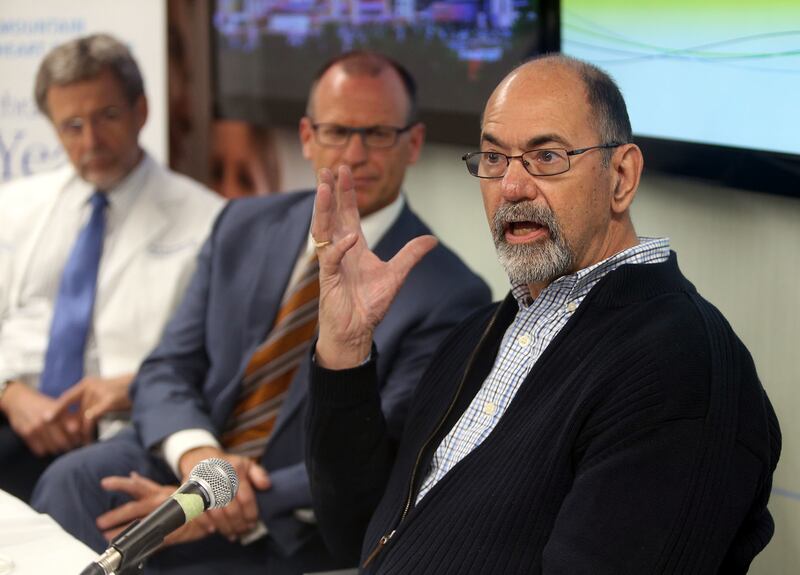
"When I think back at the army of people in this hospital, in this building, that made this all possible, it’s humbling," Haupt said Tuesday, briefly overcome with emotion while sitting next to his surgeon, Dr. Bruce Reid. "I’m very grateful for that."
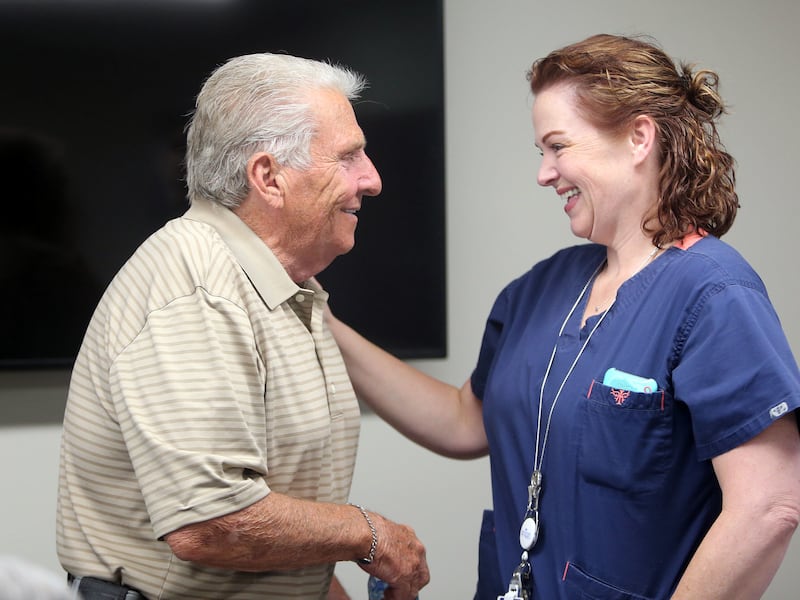
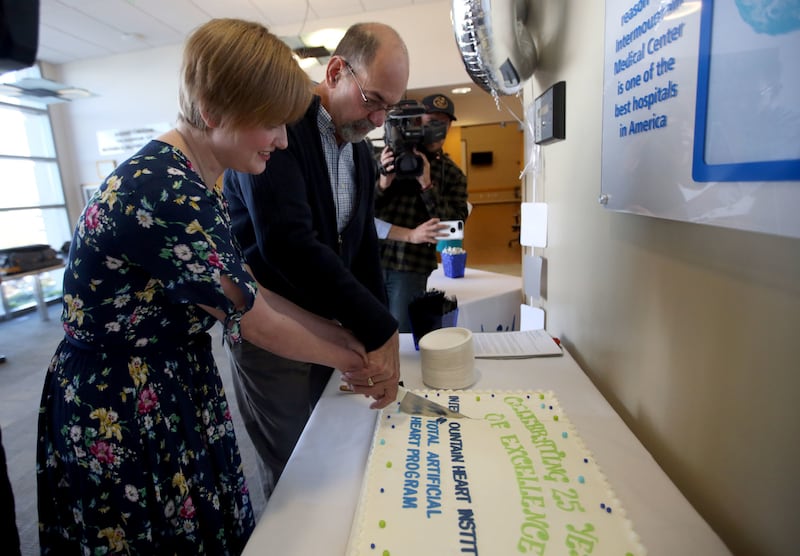
Haupt, of Herriman, returned to Intermountain Medical Center Tuesday to share his story of recovery in advance of a 25-year anniversary celebration this weekend honoring the founding of the Intermountain Artificial Heart Program.
On Saturday, patients and their families who have benefitted from partial or complete artificial heart replacements at Intermountain will reunite with their doctors and other caregivers to commemorate the far-reaching effects of the technology. More than 300 people are expected to attend the celebration, held once every five years.
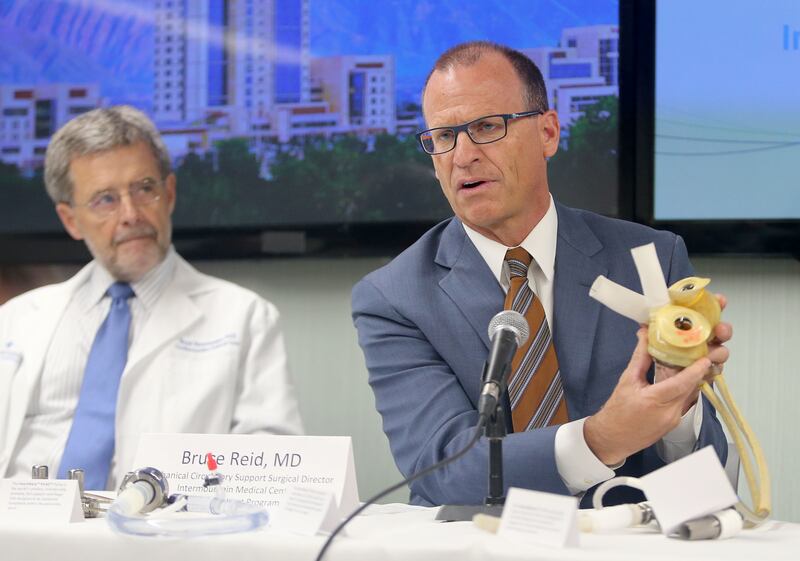
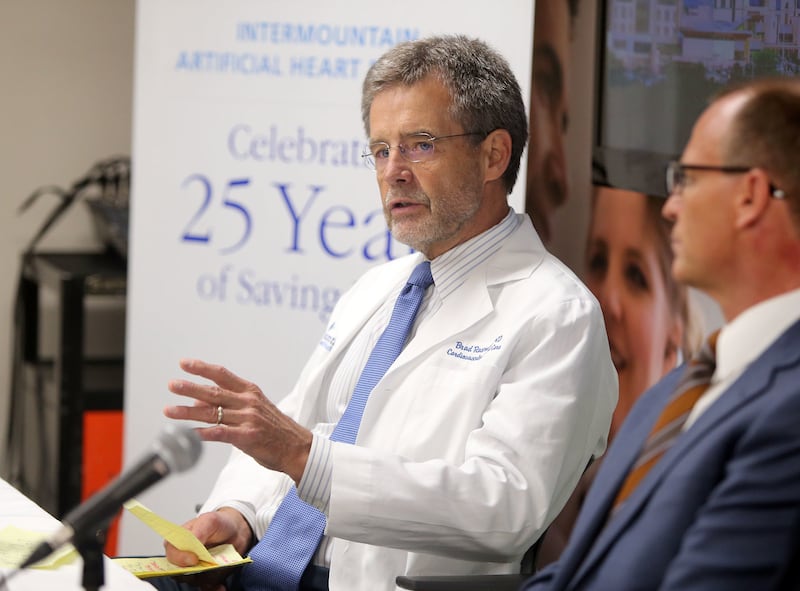
Reid, a cardiothoracic surgeon and the mechanical circulatory support medical director of the Intermountain Medical Center Artificial Heart Program, said the gratitude for the program's history is a two-way street between doctors and patients.
"We learn something from every one of our patients. Every patient, we gain a little more experience, a little more expertise," Reid said. "Thank you for helping us to be better."
According to Intermountain spokesman Jess Gomez, the hospital system is one of only a handful in the country capable of implanting total hearts, which "replace the native heart entirely rather than just assist it."
Since 1993, Intermountain doctors have implemented 605 total devices, with 232 of them designed as a holdover until a heart transplant becomes available. Other devices Intermountain uses are designed to assist a patient for the rest of their life.
"The problem with heart transplants is there just aren't enough donors," which is why it's critical to have another way to replace or, alternatively, temporarily sustain a person's failing heart, Reid said.
Gomez said Intermountain was the largest participant in a significant study into a therapy that uses a tool called a left ventricular assist device to help patients who were "fatally ill but ineligible for a transplant." Intermountain was also an early user of the most compact left ventricular assist device that is currently available, he said.
Chad Probasco, an outreach coordinator with the Intermountain Heart Institute, said even now the "technology is really changing" and patients can expect to see "really amazing advances in the next 20 years." Since 1993, he said, "we've seen the program grow, we've seen the lives — the differences that it makes."
"We can really make those lives better," said Probasco, who is also a registered nurse. "I mean, that's why you get into health care. … It's rewarding."
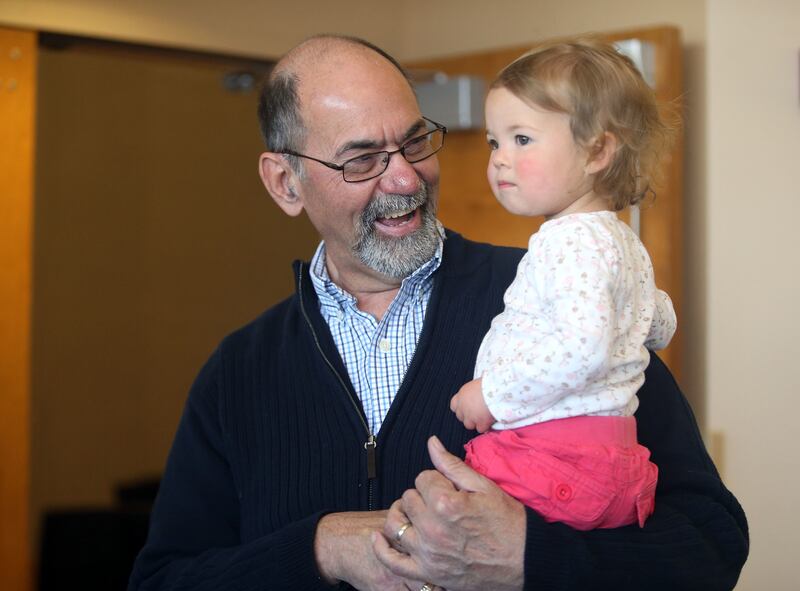
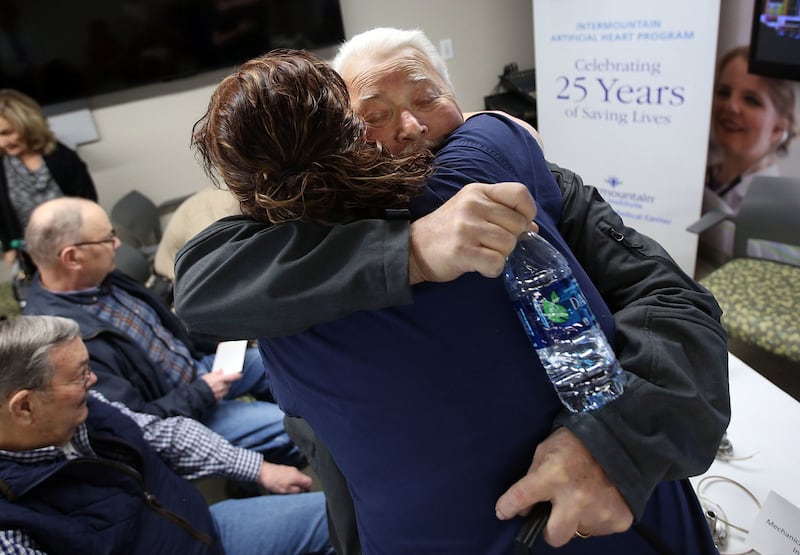
One person whose life was changed by leading-edge technology, who was a trial patient for a left ventrical assist device in 2008, is 79-year-old Richard Morris, of Hooper, who first developed heart problems when he was struck by lightning at age 17.
Morris is expected to use the device for the rest of his life, as a live heart transplant is considered too risky at his age. He is currently one of just 50 people worldwide to have lived 10 years or more using a left ventrical assist device.
"I'm just thankful to be here. It's bought me time (with) my family," said Morris, who must always keep a portable case with him containing backup batteries in case there are problems with his device. "I got to see my first great-grandson born, and be with my family. Being alive is the main thing."
Morris' wife, Elaine Morris, said she and her husband agreed to the trial treatment 10 years ago after deciding together, "What do you have to lose?"
"Ten years later, what can you say? It's been a miracle," she said. "We are so grateful."
The two now enjoy a fulfilling quality of life in which Richard Morris is well enough to frequently travel and enjoy the outdoors, his wife said.
"There's no praise you could give them that would be high enough," Elaine Morris said of the Intermountain providers who implanted her husband's device and cared for him. "They're like family."
More than 40 medical staff are now part of the Artificial Heart Program at Intermountain.
"It's been an incredible evolution of both technology and how we select and manage patients. … Between the machines and the people, it's pretty incredible," said Dr. Brad Rasmusson, the Thoracic Intensive Care Unit medical director for the program.
Rasmussen said the advances in artificial heart technology have opened doors for patients who may have been likely to die on the transplant waiting list a quarter of a century ago.
"These patients essentially had a terminal disease, and now we have the means to support them," he said.
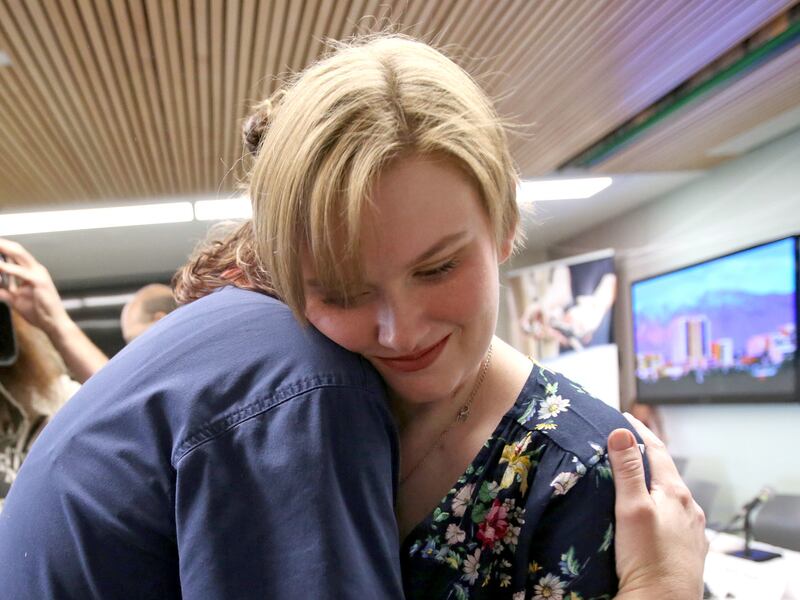
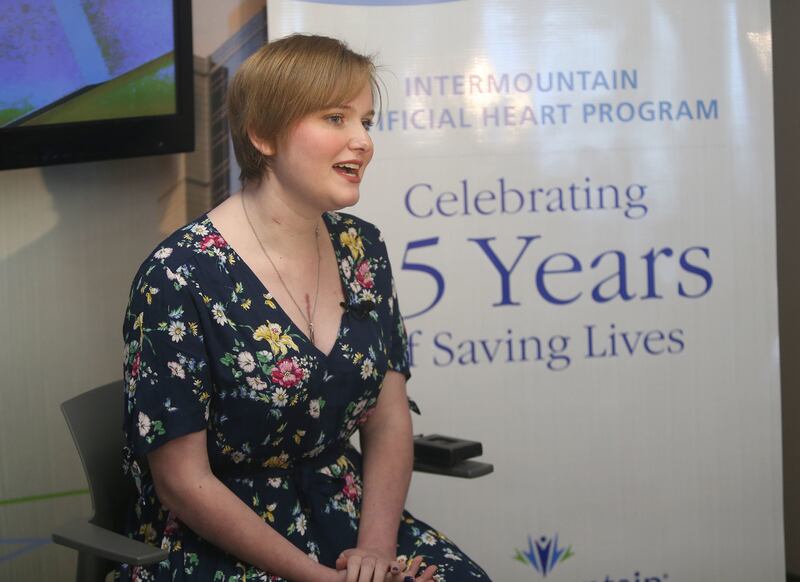
One of these patients is 21-year-old Hannah Schramm, of Vernal, whose heart quickly started failing after a strange case of the flu led to her immune system attacking her body.
"It's not something you anticipate," Schramm said. "It was a shock."
Schramm's ordeal included a two-week period in a coma, and she received a left ventricular assist device and a right ventricular device about one week apart last fall — a combination of implants she said is very rare but was needed in her case.
For a little more than four months, Schramm was confined to the hospital while she slowly recovered using her artificial devices. During that time, her caregivers at Intermountain Medical Center "became my family," she said.
Signifcantly weakened from her heart's deficiencies, Schramm kept hope alive "because I knew there was a chance I could still live my life" if she could receive a transplant, she said.
The devices kept Schramm alive until an organ donor's heart became available in February. Within two weeks, she was home, and is already living a normal lifestyle again.
"I can do anything I set my mind to," Schramm said, smiling. "The world is open to me. The possibilities are endless."