

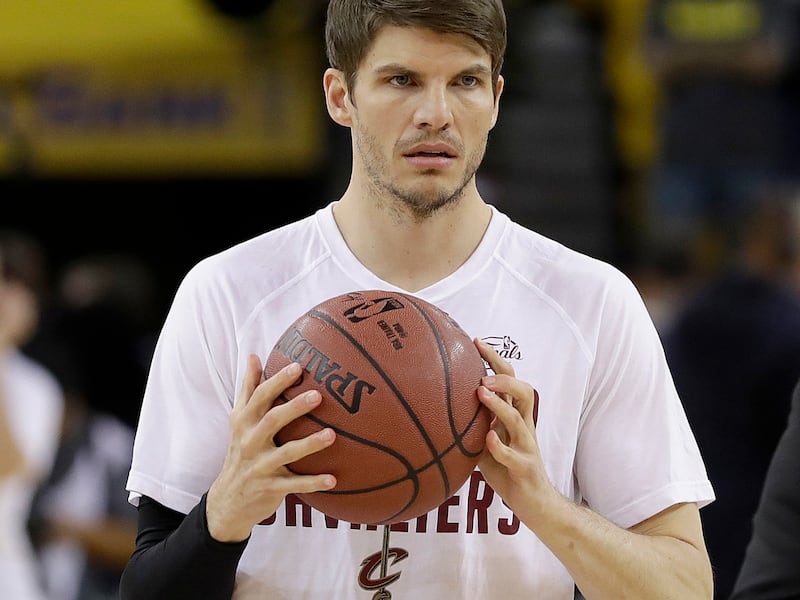
Kyle Korver. The name might ring a bell for the knowledgeable Jazz fan. For two and a half seasons, the 3-point specialist played under the tutelage of coach Jerry Sloan. During his last season with the Jazz, Korver shot a career-best 53.6 percent from the 3-point line during the regular season. The percentage remains a Jazz record, and it’s the best percentage the NBA has ever seen in its storied history.
If Korver were to hang it up today, he would rank fourth all-time in 3-pointers made during season play and top 15 in the history of the playoffs. Not a bad repertoire for a player who has spent a lot of his career coming off the bench.
But no matter the playing time, NBA players resemble gods, playing in front of tens of thousands of fans and millions more across the globe via live stream, with the weight of the basketball in their hands. However, this year, Korver showed pain, something that a lot of professional athletes won't do.
At the latter stages of this season, Korver stepped away from basketball after his brother died of an undisclosed illness. It wasn’t abnormal for an NBA player to take time away after a tragic death of a family member like Korver’s brother, who was only in his 20s. What was atypical was the way Korver shared the journey of his broken heart and grieving process.
Many NBA pros want to talk basketball when they come back from something tragic, and that’s their prerogative. Athletes are center-stage 24/7, and grieving in the limelight is raw, messy and too transparent. But when the 15-year pro looked reporters in the eye and told them the truth about his pain, people started to take notice.
“The first round against Indiana, I was just crying and falling asleep for my pre-game nap,” Korver told ESPN. He added that he would wake up and his insides would be “trembling,” as he would try to get his mind right to “play this series.”
When Korver came back to play basketball, it wasn’t a fairy tale, as if he came out and lit up the scoreboard in honor of his brother. In his first two of three playoff games, he didn’t even score. But what Korver never did was resign himself to fail. In Games 2, 4 and 5, Korver had double-digit point performances, and one game he made five 3-pointers. It was a statement that Korver would press on, even through adversity.
Korver played against Toronto, against Boston, and most recently, in the NBA Finals against the Golden State Warriors. Korver hasn’t put up gaudy numbers, but he’s been present and available when needed.
For example, in Game 1 of the NBA Finals and with the game tied, Cavaliers guard George Hill missed the go-ahead free throw with seconds remaining in the fourth quarter. Cavaliers teammate J.R. Smith rebounded the ball but thought his team was up, so he cleared the basketball hoping to get fouled. But with the game actually tied, the Cavs didn’t get off a decent shot, resulting in overtime and an eventual Game 1 loss. After the debacle, Smith said that out of everyone, Korver gave him the advice he needed to hear most — a testament to Korver's character. He is a man who perseveres through life, does his job and cares for the people around him.
Nonetheless, Korver would say it has been the people around him who have cared for him more, especially during his circumstances. “It’s amazing how many people come up to you and talk about their own stories that they’ve had," he told Cleveland.com. "There’s been so many, and while they’re hard, they’re hard to hear, it’s also very comforting to know that you’re going through this with a lot of people and a lot of people care about you.”
It’s Korver who reminds us that when trials arise, people are there, present and available, to maneuver the peaks and valleys of life next to us.