



SALT LAKE CITY — The twin tools of deceit and deception will be on full display Sunday night when Sacha Baron Cohen airs his new "Who Is America?" series on pay TV.
You can also add a third — humiliation.
That's what Utah resident and gun rights activist Janalee Tobias told Deseret News reporter Amy Joi O'Donoghue she felt after joining the list of figures duped by Cohen, whose past alter egos include Borat and Ali G in fictional portrayals that hit the big screen.
What circumstance would justify the use of deceit, deception and humiliation?
To free a captive? Probably.
To gain information from a prisoner in order to save lives?

It's certainly better than the torture of waterboarding. Which is maybe the calculation Cohen made when he used false pretenses to set up an interview with former Vice President Dick Cheney for his new show, and apparently placed a homemade waterboarding kit in his hands.
“Is it possible to sign my waterboard kit?” a man, presumably the disguised Cohen, says to Cheney in a short video clip released on Twitter to promote the show.
Cheney signed the kit.
America will have to wait for the show to see the context, assuming there is any.
Sarah Palin was also caught in the deception. She condemned Cohen for his tactics of luring her and her daughter to an interview for what she thought would be a “legit Showtime historical documentary.”
She said Cohen posed as a disabled veteran in a wheelchair and asked questions that were “full of Hollywoodism’s disrespect and sarcasm.”
Cheney and Palin have lived in this sphere before. But Janalee Tobias of South Jordan, Utah? To be sure she's an active and involved citizen, fighting for the environment, writing a children's book about immigration and speaking out as a gun rights activist.
That last one was enough to make her Cohen's target.
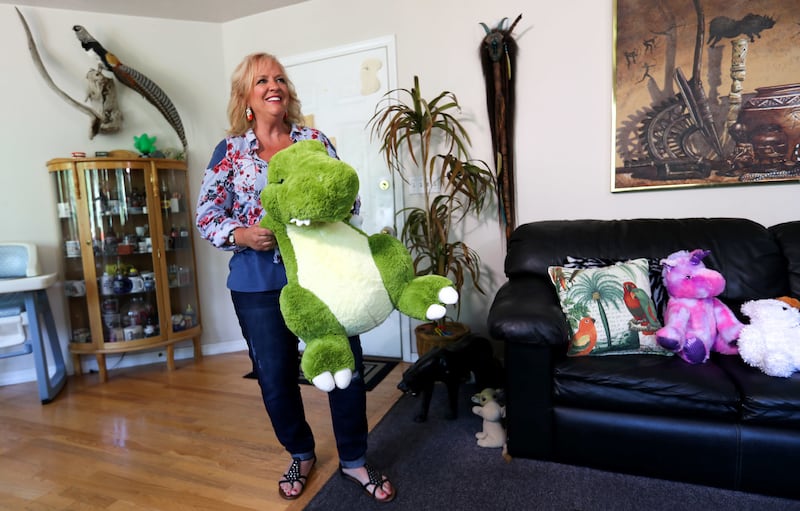
As she told O'Donoghue Friday: "It is probably the first time I can talk about this without crying. Since February I have been mortified. I guess I am in good company because he was able to con very famous people who are used to being in the limelight. We are really trusting people here and I took him at his word."
Sacha Baron Cohen goes far beyond comedy or social commentary by creating a new character out of the one who unwittingly sits before him, not just a caricature of that person. He crafts words and actions into a line of questioning that leads the subject away from their beliefs into an absurdist creation. Showtime will then invite the nation to laugh at them, all under the guise of entertainment.
In an age of bullying, partisanship and lack of trust and decorum, it's further dividing the country.

Lampooning can be a valuable way of making a point. Newspaper editorial cartoonists exaggerate features to highlight what their subject — usually a public figure — is actually doing. For example following President Donald Trump's visit with the British prime minister Friday, a Washington Post cartoonist portrayed Trump as an angry baby-shaped hot air balloon being towed by Air Force One with the caption: "Theresa May said she had a gift for me. Has anyone seen it?"
The actual balloon was a prominent fixture in the sea of protesters in London as commentary on Trump's visit. One need not agree with the protest nor the message of the balloon (a whining, infantile president) to accept that there is a place for protest and commentary.
So despite the obvious embarrassment and discomfort, is there any lasting impact?
Sadly, yes. Trust is eroded, and both public and private figures will put up barriers, unwilling to risk opening up to journalists and others. Less information about diverse points of view means less opportunity for understanding and less opportunity to unify and strengthen the country.
As Tobias told O'Donoghue:
"He betrayed me, but he betrayed any media station that wants to interview and has a desire to find out a story."