


Despite an initial controversy over Ivanka Trump’s selection as a keynote speaker, the Consumer Technology Association’s annual electronics show, CES 2020, ended with positive praise.
View Comments
We rounded up a number of details from the tech show to explain what was revealed and what you can look forward to in 2020.
Robots
- Tech giant Samsung showed off its new robot, Ballie, a grapefruit sized device that rolls to move, reminiscent of Star Wars’ BB-8. While specific details surrounding Ballie are rather vague — like its exact capabilities, price and release date — it is meant to be a smart home device that can follow users around with its built-in camera and help keep track of daily tasks, reports Engadget.
- Samsung-owned STAR Labs let CES attendees in on their quest to develop artificial humans with its project Neon. Neon will be digital CGI avatars that can hold conversations with people. The Verge reports the avatars not just intended to be AI assistants, but eventually they will have specialized skills and can work as advisers, experts, actors and even friends.
- We’ve all been there — stuck on the toilet with not a roll in sight — but hopefully soon that’ll be a problem of the past. Popular toilet paper company Charmin demoed Rollbot at CES 2020, a robot whose only job is to deliver toilet paper to those in need, according to Android Central. The Rollbot resembles the Charmin bear mascot and connects to any user’s phone within 30 feet with Bluetooth.
Entertainment
- CES provided attendees with a closer look at Lightstorm Entertainment’s new “Avatar” movie. More than a decade after the release of the first Avatar movie in 2009, James Cameron shared new concept art for “Avatar 2” at CES 2020. The movie will be released December 2021, People Magazine reports.
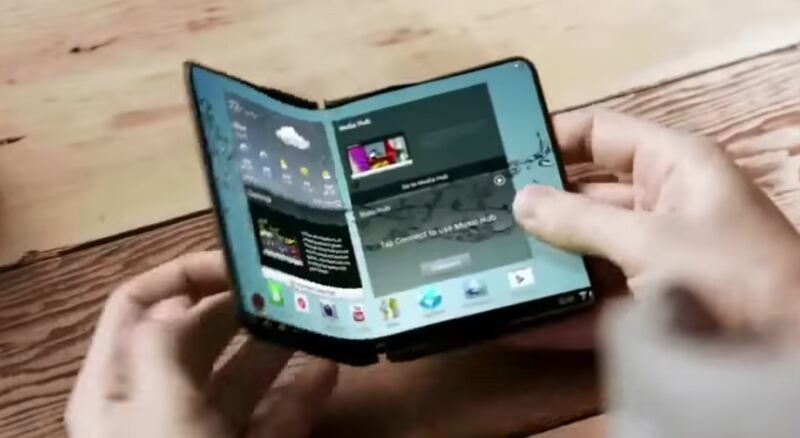
- Foldable smartphones were a big hit at this year’s show. The phones provide a large screen for viewing, but still fit in a purse or pocket. Samsung announced a new more affordable foldable phone, rumored to be called the Galaxy Bloom, to be sold for $800. Pricy — but a near $1,200 cheaper than the company’s 2019 foldable model, the Galaxy Fold. TCL also announced an even cheaper foldable option. The unnamed TCL foldable smartphone will retail for $500, likely later this year.
Wellness
- The French company FasTeesH returned to CES with Y-Brush. Boasting an impressive 10-second total brushing time, the Y-Brush looks more like a strange orthodontic device than a regular toothbrush. The $125 toothbrush, which needs the mouthpiece replaced every six months, begins shipping in March and comes in children and adult sizes.
- Proctor & Gamble announced their final version of the Opte, a handheld device that combs your face for every microscopic flaw. Upon finding a dark spot, Opte ejects perfectly matched foundation, which doubles as a facial serum and claims to reduce discoloration over time, directly onto those spots. The Opte will begin sales at the hefty price of $599 this summer. The serum, makeup and moisturizer it ejects onto the face are also all sold separately, according to CNET, and cost around $100 each. A small price to pay for beauty?
- Representing the latest in diaper tech was Pampers with a new smart diaper called Lumi. Yep, you read that right, smart diapers. Lumi is a combination of a baby monitoring camera, and an activity sensor to attach to a baby’s diaper. The activity sensor tracks a baby’s sleep habits and sends a notification to a parent’s smartphone when the baby needs a diaper change, according to WSBT. The system costs around $350 and requires parents to replace the diaper sensor every three months.
Transportation
- Hyundai and Uber are teaming up to create a line of air-taxis for the Uber Elevate service. The S-A1 “personal Air Vehicle” will seat four passengers and a pilot, reach speeds of 180 mph, travel distances of up to 60 miles and be fully electric.
- Toyota announced their plans to build a “city of the future,” which will act as a “living laboratory” for its 2,000 residents, said Toyota CEO Akio Toyoda, according to CNN. Toyota already has a 175-acre site picked out at the base of Mount Fuji in Japan, the Verge reports. They plan to begin construction as early as 2021.