

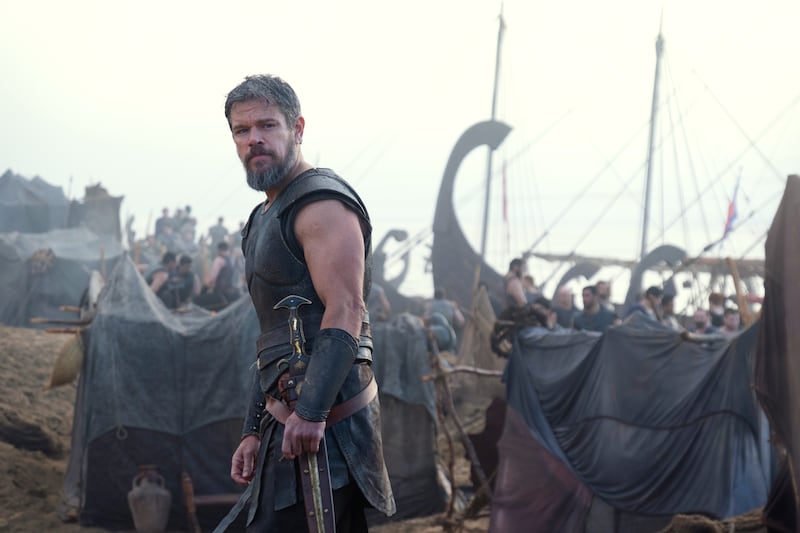

In an opening scene of “The Odyssey,” a man is shot with an arrow in both biceps, pinning him to the structure at his back. Then, the arrows are removed, causing him to topple to the ground. The film’s level of violence escalates from there, with intense combat and peril throughout.
Touted as one of the biggest blockbusters of 2026, Christopher Nolan’s “The Odyssey” is likely to catch the attention of teenagers.
Loosely adapted from the Greek epic poem, “The Odyssey” is a violent and intense story centered around Odysseus’ journey after the Trojan War, earning it an R rating.
Movies with an R-rating are recommended for audiences age 17 and older. Younger audiences can only attend if accompanied by an adult.
So, if your kid asks you to take them to “The Odyssey,” here is what you should know.
Why is ‘The Odyssey’ rated R?
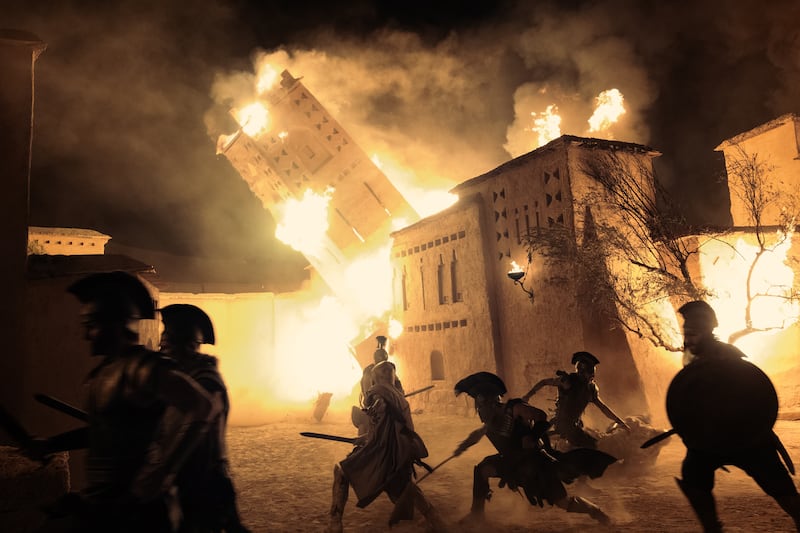
“The Odyssey” is rated R by the Motion Picture Association for violence and some language.
After seeing “The Odyssey,” I can confirm that violence and frightening scenes are intense and frequent throughout the film. As expected from a war epic, scenes of combat and peril are depicted across the film.
Nolan, speaking with TikTok movie commentator Juju Green, said he aimed to portray violence realistically while avoiding excessive graphic detail.
“When violence is portrayed in an overly graphic or I suppose I’d say gratuitous way, which is a completely valid creative choice, I find myself looking away from the screen sometimes,” Nolan said. “In my films I want to try to keep people engaged. I want them to not be able to take their eyes off the screen. In that way you want to portray the violence with enough gravity that it feels real.”
“In the case of ‘The Odyssey,’ you’re dealing with weapons, swords and arrows, and there’s a bit of blood that goes along with that, but you’re trying to keep people locked in,” he continued. “You don’t want to repulse people because you want to keep their attention.”
Some of the film’s strongest moments of violence include attacks by mythical creatures — including a man-eating Cyclops and a six-headed beast — alongside scenes of warfare and combat.
Are there violent, frightening and intense scenes in ‘The Odyssey’?
“The Odyssey” includes frequent frightening and intense scenes throughout.
The film contains suspenseful, high-stakes moments, including dangerous encounters at sea, escapes from mythical creatures, animal cruelty and a scene in which a man is transformed into a pig and back into human form again.
There are also depictions of drowning, poisoning, decapitation, stabbing and beating.
Like the source material, the film explores several emotionally intense themes, including the weight of grief, the lasting effects of war, divine fate, loyalty and betrayal.
Is there nudity or sexual content in ‘The Odyssey’?
There is a brief, implied sex scene, though no explicit sexual activity is shown.
The film also includes a glimpse of a man’s bare backside and brief verbal references to sexual violence.
Is there profanity in ‘The Odyssey’?
There is very little throughout ‘The Odyssey.’
There are fewer than eight profane words used during the movie, with only a handful of bona fide swear words used alongside some milder profanity.
Is there any drinking or drugs in ‘The Odyssey’?
Characters are seen drinking alcohol and there are some scenes of drunkenness. The film contains no scenes with smoking or drug use.
When does ‘The Odyssey’ come out?
“The Odyssey” premieres in theaters on Friday, July 17.