

0:00 / 0:00
Opinion: Lessons from 2 awful anniversaries
Despite the critics, Americans would unite again against a terror attack, and a lone-wolf killing does not define us
This week marks the anniversaries of two tragedies, different from one another in key ways, yet each leaving in its wake lingering questions about whether America can ever truly become “one nation … indivisible.”
One is the terror attacks of 9/11, now 25 years in the past but just as important to homeland security and foreign policy as if it had happened yesterday. The other is the murder of conservative activist Charlie Kirk one year ago on Sept. 10 at Utah Valley University.
They are strikingly different in ways that may make their mention in the same paragraph uncomfortable to some. But they are similar in the unanswered questions they leave about who Americans are in the 21st century.
Why was the national unity exhibited immediately after the terror attacks apparently so short-lived? What lessons have the Kirk killing taught about partisanship and political intolerance?
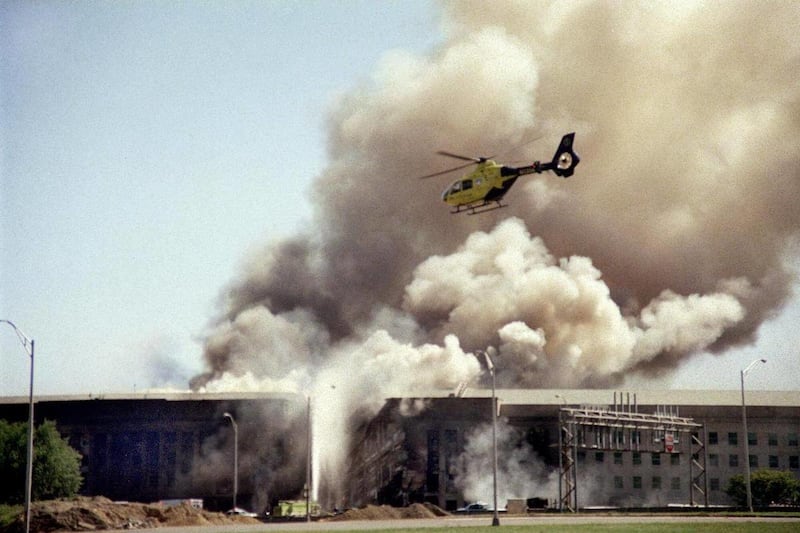
In some ways, 9/11 seems much more distant than a mere quarter century. After al-Qaida’s audacious attack on the Twin Towers and the Pentagon with hijacked airliners, and the crash of a fourth plane in Pennsylvania because passengers fought back, Americans united. Members of Congress from both parties stood together on the steps of the Capitol. As the nation watched on television, they joined in an impromptu version of “God bless America.”
More than just a touching display of patriotism, it was a symbol of the nation’s resolve. President George W. Bush followed this with a stirring speech to a joint session of Congress, in which he asserted, “America was targeted for attack because we’re the brightest beacon for freedom and opportunity in the world. And no one will keep that light from shining.”
Bush said, “The search is underway for those who are behind these evil acts.” He made no distinction between the terrorists and the nations that harbored them.
Resolve in the face of attack is one thing. Carrying out counterattacks involves policy decisions that, by necessity, become political.
Soon, the U.S. was at war in Afghanistan, then in Iraq. The conflicts lasted many years and ended without clear victories. U.S. Navy SEALs killed Osama bin Laden during the Obama administration nearly 10 years after 9/11.
Today, experts disagree as to whether al-Qaida remains a threat, but the threat of terrorism, from whatever source, remains a constant reality.
In 2020, Cronkite News published a piece under the headline, “Unity after 9/11 attacks is a relic in 2020.” It quoted various analysts who doubted a similar attack today would prompt any unity.
We disagree. Americans instinctively rally against legitimate foreign threats, even as they disagree on tactics. The aftermath of 9/11 has been rocky. The exit from Afghanistan was disastrous, but the overall effort against al-Qaida and other groups has made the homeland safer. No terrorist has managed another attack even remotely akin to 9/11, and we believe Americans would unite again if one did.
Policy fights over tactics and political strategizing are not barometers of unity amid crisis. Also, a crime committed by one person does not define Utahns or Americans.

The killing of Kirk as he prepared to exchange opinions with a crowd at UVU was allegedly the work of one single American. Tyler Robinson has been arrested and charged in connection with the murder. A judge has ruled that he can stand trial on murder charges.
No matter how much a small minority may want to politicize, it was a criminal act; one that was an affront to all citizens.
As we said at the time, Kirk was killed because he expressed views with which some disagreed.
“In the United States, and particularly in Utah, that should be a protected act necessary for self-government, no matter how vigorously others may disagree.”
Shortly after the crime was committed, Utah Gov. Spencer Cox asked a question. Calling the murder a “watershed,” he asked, “Do we escalate or do we find an off-ramp?”
The question remains relevant. It remains unanswered.
The path forward involves a literal reaching out from political silos toward personal interactions with perceived enemies. It involves listening beyond the echo chamber of hatred. It involves seeing each other as Americans first and partisans second. It takes hard and uncomfortable work. But we also believe many Americans are up to the task.
View Comments
On the occasion of these difficult anniversaries, it’s important to note that the doomsayers are wrong. A nation only 80 years removed from the unity that won World War II cannot be so hard-hearted as to place self-interests above country under all circumstances.
A Deseret News/Hinckley Institute of Politics poll conducted earlier this summer by Morning Consult found 57% of Utahns were at least very proud to be Americans, with another 18% saying they are somewhat proud.
Those figures could be higher, of course, but it shows unity and patriotism have not completely vanished.
Nevertheless, the anniversaries coming this week of two unrelated violent events offer an opportunity to take stock. Freedom and liberty never should be taken for granted. A movement toward unity, loyalty and civil discourse requires millions of sincere, individual commitments. The question for each American is, are you up to it?
Join the Conversation
Looking for comments?