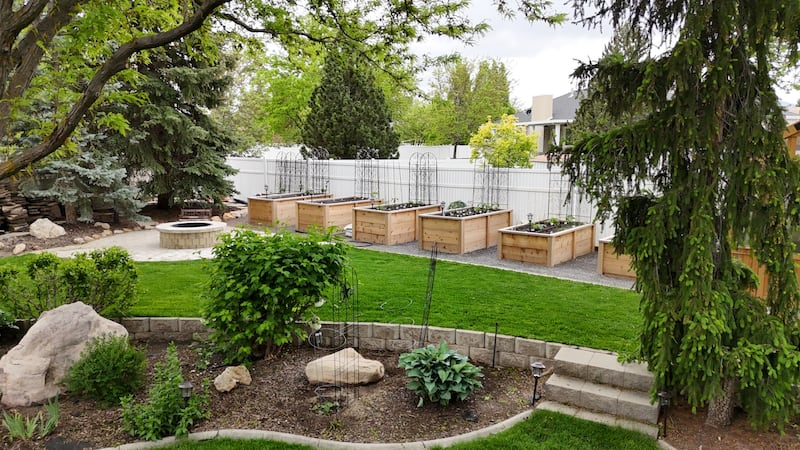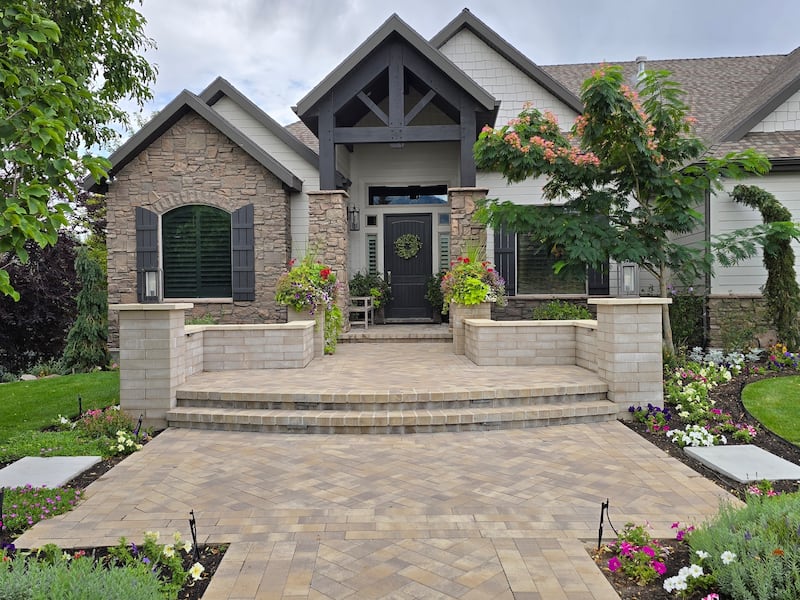
If last winter felt warmer and drier than usual, the data confirms it.
The Utah Division of Water Resources says this past winter was the warmest on record. In SLC, temperatures exceeded previous records by more than seven degrees. Now, 98% of Utah is experiencing some level of drought.
For homeowners, these shifts are showing up in a very tangible place: their yards.
The traditional model with large expanses of green grass has become increasingly difficult to maintain. But rather than eliminating outdoor spaces altogether, many Utahns are rethinking what their yards can be.
“It’s not about getting rid of your yard,” says Eric Millburn, owner of Millburn Lawn & Landscape. “It’s about reimagining it.”
For Millburn, landscaping has never been just about installing plants. “We’re solving problems,” he says. “It’s about the overall layout, the function, and how everything works together.”
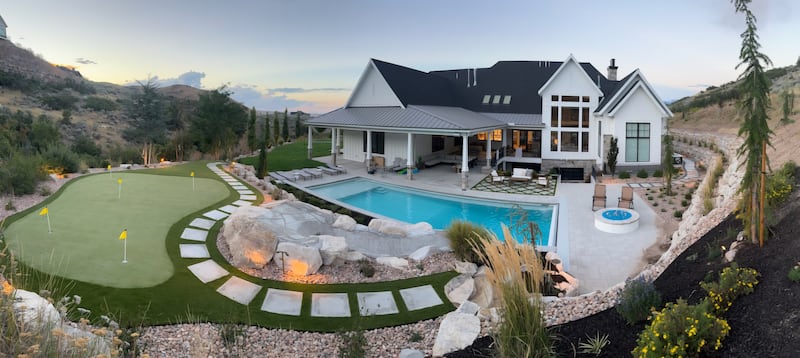
A shift from lawns to living spaces
Homeowners are incorporating features that support how they actually live outdoors: patios for dining, fire pits for gathering, shaded seating areas for evenings, and designated spaces for kids to play.
“People want somewhere they can relax, host, and spend time together,” Millburn says. “These spaces are becoming extensions of the home.”
To achieve this vision, homeowners should look for a landscaping company with “design-first” experience. “We approach projects the same way an interior designer would inside a home where every element has a purpose,” Millburn said.
For Millburn, this could mean positioning trees to frame a mountain view, placing native plants to block the west sun, incorporating shade structures for evening use, or designing small features like a bubbling rock that a homeowner can enjoy from their kitchen window.
“These details matter,” he said. “And they’re what make the space personal and functional.”
Although Millburn Lawn & Landscaping is a design-build company, that doesn’t mean it’s expensive. “Clients are getting the best value for the level of quality we deliver,” Millburn said.
Designing for both beauty and efficiency
As homeowners rethink how they use their yards, water efficiency has become a central focus.
Early drought-friendly landscaping often relied heavily on gravel and minimal plantings. While practical, those designs often looked (and felt) stark.
Our approach is more balanced.
“You can create a landscape that’s water-wise and still feels inviting and complete,” Millburn explains. “But it has to be designed intentionally.”
By reducing unused lawn areas and focusing on purposeful design, homeowners can significantly lower water consumption while improving how their outdoor space functions.
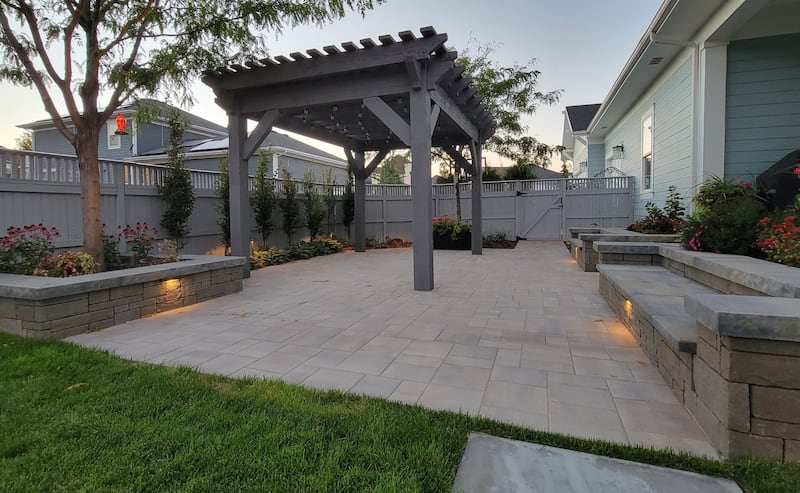
Why planning matters more than ever
As more homeowners move toward water-conscious landscaping, how projects are approached has become just as important as the materials used.
“A lot of issues come from skipping the design phase,” Millburn says. “People try to build their yard in pieces, and over time it doesn’t come together the way they expected.”
A design-first approach helps avoid these issues by aligning layout, materials, and irrigation from the start—creating a space that works as a whole.
Water savings through smarter systems
While design shapes the experience, irrigation plays a critical role in efficiency.
When properly installed and maintained, modern systems with features like drip irrigation, high-efficiency sprinkler heads, and rain sensors can significantly reduce water waste. Some projects achieve reductions ranging from 30 to 70 percent, depending on the scope of the renovation.
“Everything we design is water-wise from the start,” Millburn says. “And we build around how much maintenance a client actually wants. Many of our systems also qualify for rebates, and we help clients navigate that as part of the design process.”
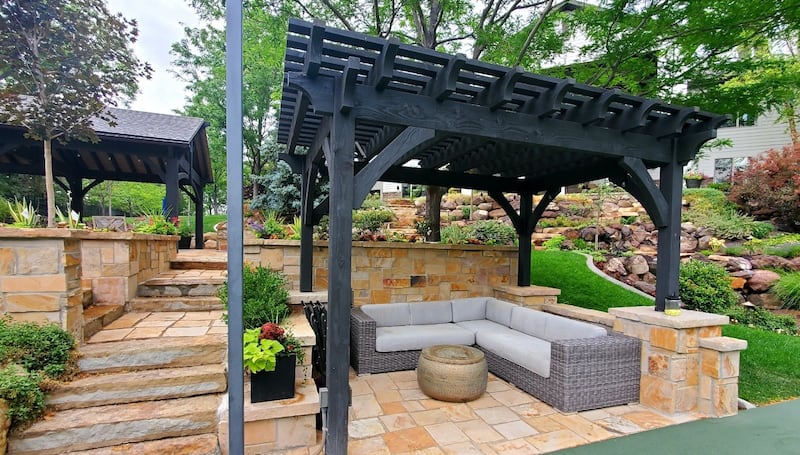
A more functional kind of outdoor space
For one homeowner in Herriman, the decision to redesign their yard came down to usability.
The space was large but underutilized, with limited areas for gathering or play. After a full redesign, including patios, shaded seating and structured landscaping, the yard became a place the family now uses regularly.
“She told us that the quality and beauty of the stonework and the overall level of craftsmanship exceeded what she’s seen in reception centers,” Millburn says. “We were able to deliver a design that perfectly matched her vision of a high quality, usable space”
They’re also seeing an estimated 40 percent reduction in water usage.
That kind of transformation reflects a broader trend: homeowners are placing more value on how their outdoor spaces feel and function—not just appearance.
Looking ahead
As drought becomes the norm, Utah homeowners aren’t waiting to adapt. The focus is shifting toward outdoor spaces that are as functional and sustainable as they are beautiful. For extraordinary results, more people are reaching out to visionaries like Millburn and his team to help them redesign with intention.
“If we start planning smarter now, we’re in a much better position for the future,” Millburn says.
The first step is often the most important: creating a clear design. Millburn added that even a simple plan can help homeowners avoid costly missteps and ensure their space aligns with both their lifestyle and Utah’s climate conditions.
If you’re considering updating your yard, the first step is a professional design. Even a simple plan can save you thousands by avoiding mistakes and ensuring your space works exactly as you envision.
Tips For Better Landscaping
- Don’t skip the design phase.
- Don’t overuse rock without structure or layering
- Don’t try installing a modern sprinkler system yourself
- Don’t use plants that don’t thrive in Utah or don’t fit the space