


- SpaceX's debut on the Nasdaq Exchange on Friday is set to be the biggest IPO of all time.
- The Elon Musk-owned company aims to raise $75 billion in fresh capital.
- Musk is poised to be the world's first trillionaire due to his massive holdings in the newly public company.
Typically, the night before a company’s IPO is the time at which share prices are set ahead of the next morning’s public investment markets debut, a critical moment that reflects the relative enthusiasm, or lack thereof, for the upcoming opportunity.
But in keeping with Elon Musk’s reputation for ignoring the tenets of convention, SpaceX disposed of the common practice of setting a range for potential share pricing and instead pegged a single value, $135 per share, days before its Friday opening on the Nasdaq Exchange.
That piece of unique strategy is just one of a slew of first-time-ever and nobody-ever-does-that aspects of SpaceX’s coming emergence as a public company. Here’s seven other notable takeaways:
1. Biggest IPO ever
SpaceX, Musk’s space vehicle manufacturing and launch business also includes the Starlink satellite internet service and network, artificial intelligence startup xAI, as well as the X social media platform that xAI acquired in 2025.
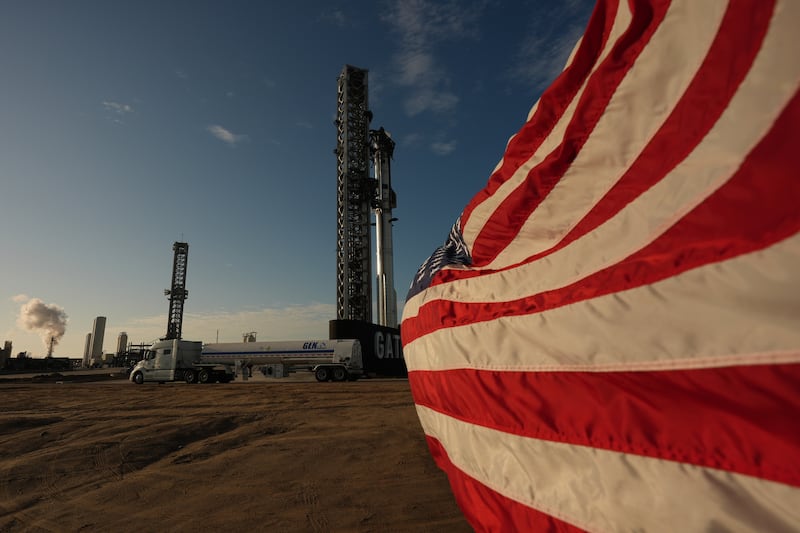
The company, which will trade under the SPCX code, reports it plans to offer 555,555,555 shares at $135 per share, raising $75 billion in new capital and potentially pushing the company’s valuation to nearly $1.8 trillion. Underwriter options to sell additional shares, if exercised, could bump the total to over $85 billion.
Even at the $75 billion mark, the SpaceX IPO would shatter the previous record of $25.6 billion raised by petroleum industry giant Saudi Aramco in 2019.
2. Who will control SpaceX after the IPO?
For those who have tracked Musk’s modus operandi over the past decade, it will come as no surprise that the SpaceX CEO will end up with the lion’s share of available stock, and thus maintain a firm grip on dictating the direction of the company.
Musk controls 85% of SpaceX’s shareholder voting power with nearly 850 million Class A shares and 5.57 billion Class B shares, and no other person or entity has a larger stake than 5%, according to the company’s SEC filings.
3. Musk on track to become world’s first trillionaire
Already the world’s richest individual with $839 billion in personal wealth as of midday Thursday, per tracking by Forbes, Musk’s expansive holdings are on track to make him the world’s first trillionaire following the SpaceX IPO.
If SpaceX is valued at $1.5 trillion, that would value Musk’s estimated stake at about $600 billion, increasing his net worth to just over $1.4 trillion, per a Forbes analysis. With a $2 trillion valuation, Musk’s stake would be valued at roughly $800 billion, potentially pushing his fortune above $1.6 trillion.
4. Demand races past opportunity
While SpaceX is seeking to raise $75 billion in fresh capital via its public offering, Reuters reports demand has exceeded $250 billion.
“The deal’s oversubscription rate is running at three and a half to four times the planned offering size," sources told Reuters.
Individual investors alone have requested over $70 billion in SpaceX stock, according to a Thursday report from the Wall Street Journal. And institutional investors are lining up to make whopping bets on the Musk effort, including global financial giant Blackrock which is seeking $5 billion in fresh SpaceX stock holdings.
5. Not everyone is buying it
It’s worth taking a close look at SpaceX’s current fiscal health. SEC filings reveal that while the company brought in $18.7 billion in revenue in 2025, up sharply from 2024, it still lost almost $5 billion last year. Among SpaceX’s various brands, only Starlink has recently shown a profit.
Investment research firm Morningstar isn’t nearly as bullish as the horde of investors clamoring to get in early on SpaceX stock.
An analysis published earlier this week suggested that “only the most optimistic ‘moonshot’ scenario approaches the (SpaceX) IPO offering price.” That ideal set of circumstances, which could lead to a $154 share price and $1.97 trillion valuation, only has a 7% chance of reaching reality, according to Morningstar’s analysis. The firm’s estimate of SpaceX’s actual fair market value is $63 per share.
6. Thousands of new millionaires will be born
While Musk himself is on the trajectory to become a trillionaire, thousands of employees who toil or toiled further down the corporate ladder are set to become millionaires following Friday’s market debut.
More than 4,400 current and former SpaceX workers are likely to become millionaires in the IPO, according to an analysis by Hill.com, a San Francisco-based investment platform, as reported by the New York Times. Of those, about 400 are expected to earn $100 million or more.
7. Retail investors will get a crack, but fewer than hoped
While early expectations suggested SpaceX would offer an outsize portion of its shares to retail investors, some 30% compared to the more typical 5% to 10%, CNBC is reporting retail allotments are more likely to come in at around 20% of shares.