

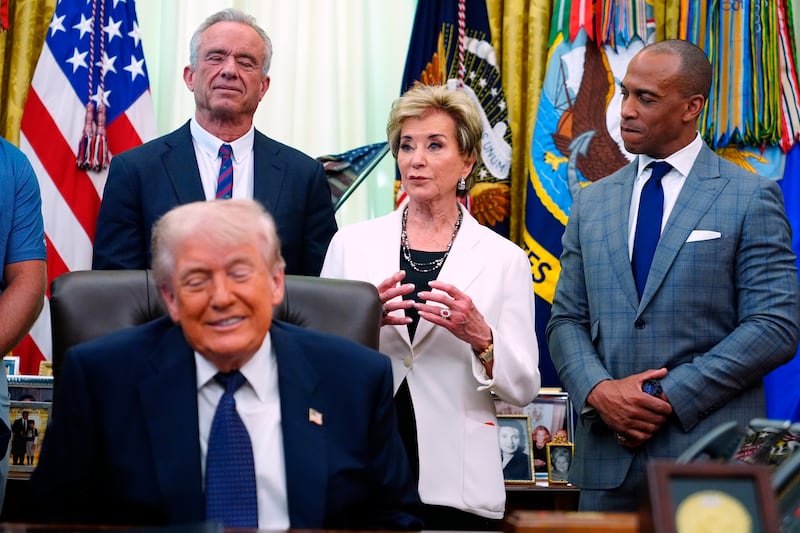

- The U.S. Education Department is shifting oversight of special education and civil rights to other federal agencies.
- The operational changes are the latest in a period of historic disruption at the Education Department.
- President Donald Trump has called for the dismantling of the 46-year-old federal agency — asserting public education is best managed by states.
When President Donald Trump appointed Linda McMahon to lead the Education Department last year, he issued his new Cabinet hire an unusual task: “Put (yourself) out of a job.”
Unusual, yes — but not surprising.
Long before being reelected, Trump pledged to scrap the 46-year-old federal agency — calling it “a big con job,” while insisting education is best managed by states rather than Washington, D.C.
Ultimately, it’s up to Congress if or when to shelve the Department of Education, but McMahon continues to follow her boss’ wish to diminish the reach of the embattled agency.
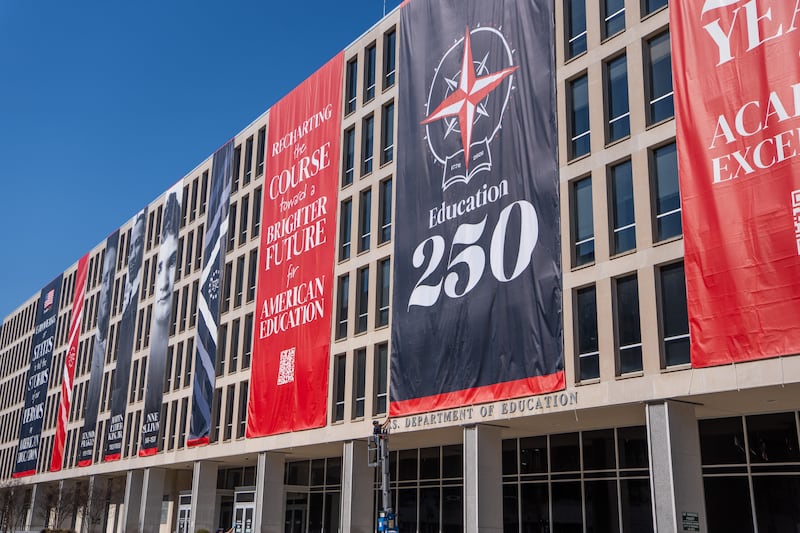
Over the past year, the DOE has shifted several duties to other agencies — including repositioning a portion of its student loan portfolio to the Treasury Department and administrative duties of other key programs to federal agencies such as the departments of Labor, Interior, Health and Human Service, and State.
The latest round of interagency agreements includes the DOE partnering with HHS on special education and rehabilitative services, and with the Department of Justice on civil rights enforcement.
McMahon said this week’s operational announcements signal ongoing efforts to scale back “federal micromanagement,” while bolstering federal oversight efficacy.
“Through our partnership with HHS, we will align federal services with the goal of strengthening academic outcomes and supporting individuals with disabilities so that they can achieve greater independence, key life skills, and meaningful employment,” McMahon said in a DOE release.
The DOE’s new partnership with the DOJ, added McMahon, ensures stronger civil rights enforcement in the nation’s K-12 and higher education campuses.
“These agreements align federal responsibilities with the agencies best positioned to support them, strengthening the effectiveness and impact of critical services,” she said.
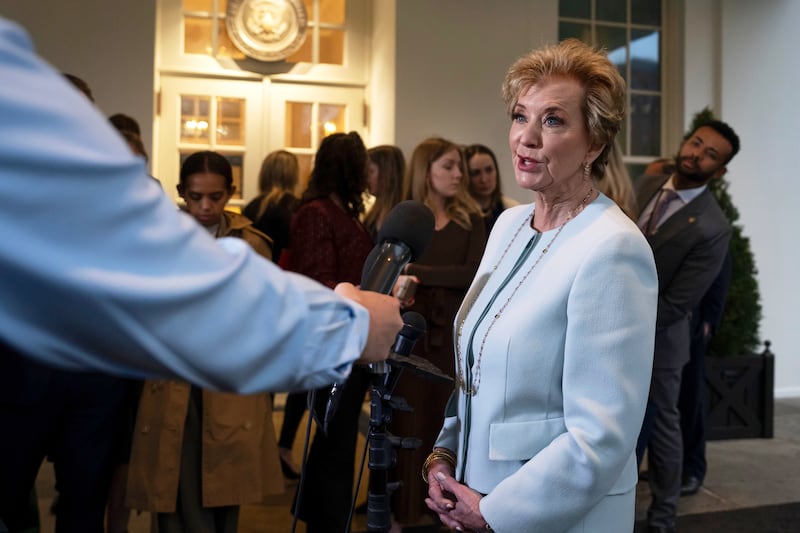
Trump administration: School kids with disabilities will continue to be protected
All protections and responsibilities guaranteed to American families under the Disabilities Education Act, or IDEA, will continue, according to a DOE fact sheet outlining details of the DOE and HHS partnership.
IDEA ensures that kids with disabilities have access to a free, public education that’s modified to meet their unique needs.
The Trump administration, according to the DOE release, remains committed to carrying out the federal government’s duty to enforce IDEA while investing in support for individuals with disabilities.
The new DOE/HHS interagency agreement won’t alter that obligation, the report added.
“Through this partnership, HHS and the Department of Education will cut bureaucratic barriers, better align federal resources, and deliver more effective support for individuals with disabilities and their families,” said Secretary of Health and Human Services Robert F. Kennedy Jr. in the DOE release.
“Together, we will improve education and employment outcomes, uphold the rights of individuals with disabilities, and help every child reach their full potential.”
But some advocates worry shifting duties from the DOE to HHS could complicate the process of protecting the rights of students with disabilities.
The Associated Press offered this example: If a student with a disability is denied school accommodations, his or her parents can often appeal to a single federal agency — the DOE — to handle the violation. Now, parents might have to navigate multiple bureaucratic systems to get answers.
Advocates, added The Associated Press, also worry that special education work transferred from the DOE to HHS would result in students with disabilities being viewed through “a medical lens” and not in terms of the educational needs.
In a medical model, “disability is treated as a diagnosis to manage instead of a natural part of human life,” Robyn Linscott, who directs education policy at The Arc of the United States, a major disability rights group, told The Associated Press.
“When that mindset drives education decisions, students are more likely to be segregated, underestimated or treated as separate from the school community.”
More headlines for the DOE’s Office for Civil Rights
The new partnership between the DOE and the DOJ aims to provide more responsive enforcement of civil rights law — combining the two agencies’ capacities to bolster evaluation, investigation, resolution of complaints and to “enforce critical protections for all students.”
In the DOE release, Acting Attorney General Todd Blanche said the partnership will ensure that discrimination on the basis of race, sex or ability “will not be tolerated” in schools.
“Together,” said Blanche, “we are advancing a national commitment to ensuring every student is treated with dignity and has an equal opportunity to succeed both in the classroom and on the court or field.”
A fact sheet added that the two agencies will “pursue vigorous enforcement of civil rights laws” to ensure that educational institutions receiving federal dollars comply with civil rights law.
The DOE/DOJ partnership will not impact students, parents or families who believe they have experienced discrimination, added the fact sheet.
The Education Department’s Office for Civil Rights has been one of the agency’s most controversial elements during a time of massive DOE disruption since Trump returned to the White House.
Despite sweeping layoffs at the DOE, the agency has aggressively utilized its civil rights office to go after schools they accuse of discriminatory or “woke practices.”
Last March, for example, the DOE’s civil rights office initiated a Title IX investigation of a Wisconsin school district following reports that the district was allowing “biological men to use female restrooms” based on students’ “gender identity.”
The department has also taken high-profile action against San Jose State University for “allowing a male to compete on the women’s volleyball team.”
One of the DOE’s most powerful tools is the ability to pull federal funding from schools that violate civil rights laws. Facing that threat, schools usually have agreed to make changes when pressed by the agency.
The department’s investigative arm also reached into the Beehive State last year when it alleged the University of Utah and dozens of other higher education institutions were practicing “racial preferences and stereotypes in education programs and activities.”
The DOE announced it was investigating Utah’s flagship university and 44 other American schools for allegedly violating Title VI of the Civil Rights Act (1964) by partnering with “The Ph.D. Project” — an organization “that purports to provide doctoral students with insights into obtaining a Ph.D. and networking opportunities, but limits eligibility based on the race of participants,” according to the DOE.
The University of Utah later settled with the DOE’s Office of Civil Rights after terminating its partnership with The Ph.D. Project.
The Utah school’s connection with the organization was fairly limited.