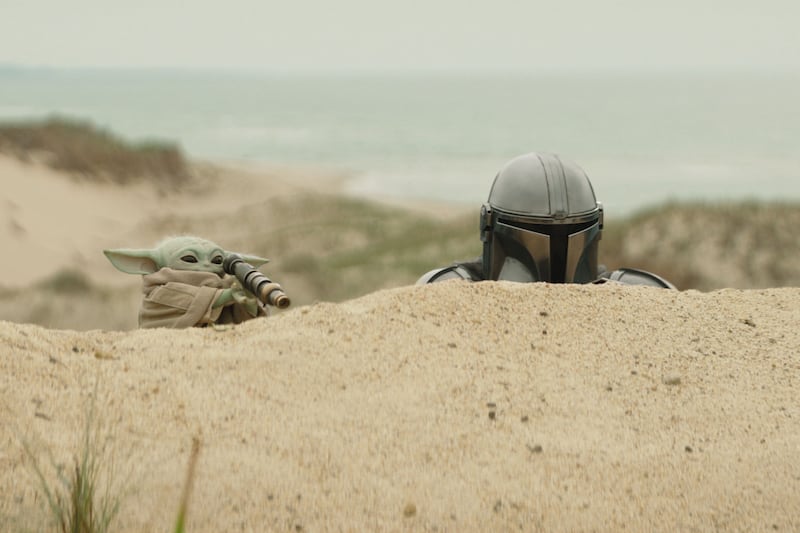

The Memorial Day weekend box office saw the return of the “Star Wars” franchise to the big screen for the first time in several years with “Star Wars: The Mandalorian and Grogu.” While the film didn’t have the galactic launch of some of its predecessors, it still has the potential to turn a profit.
2018’s standalone film “Solo: A Star Wars Story” brought in a meager $392.9 million compared to a $270 million production cost, according to Forbes. This caused Disney to pump the brakes on theatrical runs and potentially led creative teams to focus on silver screen projects.
While “The Mandalorian and Grogu” wasn’t a top contender franchise-wide, it performed well domestically compared to previous “Star Wars” spinoffs, according to the FranchiseRe industry newsletter.
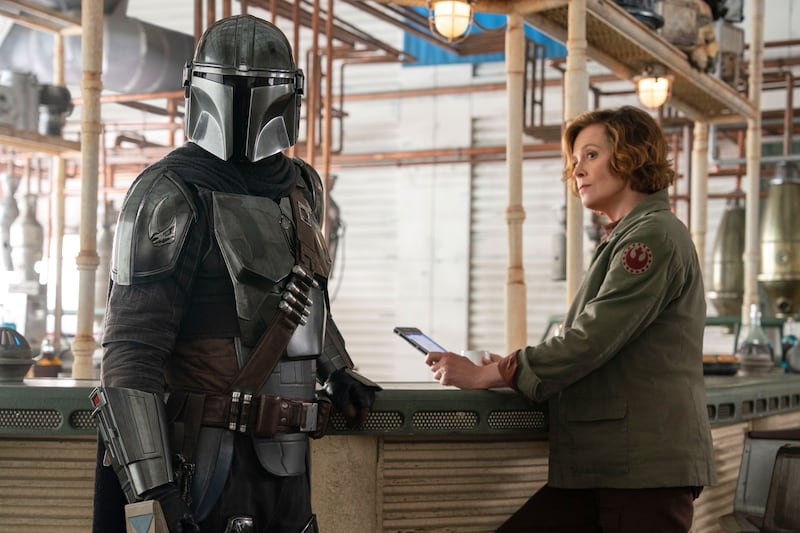
The latest family-friendly film to grace the big screen received largely mixed-to-negative reviews from critics, who gave the film a 64% approval rating on Rotten Tomatoes. However, audiences were more receptive, giving it an 88% audience score. Moviegoers also gave the film an A-minus on CinemaScore — an improvement from the B-plus earned by the last “Star Wars” film, “Star Wars: The Rise of Skywalker.”
During its opening weekend, “Star Wars: The Mandalorian and Grogu” grossed $81.7 million, opening alongside the R-rated horror-thriller “Obsession,” according to Box Office Mojo.
Much of the online conversation and critical reception centered on comparisons to “The Mandalorian” Disney+ series. “The Mandalorian” is the most-watched original series in Disney+ history, with more than 1.3 billion hours streamed globally, according to The Hollywood Reporter.
The film’s production budget was modest by “Star Wars” standards, marking the lowest budget of any title produced since Disney acquired Lucasfilm. Still, it wasn’t cheap: The film cost $165 million to produce before a global marketing campaign of at least $100 million, The Hollywood Reporter reported.
The film needs to gross $500 million to $600 million globally to break even. By comparison, 2018’s “Solo: A Star Wars Story” topped out at $393 million worldwide.
Merchandising sales will contribute heavily to the film’s bottom line. The Disney+ series has generated more than $1 billion in merchandise sales, with the overall franchise pulling in $1 billion annually.

“The impact it will have on Disney+ is critically important to us,” one Disney executive said, according to The Hollywood Reporter. “Not only could it ultimately end up on the service and get tens of millions of hours of watch views, it will also have an impact on ‘Mandalorian’ seasons one through three. And what we’re also finding is that it is already helping not only ‘The Mandalorian,’ but the entire ‘Star Wars’ catalogue.”
Given the brand recognition of “Star Wars,” its family-friendly content and the star power of Pedro Pascal, reaching the $500 million to $600 million range is realistic.
For reference, “Project Hail Mary,” the family-friendly space adventure that debuted in late March, had an $80 million domestic opening, closely matching the latest “Star Wars” film, according to Box Office Mojo. The Ryan Gosling-led film went on to earn $676 million worldwide.
“Project Hail Mary” was propelled to its nearly $700 million earning by international audiences, splitting its earnings evenly between the domestic and global box office. Getting to that $500 million range is realistic, but it hinges entirely on whether international audiences show up — historically a major blind spot for the ‘Star Wars’ franchise.