

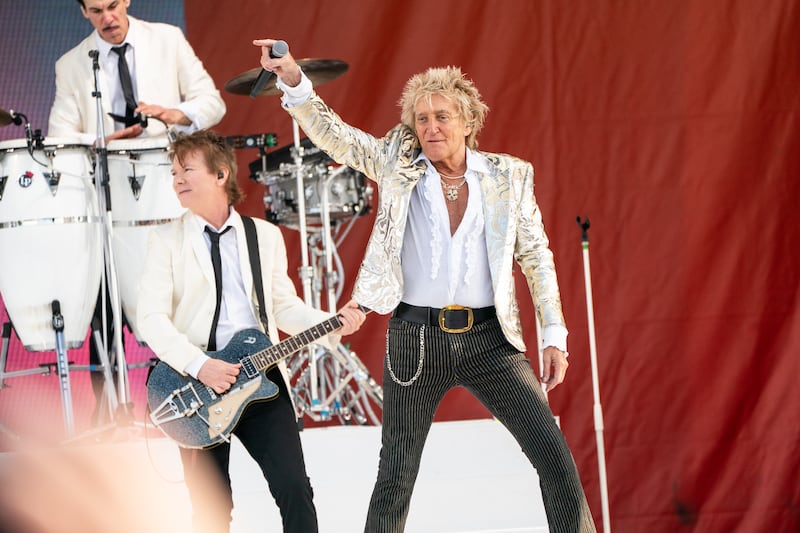

Several weeks after saying he nearly fainted at his Utah show, legendary rocker Rod Stewart has canceled his remaining tour dates for the year.
Rod Stewart cancels remaining tour dates for 2026
On Tuesday, a statement shared on Stewart’s official Instagram said the “Maggie May” singer had “undergone a routine coronary stent procedure.”
“Rod is doing very well and has returned to his normal daily activities,” the statement reads. “On the advice of his doctors, he will take the next four weeks to recuperate and regain full fitness before returning to the stage. Unfortunately, this means he will be unable to continue his current tour dates.”
Those tour dates, per the 81-year-old singer’s website, include shows in the Midwest and Mexico, and six performances at the Colosseum at Caesars Palace in Las Vegas. Currently, Stewart’s two shows at Colorado’s Red Rocks that were postponed to the fall of 2027 are still on his schedule.
In his own statement, Stewart said he is “already feeling better and very much on the mend.”
“I want to thank the doctors, nurses and everyone who has taken such wonderful care of me. I’m deeply disappointed to miss these shows, and sorry to let my fans down, but I look forward to getting back on stage and having a good time with you all again.”
Stewart has been out on his One Last Time farewell tour, which in recent months has been plagued with fairly last minute cancellations.
Tuesday’s announcement comes days after he postponed a show in Cincinnati just hours before showtime, per USA Today. That concert has since been canceled.
In the week leading up to his June 19 show at Utah First Credit Union Amphitheatre, he canceled and postponed a few shows due to an upper respiratory infection that had resulted in laryngitis, as the Deseret News previously reported.
He made it to West Valley City, Utah, but the performance seemed to take a big toll on him.
Rod Stewart’s Utah show
Stewart sounded great at the start of his Utah show — especially considering he had been suffering from laryngitis just the week before.
But his stamina waned gradually over the next two hours.
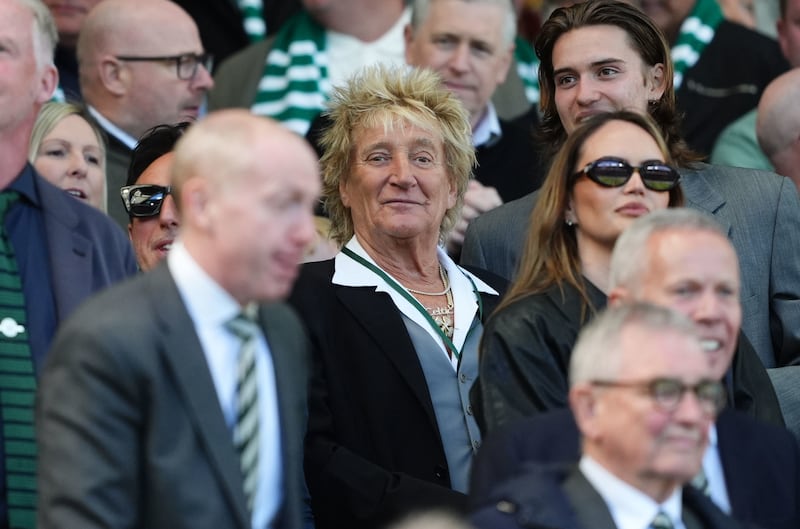
Fairly early on in the show, he asked the crowd what the elevation was (it’s roughly 4,300 feet).
About two-thirds of the way through his show, the rocker was visibly struggling while performing “Young Turks.” As he stood on the stage singing, he switched between holding on to the piano for support to leaning on the drum set. At the end of the song, Stewart stood off to the side of the stage as a few people from his crew gave him oxygen.
“The show must go on,” he said to supportive cheers from the crowd, adding through jokes and colorful language that he had nearly fainted during the song, per Deseret News.
And the show did indeed go on. Stewart performed five more songs, and although he was sitting in a chair by the end of it all, he was still singing, engaging with the audience and tapping his leg to the beat.
A similar incident happened to Willie Nelson at the same venue in 2017. Nelson, then 84, cut his Utah show short after saying the high altitude made him feel sick, CBS News previously reported.
Broadway star Kristin Chenoweth, 58, has also previously shared that she was “extremely nervous” to perform at a high altitude in Utah — she once used a tank of oxygen to help get her through her show at the Deer Valley Music Festival in Park City, as the Deseret News reported.