


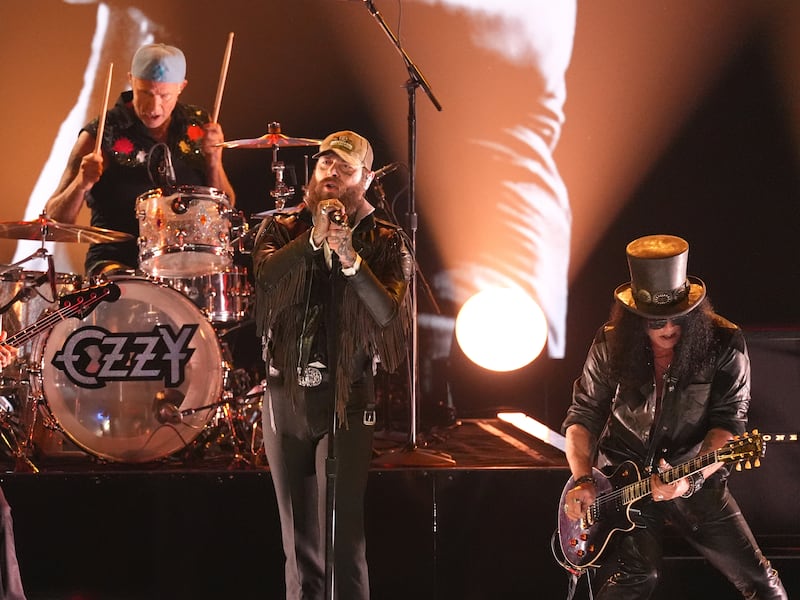
As Post Malone stepped onto the stage at the 2026 Grammys, he waved his camouflage hat to the crowd. He cupped both of his tattooed hands around the mic and started to belt Black Sabbath’s “War Pigs.”
During the tribute to the late Ozzy Osbourne, which was part of the Grammys’ In Memoriam segment, the camera zoomed in on Malone and his hat. The white letters across the front came into focus: Spanish Fork Fiesta Days Rodeo.
Malone, who lives in Utah, had gone to that rodeo at the Spanish Fork Fairgrounds over the summer, more than 600 miles away from the bright lights of Hollywood.
Now, at the Grammys, Utah’s first rodeo to be inducted in the ProRodeo Hall of Fame was in the spotlight — and the fast-growing city of Spanish Fork reveled in the attention.
“Thanks Post Malone, for putting us on the map again,” read a post from the city’s official Facebook page.
Maybe it was the use of the word “again,” but as people commented on the post, longtime citizens seemed to be juxtaposing the moment with the most unlikely event to emerge from the Spanish Fork Fairgrounds.
“Biggest thing to happen to SF since Rage Against the Machine!” one user commented.
“I don’t recall Rage Against the Machine getting an equal thank you,” another wrote, adding in a laughing emoji.
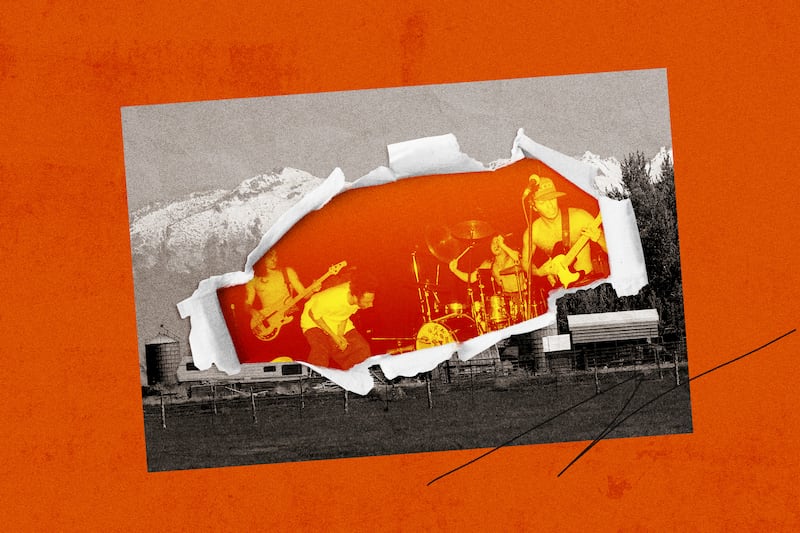
September marks 30 years since Rage Against the Machine, an alternative rap-metal band whose profanity-laced lyrics confront institutional authority, got booked to play the fairgrounds in this small, conservative Utah city. Just five months prior, the provocative band had been banned from performing on “Saturday Night Live.”
The surprise booking sparked a firestorm. As news spread that Rage was coming to town, some citizens gathered in the park to protest. Others went door-to-door seeking signatures for a petition that demanded the show be canceled.
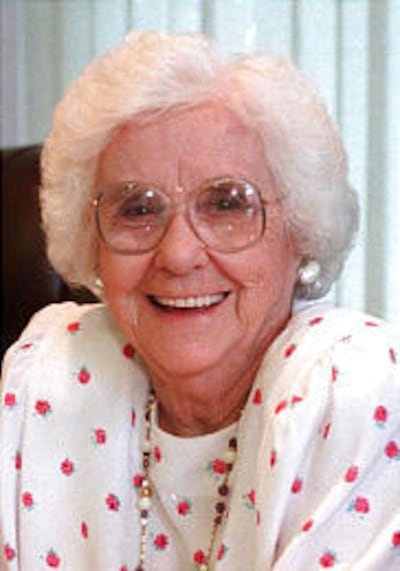
Then-Mayor Marie Huff, who was 82, received angry letters and was subjected to verbal attacks, as the Deseret News reported at the time.
But there were also thank-you notes. There were teenagers in Spanish Fork who had been listening to Rage, and even trying to learn the band’s style of music, with guitarist Tom Morello as their north star. They were in total disbelief that RATM would ever come to their rural but growing hometown that typically welcomed rodeo music from cowboy greats like Chris LeDoux.
The city has roughly tripled in size since Rage Against the Machine stepped onto the fairgrounds, but the story continues to live on in Spanish Fork lore.
For the 30th anniversary, the Deseret News spoke to concertgoers, performers, police and a former city administrator to reconstruct the event. In their own words, here’s the story of Rage Against the Machine in Spanish Fork — and the influence it’s had beyond a single show.

To reconstruct this event, we spoke with:
- Chris Henderson: A 17-year-old concertgoer and musician from Salem, a few miles south of Spanish Fork. He was a Spanish Fork High student at the time.
- Curt Gordon: A 19-year-old concertgoer and musician from Lake Shore, a small farming community about 4 miles west of Spanish Fork. Gordon is the current owner and operator of the Angelus Theatre in Spanish Fork.
- Lindsay McDonald: A 34-year-old concertgoer and musician from Richfield, which is about two hours south of Spanish Fork.
- Lt. Cory Slaymaker: A longtime police officer in Spanish Fork who was assigned to the entry point at the fairgrounds for the show.
- Mario Jimenez: The lead singer of the post-hardcore band Stanford Prison Experiment, which was one of the opening bands at the RATM show.
- Maryclare Maslyn: The assistant city manager of Spanish Fork at the time of the show. Maslyn currently teaches at Butler County Community College in Pennsylvania.
- Megan Banks: The granddaughter of then-Spanish Fork Mayor Marie Huff. She was in her early teens at the time of the concert.
- Rodger Hardy: The former Deseret News reporter who covered the Rage show and the events leading up to it.
- Scott McCloud: The lead singer of the post-hardcore band Girls Against Boys, which was the other opening band for the Rage show. McCloud now lives in Vienna, Austria.
Part 1: The booking

On the heels of releasing its second album, “Evil Empire,” RATM is booking tour dates. Through the fairgrounds manager, the band books a show in Spanish Fork, Utah County, for Sept. 11, 1996 — the night after they would perform another one-of-a-kind show at the historic Old Idaho State Penitentiary. A popular urban myth about how the booking came to be has developed over the years, but the truth, according to a city official at the time, is much less exciting.
Chris Henderson (teenage concertgoer): Spanish Fork was not exactly thrilled that Rage Against the Machine was coming. The story was that they contracted with the band thinking it was a monster truck show or something like that, and then once they figured out what they had done, they tried to get out of it, but they weren’t able to. They were under contract.
Curt Gordon (teenage concertgoer): We never dreamed we’d see some hard rock, hardcore band playing at the Spanish Fork Fairgrounds. And later on come to find out that the city had thought it was like a tractor pull.
Maryclare Maslyn (then-assistant city manager of Spanish Fork): We had an excellent fairgrounds manager. He had booked other events before, and he had not heard of the band. He knew it was a band — he just didn’t know what kind of music. And so he in good faith signed the agreement. That was how it happened. It wasn’t neglect. It wasn’t anything but him doing his best job.
Rodger Hardy, 1996 Deseret News article excerpt: Fairgrounds manager Steve Money won’t be booking future concerts without approval from city officials after signing a controversial band to perform. ... Money reportedly used a mayoral rubber stamp to ink the contract, which is apparently standard procedure for department heads.

Maslyn: At that time, the contracts for the fairgrounds required the mayor’s signature. But people would come and rent a stall at 2 in the morning or 8 in the morning or 11 in the morning, and that would require her to be signing a ton of things for the fairgrounds. ... I don’t have the record of when it was decided that Steven could use this, but people were saying she rubber-stamped this and it shouldn’t have been used and all of this other stuff. It was in the purview of his capacity to handle the contract the way that he did — he did what he was allowed to do.
Henderson: They booked the Spanish Fork Fairgrounds and of course, when we heard that, we didn’t believe that. We thought that’s impossible that Rage Against the Machine would be playing the Spanish Fork Fairgrounds. The area was just an ultra-conservative, very religious area, so it was a very unlikely venue for this concert.
Gordon: I used to see Chris LeDoux and The Saddle Boogie Band playing out there. To me, that was like the pinnacle of live music in Spanish Fork, the Chris LeDoux country music, bronc-riding music. So this was a spectacle.
Part 2: ‘Not a lot to do around here’

The population of Spanish Fork was roughly 17,000 at the time of the booking, according to Maslyn. The community with deep agricultural roots was experiencing a population boom, but Spanish Fork still had a quiet, small-town feel. The city had been cracking down on cruising Main Street with local ordinances in the early ’90s, as the Deseret News reported at the time.
Gordon: I do vividly remember during that time, when I was like 18, 19 years old, just out of high school, cruising Main quietly. By then, Marie Huff had put the kibosh on cruising Main. They did enforce it somewhat — there was a no-loitering law going on. So we kind of covertly would cruise Main just looking for any action … and most of the time we cruised Main until we finally gave up and then would just head home, get up for work the next morning. There just really was not a lot to do around here at all. I took my dates to Salt Lake — that’s a 120-mile round trip, you know? It was fun, but these days there’s just a lot more to do.
“I looked at the lyrics and I thought, ‘We may have a problem here.’”
— Maryclare Maslyn, former assistant city manager of Spanish Fork
Megan Banks (granddaughter of then-Mayor Marie Huff): It was a lot smaller. We’d find friends that knew how to drive, and we would drag Main on Friday nights. That was the best. Much simpler times.
Mario Jimenez (lead singer of opening band Stanford Prison Experiment): I think the people in that area were desperate for any entertainment, so they were psyched that a band like Rage was there.
Gordon: We were bored stiff. So this was not only like, “Oh wow, this will be something to do.” This was more like, “This is 1969, we’re going to the moon!”
Part 3: The reactions

Rage Against the Machine shocked Spanish Fork’s citizens. A petition demanding the show be canceled garnered 789 citizen signatures — roughly 4% of the population at the time. Each of those citizens pledged $10 toward the show’s cancellation. Estimates say canceling the show would’ve run anywhere from $80,000 to $300,000, according to Deseret News coverage at the time.
One citizen rallied others in the community to “inform the public of the danger and violence that may accompany the group,” according to documents Maslyn shared with the Deseret News.
Maslyn kept a growing list of the citizens’ rumors and concerns. Some of these managed to reach performers on the Rage tour who were making their way to Utah. All the while, excited fans clamored to get tickets, which were $13. In three days, the show sold 6,600 of the 8,000 available tickets, per Deseret News.
Maslyn: We were at a city council meeting, and one of the city council members mentioned these people are going to this concert and they’re really excited that they’re coming to Spanish Fork. They think that’s very cool. And I said, “OK,” because honestly, I didn’t know who they were.
But my assistant looked at me and she said, “Did he say Rage Against the Machine?” And I said, “Yes.” She said, “Huh.” And I said, “What do you know that I need to know?” And so she brought me a Rage Against the Machine CD, which she had, and I looked at the lyrics and I thought, “We may have a problem here.”

Banks: My Grandma Huff, she was all about listening to the citizens. She would get the residents’ opinions, would really listen to them and do her best. I was told that she didn’t know who Rage was, and it was too late to cancel it by the time she knew who they were. I know she got a lot of grief when people found out who the band was.
1996 citizen note to Mayor Huff: You were elected to serve the community. Yet, you bring in trash that is anti-establishment, anti-government into our backyards. Shame on you!
Maslyn: We did not feel that we could cancel, and it would have cost a lot. We looked at everything. We looked at what the cost would be, and then we looked at what is our responsibility, and what is the purpose of the fairgrounds? ... It really did get into the rule of law.
“And here’s this band with their record called ‘Evil Empire.’ Without understanding, I can see how that could be a little bit alarming or frightening to some people.”
— Scott McCloud, lead singer of opening band Girls Against Boys
We did have to do our best to make sure that we were abiding by the law. Citizen safety and abiding by the law, that’s what our goal was. You’re setting a precedent when you take actions, and we take that very seriously at the city. ... You take many things into consideration. You look at the immediate effect and then you look at what it will mean down the road. And when it came down to it, they decided to go ahead. And there were a lot of people who were very happy with that. And of course, some people not.
Henderson: I do remember the hysteria. There was a lot of pushback from the city and from the residents to try and prevent this show from happening. At the time, I was just a punk teenager, and I thought it was hilarious that this was happening. I didn’t care about any of the hysteria. I just thought that it was hilarious that they would book them by mistake and had their hands tied.

Maslyn: I was on the phone continuously for about two weeks answering phone calls. The most important thing that we were trying to do was communicate to our citizens and also to hear from them because they had every right. This is what it’s all about. They had every right to express their opinions.
Scott McCloud (lead singer of opening band Girls Against Boys): We’re not talking about even Salt Lake City proper. We’re talking about Spanish Fork. This is a place this doesn’t happen every day. So this can be kind of frightening to people, I would imagine. It’s not in New York City or Los Angeles; it’s right in your town. And here’s this band with their record called “Evil Empire.” Without understanding, I can see how that could be a little bit alarming or frightening to some people.
Henderson: I think that the mood in the general public was fear. I think that there was so much hysteria behind it they believed it, and they believed that bad things were really going to happen at this concert. But the mood from people my age was just ecstatic. They thought it was going to be the greatest thing ever.
Maslyn: The fact that they were very honest with why they didn’t want the band was great. And the fact that people who did want the band were very honest and vocal were great, too. It’s a very good community. For me personally, even in the thick of it, I just felt so fortunate to live somewhere that people cared on either side.
Henderson: As it got closer, things ramped up. The businesses were literally boarding up their windows. They were nailing them to the sides of their buildings to prevent people from breaking in. They thought it was going to be full-on riots. I had heard all kinds of stories of what people thought was gonna happen, and of course it all gets exaggerated. But the boarding up of the windows I saw with my own eyes, people were actually doing that.
Gordon: I just thought it was so funny how they were saying things like, “Turn off your lights,” “lock your doors,” “keep your kids inside,” all of this. It reminded me of that AC/DC song, “Lock up your daughter, lock up your wife, run for your life,” the boys are back in town type of thing.
Henderson: There was a fear that it might not happen because of the protests against it.

Jimenez: We’re happily traveling around and doing shows, and start hearing through the grapevine, through our managers, that they might cancel the show.
There were no cellphones in that day, so we’d have to hear it all secondhand from our tour manager, who’d get a phone call from the promoter. He was on the phone all the time trying to figure out what’s going on, getting updates on what the situation was.
They just assumed we were bringing drugs, guns and gangs into the area. We thought it was hilarious.
It was an unnecessary reaction. I thought for sure it was going to be canceled. We were just waiting for it to be canceled.
McCloud: We were a little bit nervous about what might happen that night, especially with all this hyperbole around Satan comes to town and all these different things. I remember we felt somewhat concerned about how it would go, and hoping everything would be fine, hoping there wouldn’t be any huge incident or anything.
Jimenez: I was just worried that we were going to get arrested for some trumped-up thing. But I mean, nothing gets artists, musicians, or anybody more pumped up than somebody trying to tell you you can’t do your thing. So all of us collectively, I think we were just ready to rock and play the best show we can.
Part 4: The big day arrives

As the concerns and anticipation intensified, Sept. 11, the day of the show, finally arrived. It was a sold-out show, and roughly 90 police officers spanning all across Utah County were working the concert, according to documents shared by Maslyn. The band also had 100 of its own security people inside the concert, per Deseret News coverage.
Banks: All my friends were going to the concert, and my parents were like, “You can’t go to this. It’s gonna be really dangerous.” So I had to stay home.
Lindsay McDonald (concertgoer): I remember the parking was a real pain in the butt. You had to park, and then you had to walk forever to get to where the concert actually was. And the one thing I noticed initially, which I don’t usually see at concerts, was the police were walking, too. And I’m like, “Oh wow, there’s a police presence here.” This is like way before the concert even had started.
Henderson: I think I had a pocket knife in my pocket, and they made me throw it away, because obviously I couldn’t bring that in, and I probably just forgot that I had it. But they were searching people pretty good on the way in.
Jimenez: Cops were already there when we got there. They’re just all over, and I’m noticing different uniforms. So it’s not just one police force. There’s like way too many police for just a rock show.
Lt. Cory Slaymaker (concert security): I think there was some concern about the band and the type of crowd that it draws. That’s what got people wound up a little bit. And then based on all that ... they had a larger police presence than maybe some other type of a concert.
Maslyn: We did have several law enforcement agencies represented. But that happened a lot. Again, this was 30 years ago. A lot of times when there were city events, cities have contractual agreements with other cities ... because the smaller cities, you don’t always have enough to handle your everyday immediate demands, plus special events. So you see this all the time with other entities coming in to assist.
We worked to make it the safest event possible, given the circumstances. The community safety was our priority, as it always was.
Jimenez: The police were standing on the sides of the stage. … I remember seeing it when we were setting up, there were police visible from the stage.
McCloud: Given the whole hysteria around the thing, it was a little bit alarming. It felt like there was a big possibility for animosity between law enforcement and concertgoers. The situation was ripe for that.
“Even for Rage Against the Machine I thought that was really audacious.”
— Curt Gordon, teenage concertgoer
McDonald: When we got there, the place was pretty insane. The crowd was really ready for Rage. And there was such a wide variety of race there. I was surprised with that just because I sort of expected it to be primarily Caucasian. There were also young and old people, too. It wasn’t limited to teenagers. I was surprised about that, too.
Jimenez: I was just waiting to hear that they were going to cancel the show, and then we set up our equipment. Even at sound check, it was like, “OK, anytime they’re going to pull the plug.” That was the whole vibe. It was very heavy.
We did our sound check, and OK, all good. And then we just waited until showtime.
Part 5: Rage takes the stage
Rage Against the Machine performs for about an hour on that Wednesday night because of an agreement with Spanish Fork to end by 10 p.m., according to a review of the concert from BYU’s The Daily Universe.
The band played several hits, including the popular “Bulls on Parade,” but also an unexpected performance of N.W.A’s “(Expletive) tha Police” — a song it rarely performed.
McCloud: The audience was receptive to us, which was great because sometimes you go on these bigger tours and when you’re a support band, the audience might not be that receptive. So we had a good show. And then Rage is going to go on, and I just remember feeling this tension.
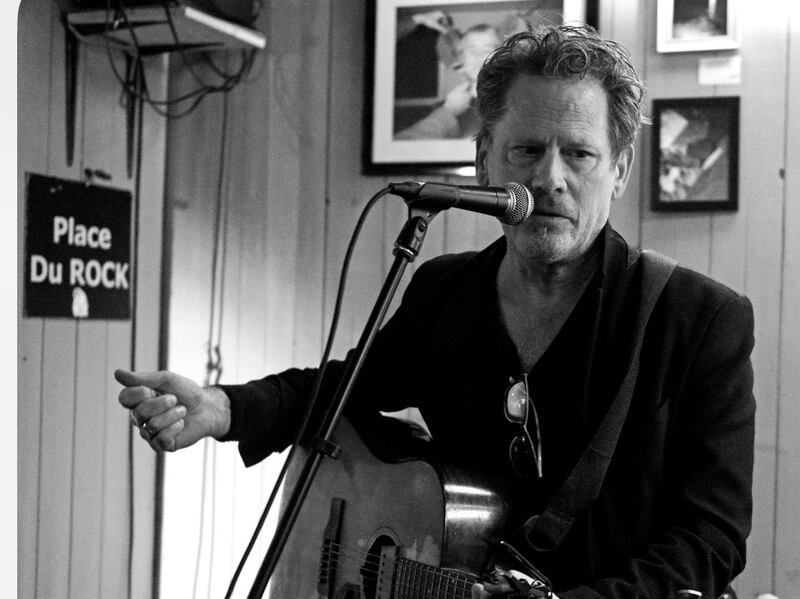
Jimenez: Girls Against Boys were amazing. We had a great time, and then when Rage is coming, it’s like OK, now they’re gonna shut it down.
Gordon: They came out swinging.
Henderson: The band did acknowledge what they felt like was an injustice, the negative hype toward their show.
McDonald: They played two songs, and they went right into that police song as the third song. And I was like, “Oh wow! I can’t believe they did the police song right away.”
Gordon: (Lead singer Zack) de la Rocha gets on the mic and he says, “We got one for the Spanish Fork police,” and they bust into (the song) and even I was like, “Whoa, dude.” I couldn’t believe that. I mean even for Rage Against the Machine I thought that was really audacious. I think they must have seen the news. They kind of knew what was going on, so they leaned into it.
McDonald: I did not expect them to play that song. From what I understand, this was not a normal song that they do. Honestly, I think they saw how many police were there and they may have adjusted their set to do that. I think it was the band’s way of saying, “OK, police, you’re here, but it’s our concert. Don’t ruin our concert.”
The tension went crazy once they did that song. … The whole attitude and the whole concert changed. The audience started ... jumping and screaming and going crazy, and the cops were really getting ... tense and nervous, but nothing happened. That was the beautiful part.
Jimenez: They played it. They were on fire as always. It was great to see the police just stand down.
McCloud: The police, law enforcement, didn’t overreact to that, and everything was OK. I don’t remember a real confrontation with the police at all. So that’s a testament to the law enforcement, in my opinion.
McDonald: Once you got past that song, everyone kind of relaxed. Cops were having fun, kids were having fun, everyone was having fun. By the end of the concert, the whole crowd was just so happy.
Gordon: I just remember our law enforcement teacher in high school, Morgan Warner, who was also a longtime police officer in Spanish Fork. He was there, and he was having so much fun.
“At the end of the day, it maybe wasn’t as big a deal as it was portrayed out to be.”
— Lt. Cory Slaymaker, longtime Spanish Fork police officer
Jimenez: Everyone was just going nuts, and nobody was getting hurt. ... I think some of the officers realized this is just a rock show. Everyone was having a great time. Everyone was pouring their heart into it and venting because of the situation. So I think the audiences, they felt something special was happening, and so they responded.
Lt. Slaymaker: I know they were concerned about the mosh pit. I don’t recall many issues or problems.

Gordon: I was in the mosh pit for a little while. My buddies, they were all-state football players two years before, and they were tough. We ended up getting kicked out. I think it just got a little too extreme, and the cops knew us, we knew them. So they’re like, “All right, you’re out of here.”
We ended up sneaking back in. There was this little spot sort of by the bull chutes. We’d been to the rodeo 1,000 times, and we kind of knew there was this one little vulnerability where we could just go and sneak through the fence. I think probably the cops noticed us and they were just like, “Ah, whatever, let them have their fun.” We didn’t get so wild after that.
McDonald: It was literally one of the best concerts, safest concerts. It was just one of those things where everything went right and it was a great show. The audience loved it, and I think the cops even loved it, I really do. I think all the cops walked away going, “Wow, I’m glad nothing happened, and that was a great concert despite the one song we don’t particularly like.”
Lt. Slaymaker: I couldn’t tell you to this day what music they play, because quite frankly, it’s not my type of music. I couldn’t care less.
Part 6: The immediate aftermath
In the immediate aftermath, the headlines largely praised the show and the city of Spanish Fork. A concert review in Brigham Young University’s Daily Universe described the show as “exhilarating, educational.” A letter to the editor in the Spanish Fork Press praised the police and city officials for the show running smoothly. Another Spanish Fork Press headline read: “We survived the rage.”
Three months later, a similar situation would emerge at the Utah State Fairgrounds when the Salt Lake City venue chose to cancel an upcoming Marilyn Manson show. That decision led to a federal lawsuit from fans. Months later, following a settlement agreement, the Utah State Fairpark agreed to adopt “content neutral” booking rules, the Deseret News reported.
The Rage show also led to a policy change at the Spanish Fork Fairgrounds. City officials decided that concerts would no longer be held at the venue, although restrictions on this ban were later loosened a little in 2004, as the Deseret News reported.
Henderson: From what I understand, there was nothing out of the ordinary from just a regular concert. One guy climbed up one of the scaffoldings, and that was the biggest incident of the night. We made it in and out of the concert unscathed.
Maslyn: There were no stabbings, there were no sacrifices on stage or anything. There were a few minor injuries, dehydration — the record shows 80 people with that. There was one drug issue that needed to be helped medically. There were ... arrests for alcohol, lewdness, disorderly conduct, marijuana paraphernalia, tobacco. And you’re going to get that at any concert, right? So there really wasn’t anything that stood out. It was handled very professionally.
Lt. Slaymaker: At the end of the day, it maybe wasn’t as big a deal as it was portrayed out to be.
McDonald: I tried to look in the papers the next day to see if there was something that happened in the concert that I didn’t know about, and there was nothing.

Rodger Hardy (then-Deseret News reporter): The morning after the concert, I began my Deseret News story this way: “Rage Against the Machine has come and gone with none of the horrors or disasters many people feared.”
Thirty years later, that sentence may say more about the experience than anything else I wrote. … Sometimes the most interesting story is the distance between what people fear will happen and what actually does.
Lt. Slaymaker: I think for the most part everything played out the way it was going to play out. Yeah, there was a heavy police presence. I know it made the news. It was a big thing back in the day, but you kind of look back at it 30 years later, you think maybe it was overrated. It was probably overrated and didn’t need the attention that it got. It got more attention than it needed to get.
Henderson: The next day, a lot of people were probably thinking, “Well, that was blown out of proportion.” After the concert, I heard a rumor that they said they’ll never do that again — they’ll never have concerts there again. But they went back on that because I’ve actually played the fairgrounds a couple of times.
Part 7: Recreating the moment
In the late afternoon on Sept. 11, 2026 — 30 years to the day since the Rage show — the fairgrounds at 475 S. Main Street in Spanish Fork are empty.
Out by the stalls, to the east of the outdoor rodeo arena that underwent a massive renovation in 2012, there’s construction in progress. It’s in the early stages, but when it’s all done, the fairgrounds will boast facility upgrades, including a new indoor arena and barn stall.
Even as the fairgrounds take new shape, for concertgoers, the memories of standing on the dirt floor of their hometown arena and hearing Rage haven’t disappeared.
Now, there’s at least one concertgoer hoping to recreate the magic of that once-in-a-lifetime show. Henderson, who as a teen and aspiring musician was especially in awe of Tom Morello’s guitar wizardry, is now in a ’90s alt-rock and grunge tribute band that hopes to soon play Rage’s music at the fairgrounds.
Maslyn: What’s really fascinating to me about this situation is people still remember, and it’s 30 years. Advances that the city has made with fire, with public safety, with the streets and the growth and parks and recs centers, all of these things. And what still comes up is Rage Against the Machine. I find it fascinating.
Lt. Slaymaker: I’ll bet 90% of people in Spanish Fork don’t even remember it. … Occasionally if you run across someone that’s lived here forever, for some reason if it gets brought up, they laugh about it.
Henderson: I would say that Rage Against the Machine is still having influence on me as far as musicianship is concerned. … Seeing (Morello) do it live, I didn’t think it was possible. And even now, 30 years later, I’m like, “How does he do that?” And I’m trying to learn it and trying to figure out how he’s doing it. But I know it can be done because I’ve watched him do it.
Now, we’re trying to create this tribute show, to give people a place to relive this magical moment. We don’t want to recreate the negative outlook. We want to bring a positive outlook to this. We want to bring it back for the nostalgia, for the fact that it ever happened. It was so unlikely and so crazy that it did.