

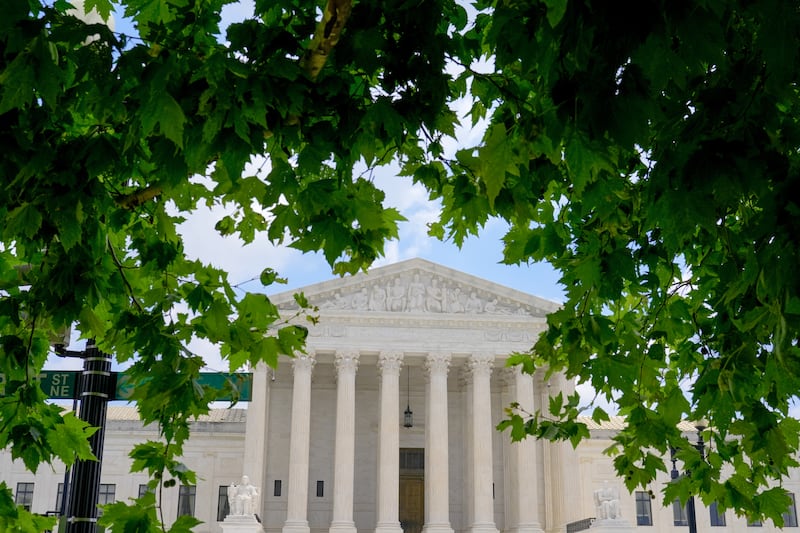

- The Supreme Court allowed for the use of a citizenship data collection to review voter rolls, overturning a previous ruling from a district court.
- The program allows for mass searches using Social Security numbers.
- In the majority opinion, justices rejected arguments that the use of the program violates confidentiality provisions, while all three liberal justices dissented.
The Supreme Court said on Friday that states can use a citizenship data collection system to review voter rolls, pausing for now a lower court order that found the program violated federal privacy laws.
The majority opinion rejected arguments that the use of the new system, designed to make it easier for government officials to vet voters’ citizenship status by using Social Security numbers and conducting bulk searches, arbitrarily violates confidentiality provisions and requires nonconsensual disclosure of private information.
The program, known as Systematic Alien Verification for Entitlements, or SAVE, received some criticism after it was implemented early last year.
A few organizations, including the League of Women Voters and Electronic Privacy Information Center, filed a lawsuit and said the program was illegal.
In response to the challenge, a district court ruling in June halted the use of the SAVE system. District Judge Sparkle L. Sooknanan, who wrote the June opinion, said that by implementing the program, the federal government “knowingly trampled on the privacy rights of American citizens in a manner that threatens the sacred right to vote.”
The recent opinion of the high court, however, said the federal government “has an obligation to respond to requests from state and local election officials seeking to verify the citizenship of voters,” and the district ruling “prevents the Federal Government from using the program it believes is best suited to the task.”
The opinion acknowledged that the plaintiff organizations “likely have standing,” but said that “their claims likely lack merit.”
All 3 of the court’s liberal justices dissented to the opinion
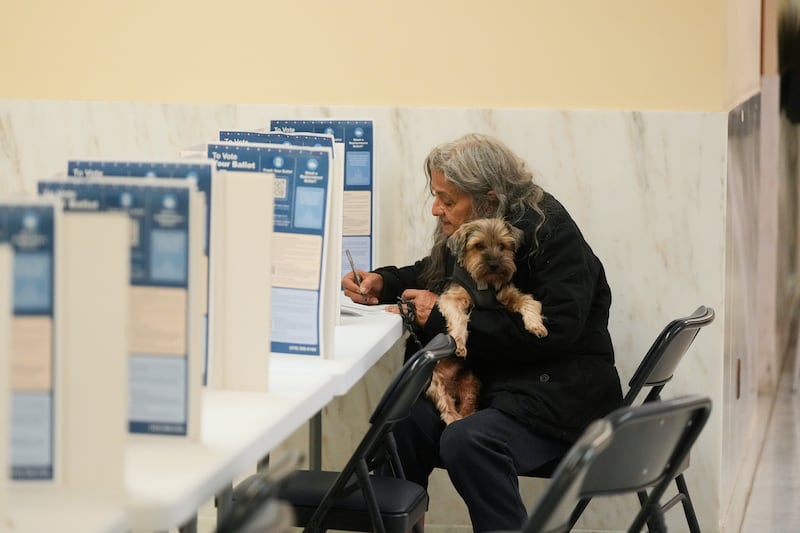
Justices Ketanji Brown Jackson, Sonia Sotomayor and Elena Kagan dissented to the opinion allowing the use of the system.
Jackson, who authored the dissenting opinion, said that in the majority ruling, the court “focuses only on the harms the Government will purportedly suffer absent a stay, disregarding the harms that the modified SAVE system has caused, and will likely continue to cause, to lawful voters.”
Jackson listed harms that “might occur if the modified SAVE system is allowed to continue operating,” such as some recently naturalized citizens being forced to provide proof of citizenship before voting or having their registration canceled altogether.
Plaintiff organizations say legal battle will continue
The organizations that challenged the SAVE overhaul released a statement Friday that said they will continue efforts to oppose the program.
“Today’s decision is profoundly disappointing, as it puts millions of Americans at risk of being unlawfully targeted by the administration’s unreliable voter purge database weeks before the midterm elections,” the statement said.
“However, this case is not over,” the organizations continued. “The D.C. district court ruled that the expanded SAVE program violated multiple laws. We will be doing everything in our power to protect Americans’ voting and privacy rights by ensuring that the district court decision stands.”
Utah Sen. Mike Lee, who proposed the SAVE Act in Congress, a bill that would require voter ID to cast a ballot and proof of citizenship to register to vote, said the Supreme Court’s decision was, “Excellent news for election security.”
“Thank goodness we have a president and his administration willing to stand for American voters in American elections,” he said in a social media post.
Effects on the November general election may be limited
The majority opinion mentioned the National Voter Registration Act that bans “systematic voter-list maintenance” within 90 days prior to the election and suggested that federal law prohibits the conduction of mass searches shortly before Election Day, meaning there may be minimal effect on the upcoming general election in November.
The Trump administration has argued that the 90-day ban does apply to efforts targeting noncitizens, and the court noted that it will consider whether probes within 90 days of an election will be allowed in a later case.