

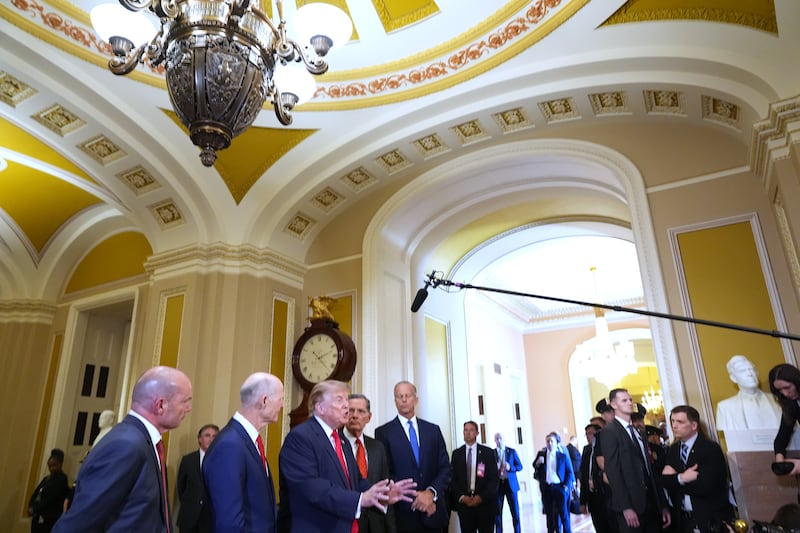

Ever since President Donald Trump took the oath of office in January 2025, pundits have agreed on one thing: Congress has rolled over. Lawmakers, we’re told, have handed their powers to the president, the separation of powers is broken and Capitol Hill is to blame.
That story is wrong. Congress has pushed back on this president, repeatedly and in ways that matter. Most people just missed it because Congress has pushed back slowly, quietly or both.
3 examples
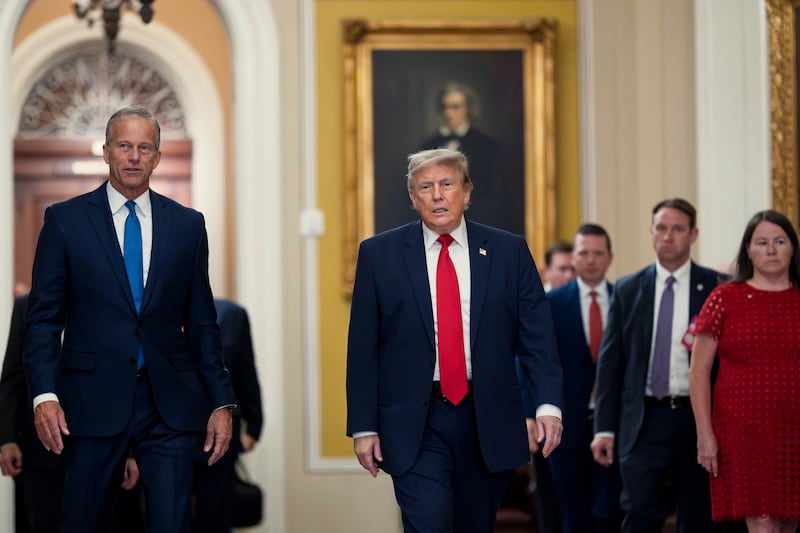
That doesn’t mean Congress has done enough. It never has. On war and national security, lawmakers have let presidents run the show for decades. But look past the headlines, and a different picture emerges.
1. Pushing back on nominees
Consider the president’s efforts to reshape the executive branch. In 2025, while Elon Musk’s DOGE efforts dominated the news, the Republican-led Senate was quietly blocking a record number of the president’s nominees. There were no dramatic floor votes. The nominations simply sat until the White House gave up and pulled them.
Trump withdrew 57 executive branch nominations in 2025. That’s more than double the 22 he withdrew in 2017 and nearly twice the 29 Joe Biden withdrew in 2021. Across the first two years of this second term, Trump has now withdrawn 74 in total — second only to Biden’s 81 over the same initial two-year span. Every withdrawn nomination is a fight the president lost without anyone seeing a punch thrown.
2. Pushing back on mass layoffs
Congress also put a halt to the aggressive workforce reductions that characterized the first several months of the second Trump administration. Through layoffs, buyouts and early retirements, the administration pushed out more than 200,000 federal employees in the first 10 months of 2025.
Then Congress stepped in. The November 2025 bill ending the longest government shutdown in American history barred agencies from any further mass layoffs while it was in effect, and lawmakers have kept up that pressure in legislation since.
By March 2026, the government was hiring again, bringing back workers who had left and restaffing agencies that had been gutted. The exceptions tell the story. USAID and the Corporation for Public Broadcasting stayed dead because Congress itself voted to kill them.
3. Pushing back on aggressive spending cuts
Congress has also done more to push back on the Trump administration’s efforts to unilaterally slash federal spending than it may seem. In 2025, the administration cut funding for science and health research, foreign aid, clean energy, and more.
Through the appropriations process, however, Congress has put much of it back. Despite DOGE, federal spending actually rose from 2024 to 2025, and most programs are funded at roughly Biden-era levels.
The cuts that stuck are mostly the ones Congress approved. That is exactly how the Constitution says spending decisions should be made.
Congress has moved to check President Donald Trump in other ways as well. It put an end to the president’s $1.8 billion “weaponization” fund, which would have funneled money to his political allies. Democratic and Republican senators refused to back Trump’s SAVE Act, which would have allowed the Trump administration unprecedented influence over who can and cannot vote in federal elections. And this summer, Congress passed the largest housing affordability bill in decades with broad bipartisan support, despite opposition from President Donald Trump.
Moving at different speeds
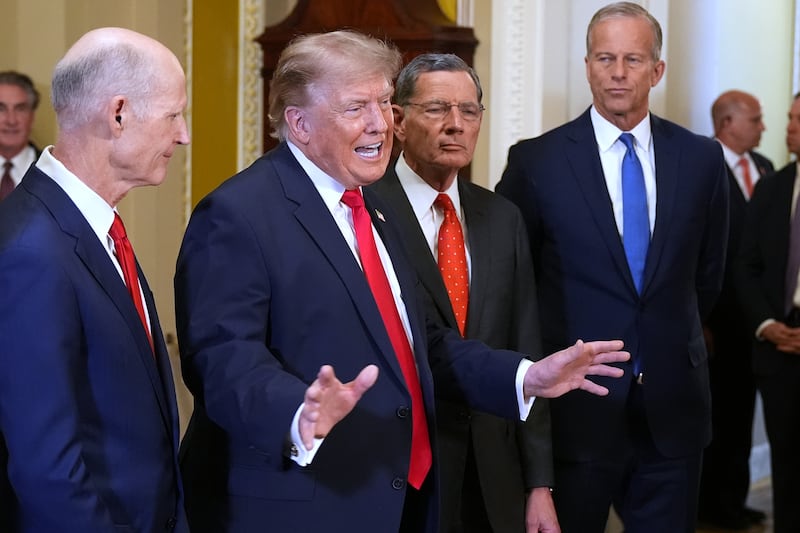
So why does this pushback go unnoticed? Because presidents and Congress move at different speeds. A president can act with the stroke of a pen. Congress has 535 members, two chambers and no single voice. It acts by building coalitions and passing laws, which takes months, sometimes years.
By the time it responds, the public has absorbed weeks of coverage of a president acting and a Congress doing nothing. The news cycle has moved on. The check happened, but almost nobody covered it.
Trump magnifies this effect. Perhaps no president in American history has commanded attention the way he does, and social media and cable news amplify his every word. A committee markup or a line in a spending bill can’t compete for headlines.
But those slow, quiet moves are the system working as designed. The separation of powers was never meant to be an alarm with tripwires. Congress responds through legislation, and it responds in proportion to what voters demand.
The biggest check of all
Early in Trump’s second term, when Republican voters strongly backed him, it should have surprised no one that Republican lawmakers didn’t loudly resist. Crossing a popular president in your party means angering your own voters, the one thing members of Congress are trained to avoid.
This year, voters across the political spectrum have soured on the administration. As a result, more Republican lawmakers and candidates are willing to break with the White House.
That brings us to the most powerful check of all: voters. In November, Americans will decide who controls Congress. If Democrats win the House or Senate, they will have every incentive to use Congress’ full arsenal against the president. Expect oversight hearings, investigations, subpoenas and a legislative agenda aimed at attacking the last two years of Republican governance.
That will be the separation of powers doing exactly what it was built to do. The system is alive and well. We just have to know where to look.