

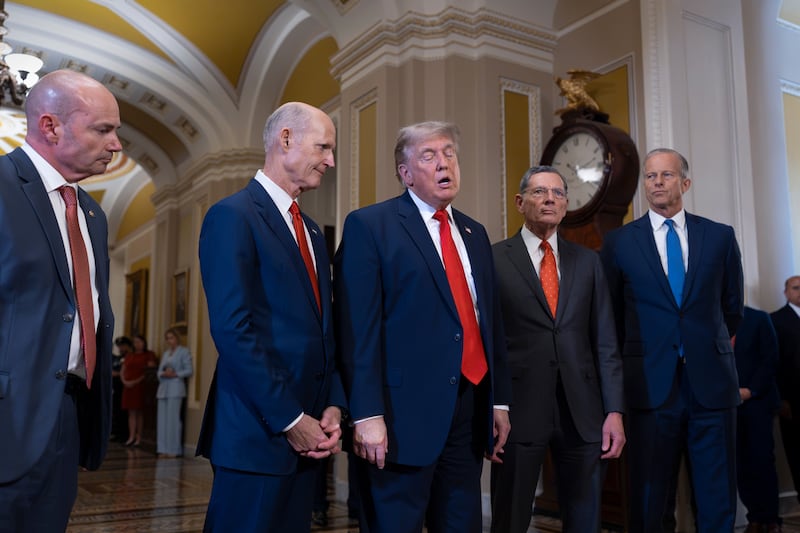

President Donald Trump announced on Friday that he would not sign the landmark bipartisan housing reform package, noting he was doing it out of protest that the Senate has not yet passed the SAVE America Act.
The bill, the 21st Century ROAD to Housing Act, is still poised to become law after midnight on Friday even without Trump’s signature, so long as he doesn’t formally veto the package.
“I will not sign the Housing Bill, which has been fully approved by Congress and sent to the White House, in PROTEST over the fact that the United States Senate is not capable of passing THE SAVE AMERICA ACT, which is polling at 97% with the Republican Party, and very high with the non-politician Dumocrats,” Trump wrote in a post on Truth Social.
Trump renewed his demands for Senate Republicans to repeal the filibuster, a procedural tactic that requires 60 votes to end debate on certain pieces of legislation in order to schedule a final vote. Democrats have managed to use the filibuster to prevent a vote on the SAVE America Act, which would establish voter ID and proof-of-citizenship requirements for federal elections.
The president has repeatedly urged Republican leaders to undo filibuster rules, a demand that top Republicans such as Senate Majority Leader John Thune, R-S.D., have warned against.
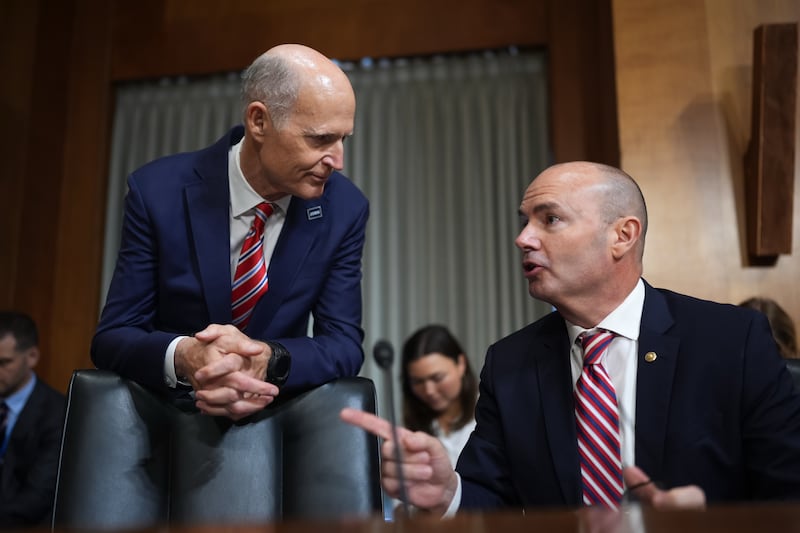
Utah Sen. Mike Lee, the main author of the SAVE America Act in the Senate, backed Trump’s decision not to sign the legislation.
“President Trump shares frustration with the American people that Congress is not delivering on their most important priorities, including securing elections by requiring proof of citizenship to vote,” Lee told the Deseret News in a statement. “The sooner we pass the SAVE America Act, the sooner President Trump will return to celebratory signing ceremonies for other legislation.”
A bill can become law without president’s signature
Even without Trump’s signature on the bipartisan housing package, the bill is still set to become law.
Under U.S. law, a bill is automatically enacted after 10 days so long as the president doesn’t issue a veto and send the legislation back to Congress. In his lengthy statement on Friday, Trump did not indicate plans to formally object to the bill.
Trump’s refusal to sign the package follows through with threats issued by the president last month that he would not enact new legislation until the SAVE America Act first reached his desk. That caught Republican lawmakers by surprise, particularly after the president abruptly canceled a signing ceremony in the U.S. Capitol, calling it “unimportant” compared to the election security bill.
Republican leaders had hoped Trump would formally sign the housing package, which both parties want to use as campaign fodder heading into the midterm elections. The bill aims to increase supply and lower costs for homebuyers, playing into both parties’ campaign messaging of affordability.
“I hope he does sign it,” House Speaker Mike Johnson, R-La., told reporters last month. “If he doesn’t, it’ll still (become) law, we’ll still celebrate it. But he’s trying to make a point, and I think he’s making it very effectively.”
Still, Democrats could use the absence of Trump’s signature to attack Republicans and paint the majority party as unwilling to reduce costs.
“The 21st Century ROAD to Housing Act would help tackle the housing shortage and make homes more affordable. And still Donald Trump is refusing to sign it,” Sen. Elizabeth Warren, the top Democratic negotiator on the housing bill, said in a post on social media. “If you’re serious about lowering costs, you don’t reject one of the biggest housing bills in years.”