


On Monday morning, while much of the country was still sweeping up confetti from America’s 250th birthday, the president of the United States shared a video of kindergartners.
The clip came from a graduation ceremony at Gateway STEM Academy, a public charter school in St. Paul, Minnesota. Beneath their caps, many of the girls wore white hijabs.
President Trump first posted the video without comment. He later reposted it with a caption: “Public school in St. Paul, Minnesota. Every girl is in a hijab … in kindergarten.”
The implication was difficult to miss. The most powerful office in the world had turned a kindergarten graduation into a political statement about a child’s religion.
Minnesota Gov. Tim Walz responded with a post of his own. “The President of the United States is attacking a group of kindergartners because of the clothes they wore to school.”
The Minnesota Association of Charter Schools noted something even more sobering. By publicly sharing the children’s faces and identifying their school, the posts could put those students at greater risk.
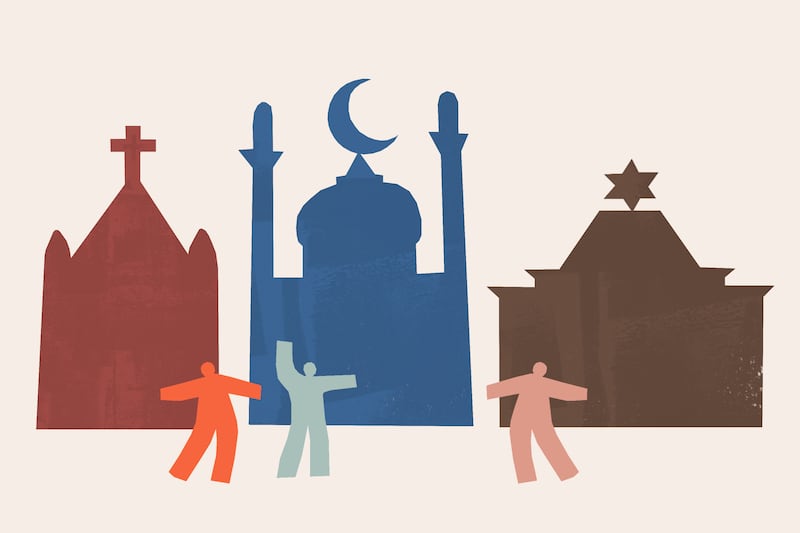
But the story isn’t really about Minnesota. It’s about whether America still intends to keep one of its oldest promises, the one embedded in the Bill of Rights:
“Congress shall make no law respecting an establishment of religion, or prohibiting the free exercise thereof.”
Religious liberty comes first in the First Amendment. Before speech. Before the press. Before assembly. Whatever else that ordering may or may not mean, it reminds us that freedom of conscience has always stood at the heart of the American experiment.
As a member of The Church of Jesus Christ of Latter-day Saints, I also wear religious clothing. One is worn beneath my shirt, a daily and deeply personal reminder of promises I’ve made to God. My son wears his faith both inside and on the outside. He’s serving a mission in Thailand, and every morning, he clips a small black name tag to his shirt that announces exactly who he is and what he believes.
My people know what it feels like when powerful voices decide a faith does not belong. In 1838, the governor of Missouri signed an order declaring that members of my church must be “exterminated or driven from the state.” Families left their homes in winter. Some never survived the journey.
That history is why Latter-day Saints should be among the first to speak up when any believer, of any faith, is singled out for what they wear in worship or devotion.
A hijab. A yarmulke. A turban. A cross on a chain. A white shirt and a name tag.
Religious liberty has never required us to agree with another person’s theology. It invites something simpler — that we defend another person’s right to worship according to the dictates of conscience just as fiercely as we expect them to defend ours.
Here’s what we might forget about religious liberty. It’s not the freedom to practice the most popular faith in the room. It never has been.
It’s the promise that a kindergartner in St. Paul can wear her faith to graduation, sing as loudly as she’d like, and never become a political symbol.
You do not have to share her theology to protect her liberty. In fact, protecting her liberty is how you protect your own.
The fence around her faith and the fence around mine are the same fence.
America just celebrated her 250th birthday. The fireworks are over. The speeches have wrapped.
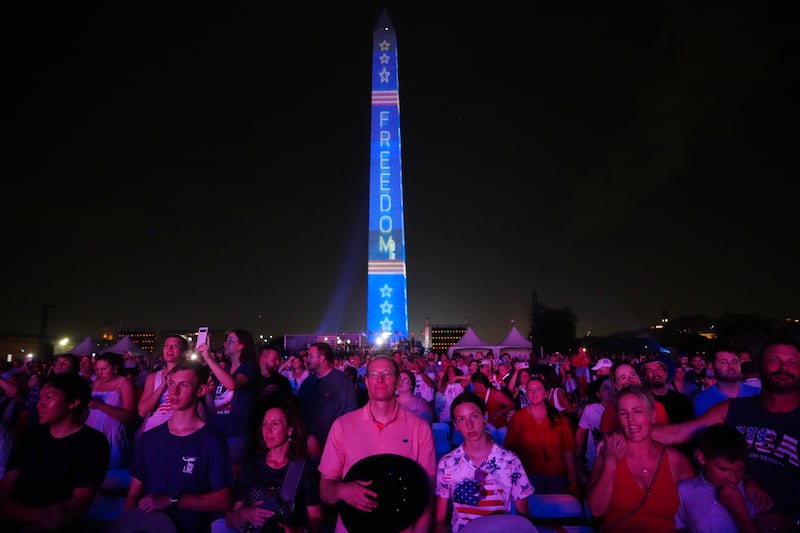
Now comes the harder part. We have to decide what kind of country begins the next 250 years.
One day before the president’s post, millions of members of my church around the world joined a fast for religious liberty. We linked the fast with prayers that freedom of belief would be strengthened everywhere.
I assumed we were praying for people in distant countries where governments restrict worship.
It turns out those prayers were needed here, too.
For kindergartners in Minnesota.