

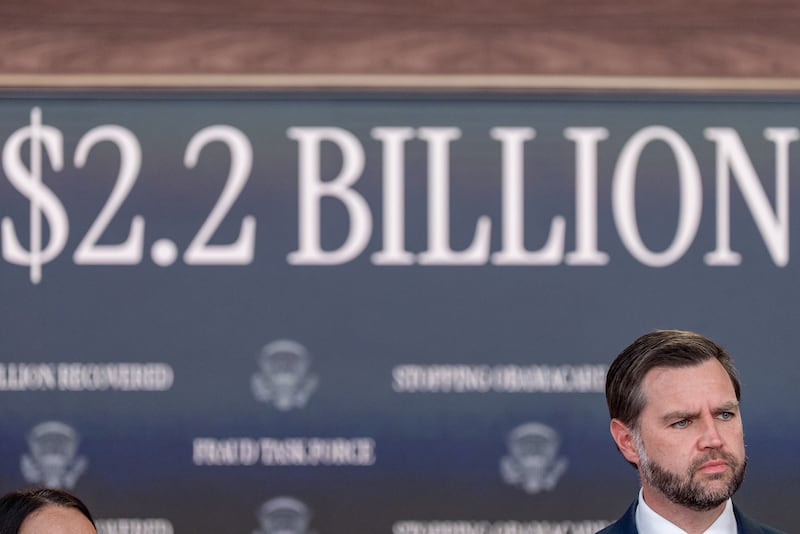

- Vice President JD Vance says 750,000 ACA enrollees are being removed for suspected fraud, saving an estimated $2.2 billion.
- The Paragon Health Institute estimates the broader problem involves more than 6 million improper enrollments.
- Advocacy groups and some experts called for greater transparency on how those who lost coverage were identified.
In a move he estimated will save taxpayers $2.2 billion, Vice President JD Vance announced Tuesday that more than 750,000 Affordable Care Act enrollees do not qualify for the subsidies they receive in the public healthcare exchange and will be dropped. And some of them, he added, are not real people.
“We’re actually making sure that the people receiving Obamacare subsidies are actually entitled to receive them,” said Vance, appointed by President Donald Trump to lead a government task force that targets fraud, so far in programs like Medicaid, Medicare and the insurance-subsidy program.
The Affordable Care Act marketplace had enrolled more than 19 million people during its open-enrollment period, according to the U.S. Department of Health and Human Services website — a number that had swelled during the COVID-19 pandemic as additional funds were added to help struggling families during the Biden administration. When the Trump administration let the COVID-era enhanced subsidies expire without seeking an extension, many enrollees saw a big increase in premiums, prompting many to downgrade coverage and an estimated 3 million people dropped it, according to a U.S. Department of Health and Human Services report.
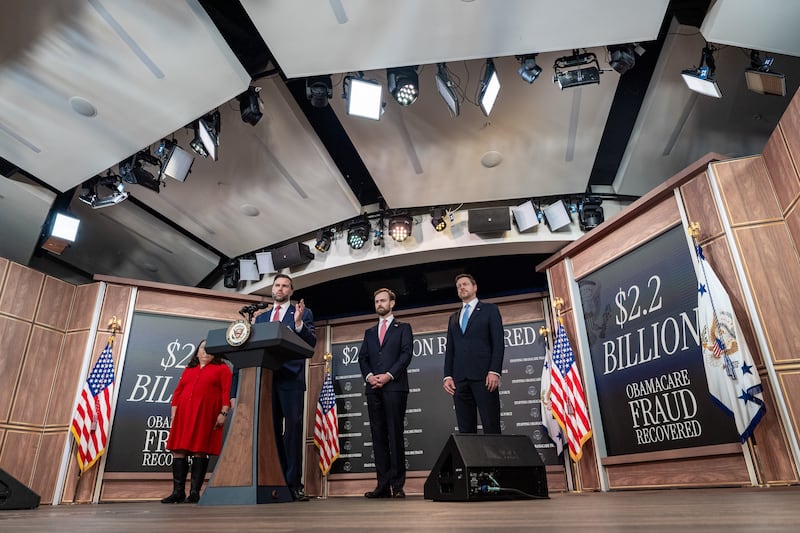
The Associated Press quoted Vance as noting that the 750,000 people were part of 315,000 enrollments, which include family members, that had not been checked by the government for eligibility. He said that another 419,000 enrollments will be checked further to see that they are eligible for the subsidized healthcare.
Per the article, “The Trump administration also announced a six-month suspension on new agents or brokers who sign up enrollees for healthcare coverage, who officials say commit a disproportionate amount of the fraud they uncovered.”
Unaware of enrollment?
The move to drop those suspected of not qualifying was first reported by The Wall Street Journal.
Per the Journal, “Vance said those enrollments include people who are unaware that they are enrolled in the program, are ineligible for the program because they have employer-provided healthcare or earn an annual income greater than 400% above the federal poverty level. The Department of Health and Human Services sets the federal poverty level at $15,650 for one person or $32,150 for a family of four.”
The New York Times said the 750,000 who will lose coverage are about 4% of the total enrollment.
According to the Journal, “CMS also announced that it is cutting off hundreds of brokers and agents who signed people up for government healthcare and issuing a nationwide moratorium on all new agents and brokers, who are paid by insurance companies and can receive up to $25 a month for each new enrollee.”
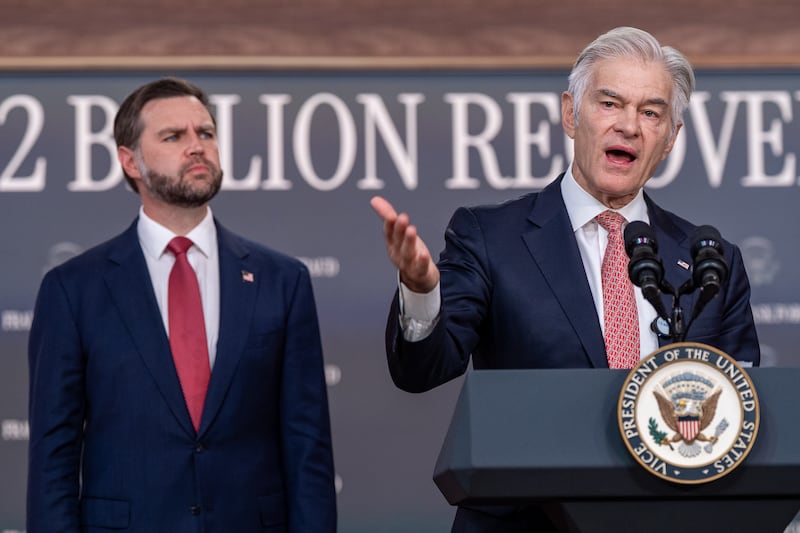
The Hill reported that Vance and Dr. Mehmet Oz, Centers for Medicare & Medicaid Services administrator, said in a media briefing that they’re not worried about real people losing their plan in the crackdown “because most of them didn’t file claims, have Social Security numbers or respond to outreach efforts.”
“We are putting ourselves under an extraordinary burden of proof,” Vance said. “So those 750,000 people are people that we feel confident either don’t know that they’re enrolled in the program, aren’t using the program at all, are unaware of it or … are potentially phantom people who are enrolled against their will, or maybe they don’t even exist.”
Pushback and a call for transparency
“People who earn more than four times the poverty limit — around $64,000 for a single person — are ineligible for subsidies. But people who earn less than the federal poverty limit — around $16,000 a year — are also ineligible because the lawmakers who wrote Obamacare had intended that such people would obtain health insurance through an expansion of Medicaid, before the Supreme Court made Medicaid coverage for this low-income group optional for states,” per the Times article.
It noted that “there is evidence that some such people have enrolled in coverage, either because they innocently overestimated their expected income or because a broker coached them to do so to obtain coverage. The Congressional Budget Office estimates there were around 2.3 million such people in 2025.”
There are calls for more information on how the decision was made on who was enrolled fraudulently and who was not.
“I think there’s no question that somebody who was fraudulently enrolled should have their coverage canceled,” Cynthia Cox, a vice president of KFF, a nonprofit that looks at issues surrounding healthcare, told AP. But she added, “I think the question is whether this was the appropriate process by which to identify fraudulent enrollees, and also whether all of them were indeed fraudulently enrolled.”
Per The Hill, “The Democratic-aligned advocacy group Protect Our Care said the action is a ‘smokescreen’ designed to kick more eligible people off their coverage and that the administration doesn’t actually care about fighting fraud. The group noted that last May, the Trump administration reinstated 850 ObamaCare brokers and agents suspected of fraud.”
But others, including The Paragon Health Institute, a conservative think tank with ties to the administration, said their own investigation found more than 6 million people were improperly enrolled in the health exchange in 2026.