

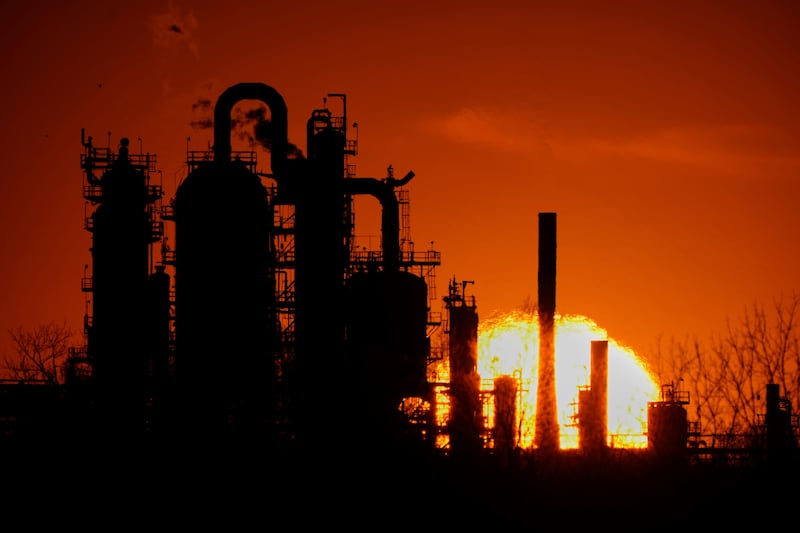

In a small victory for the world, scientists have changed their outlook on the worst-case scenario for climate change. At the same time, the best-case scenario is no longer attainable, reports say.
Not as bad as we thought, not as good as we hoped
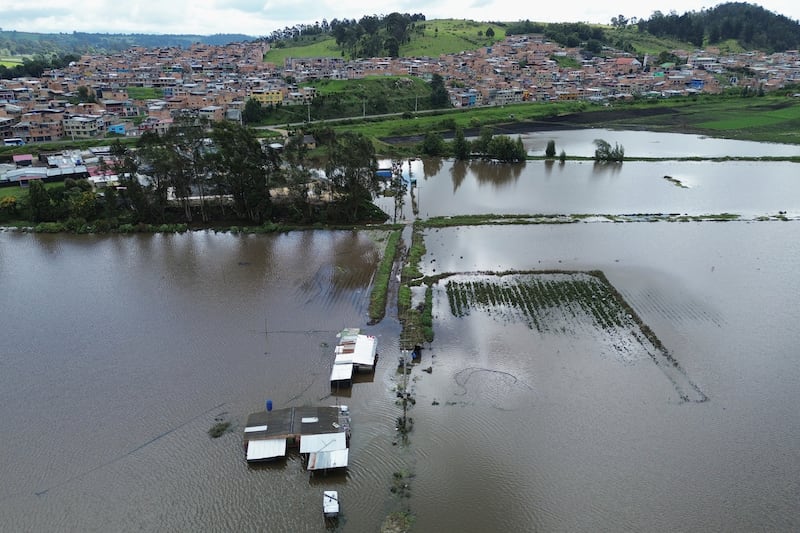
Originally, the world’s current pollution rates were taken into account to determine how much Earth’s temperature would increase. The worst-case scenario started as 8.1 degrees Fahrenheit, but has been lowered to 6.3 degrees, per The Associated Press.
But “the risks of climate change have not disappeared,” Detlef Van Vuuren of Utrecht University, lead author of a study laying out future scenarios, told AP.
“The good news is that we did not follow the most dramatic emission pathway. However, we are still heading towards a future with significant climate impacts; a future we should avoid.”
The original goal of 2.7 degrees Fahrenheit is no longer on the table. AP reports the next best-case scenario is for the Earth to reach 3.1 degrees for 70 years and then return below the original goal if some sort of technology can be designed to remove large amounts of carbon from the air, according to scientists.
Addressing the new updates, Keywan Riahi, who led a 2011 study on the scenario, said the two extremes were never the likely scenarios.
“It was never a likely case. It was basically, given the underlying studies in the literature at that time, a plausible higher bound of what possible emissions could look like,” he told AP.
Now with more studies and shifts in emission reduction, the extremes have been adjusted, but the likeliest scenario is 4.5 to 5.4 degrees Fahrenheit, still dangerous levels The New York Times reports.
Each degree matters

As nations across the globe seek cleaner energy forms, each additional fraction of a degree matters significantly, since each addition to global warming causes noticeable and dangerous increases in extreme weather, according to the Times.
Discussing the impact half a degree makes, climate scientist Carl-Friedrich Schleussner explained to the Times that not every region sees the global average.
“If you’re looking at this one region, which is already water-scarce today and sees a lot of political instability, half a degree makes a really big difference,” he said. “It’s a good reminder that no one experiences the global average temperature.”
Not meeting the global goal of 2.7 degrees Fahrenheit will greatly impact those on small islands in developing states, according to AP. A co-author of a United Nations science report explaining the potential harms, Natalie Mahowald, said some islands will go underwater.
What does carbon capture look like?
Alongside emission reductions, The World Resources Institute states that carbon removal is needed to keep climate increase under control and to meet the U.N.’s goal of 2.7 degrees or to come anywhere close.
Carbon removal is the process of removing emissions already in the air and can take several forms, according to World Resources Institute. Some forms include trees, carbon mineralization and directly capturing carbon in the atmosphere.
Each method comes with its pros and cons as they are exploring greater efficiency to capture and prevent emissions from reentering the atmosphere.
While no single process has risen to the top, the institute says “the most cost-effective and lowest-risk strategy for increasing carbon removal capacity involves developing and deploying a variety of approaches in tandem.”
Different from carbon removal, carbon capture is what it sounds like: the process of capturing emissions at the source and then depositing them deep into the ground. The captured carbon dioxide can then be used for other purposes. It is not necessarily new, but currently, it is still expensive. For carbon capture to take hold, further development is needed.
What Trump said
Reacting to the news, Trump said “GOOD RIDDANCE!” in a social media post. “After 15 years of Dumocrats promising that ‘Climate Change’ is going to destroy the Planet, the United Nations TOP Climate Committee just admitted that its own projections (RCP8.5) were WRONG! WRONG! WRONG!”
While the extremes of climate change are no longer viewed as plausible by researchers, the path the world is on right now is still cautioned by experts.
Sen. Curtis and his shift to climate awareness
Sen. John Curtis, who recently spoke at Utah Valley University at an event called “Bringing people together for constructive conversation about climate change,” talked about how he came to an awareness of the subject.
Curtis did not always believe in climate change, but as he was asked the question, he decided he needed to learn more.
So he began asking oil executives and conservative think tanks if they thought humans were behind climate change; “their answers were all ‘yes.’”
Ultimately, he said his faith in God led him to feel “reverence for the Earth,” which led to him starting the Conservative Climate Caucus with the purpose of educating House Republicans on climate policies and legislation consistent with conservative values.