

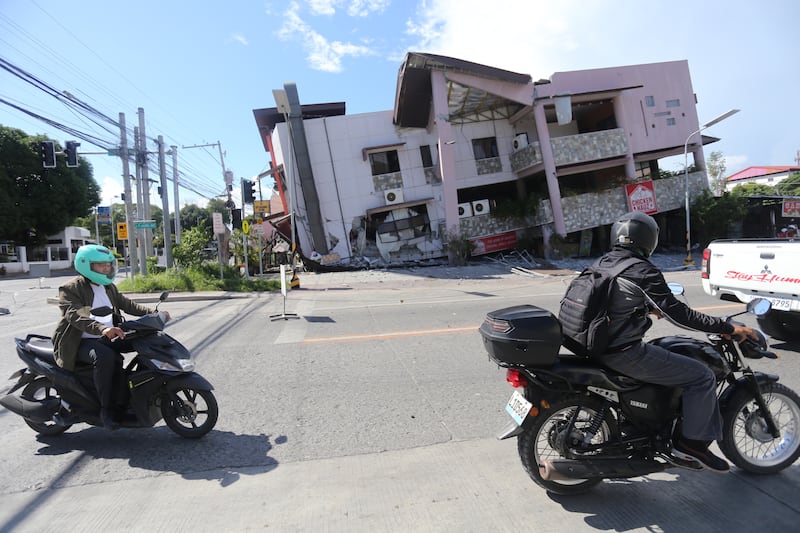

A 7.8 magnitude earthquake struck the Philippines early Monday, making it the largest earthquake to hit the Philippines this year, according to officials.
Where:
The earthquake struck the southern Philippines and was centered at sea near Mindanao, the second most populated island in the Philippine archipelago, according to reporting by The Associated Press.
Affected countries include the Philippines, Indonesia and Malaysia.
By the numbers:
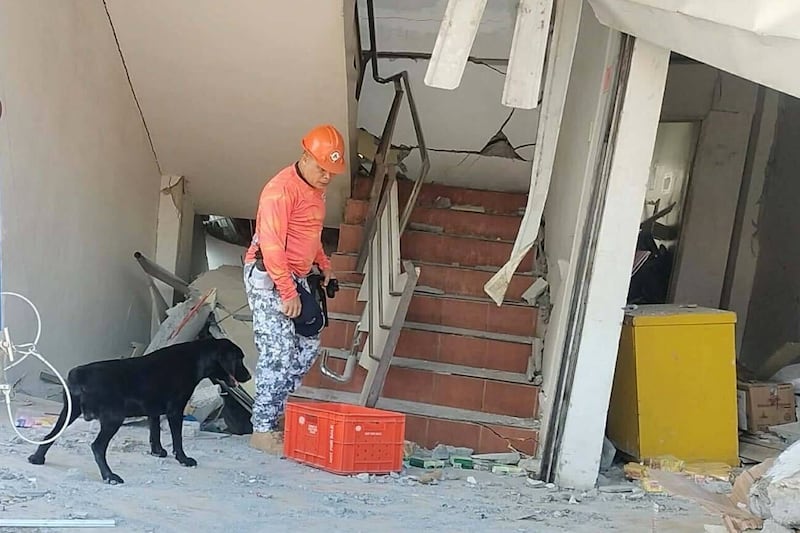
Fatalities: At least 32 deaths have been reported, caused mostly by the landslide and collapsing buildings.
Injuries: More than 200 injuries have been reported, mostly caused by the collapse of ruined buildings.
Missing: At least 12 people remain missing in General Santos, a port city with more than 700,000 people.
Biggest worries ahead: Tsunami, landslide and building damage
The quake sent a 3-foot tsunami into nearby coasts. At least one coastal village has reported tsunami damage. Officials said the threat of tsunami remained for about five hours after the quake.
In addition to the large tsunami, smaller waves were detected as far as southern Japan.
The quake also prompted a landslide in Glan, the most populous municipality in the province of Sarangani. The landslide killed 13 villagers, officials report.
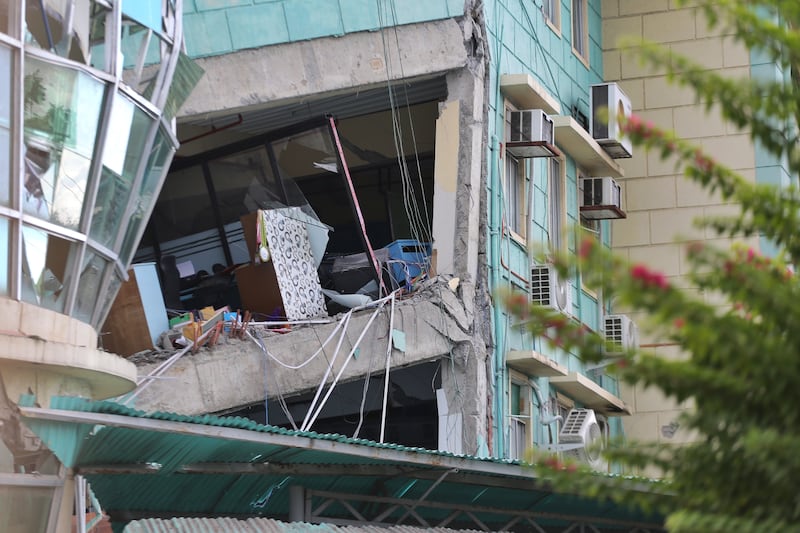
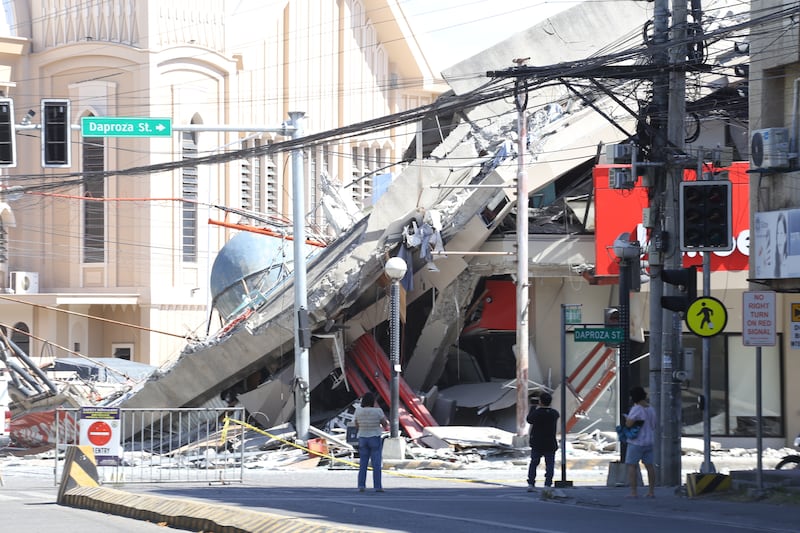
Several buildings sustained damages or completely collapsed in General Santos. Collapsed buildings was one of the main causes of death and injury.
The U.S., France and New Zealand have expressed their readiness to support Manila.
Officials warn of aftermath
The Philippine Seismic Network has recorded 138 aftershocks as of noon local time on Monday. Aftershocks, ranging between magnitudes of 1.3 to 6.7, may be felt for days or even weeks in nearby provinces, according to officials from the Philippine Institute of Volcanology and Seismology.
Those in the area are told to stay away from beaches and coasts in case of another earthquake.
A press release from the institute warns of inundation of seawater (the submergence of normally dry coastal areas) and sinkholes in areas with limestone bedrock. The institute said they will monitor volcanic activity but do not expect any.
Many residents in local communities affected
More than 100 students and teachers in Malita were gathered for a flag-raising ceremony on their first day of school after a two-month break when the quake hit.
“Their excitement on the first day of school turned to trauma,” school principal Rosavel Cachuela told The Associated Press. Many children screamed and cried but avoided injury, Cachuela said.
Philippines President Ferdinand R. Marcos Jr. ordered the suspension of all classes across affected areas until further notice.
“The safety of our children comes first,” Marcos said in a news release. He also warned residents to take immediate action to protect themselves from the disaster.
“To our kababayans in the affected provinces, please heed the tsunami warning. Move to higher ground now. Do not wait. Your life is more important than anything left behind,” the president said.
Many residents ran out of their houses and into the streets when they felt the shaking begin.
This disaster is not the first, nor will it be the last
The Philippines archipelago is hit by about 20 typhoons and tropical storms a year due to its location on an arc of seismic faults known as the Pacific “Ring of Fire.”
This makes it one the most disaster-prone countries in the world, The Associated Press reports.