


On March 11, 2011, a magnitude 9.0 earthquake off the northeastern coast of Japan’s main island triggered a devastating tsunami that killed nearly 20,000 people.
Without any cell service or electricity available, a branch president in one local congregation of The Church of Jesus Christ of Latter-day Saints set out on a scooter, traveling over a mountain to check on two female church members living in the coastal city of Kesennuma. After two days of searching, he finally found them and ensured they were safe — delivering a bag of rice and a message of love.
This humble leader’s watchcare “made me know that God loved me,” one of the women later told Sarah Jane Weaver, now editor of the Deseret News.
“What a sweet message to women of the world, that someone cares enough to spend days seeking them out,” Weaver recalled during a panel Friday at the FAIR Latter-day Saint conference in Lehi, Utah.
“That’s what the church does,” Weaver said. “It lifts and strengthens everyone, men and women alike, as we serve and care for one another.”
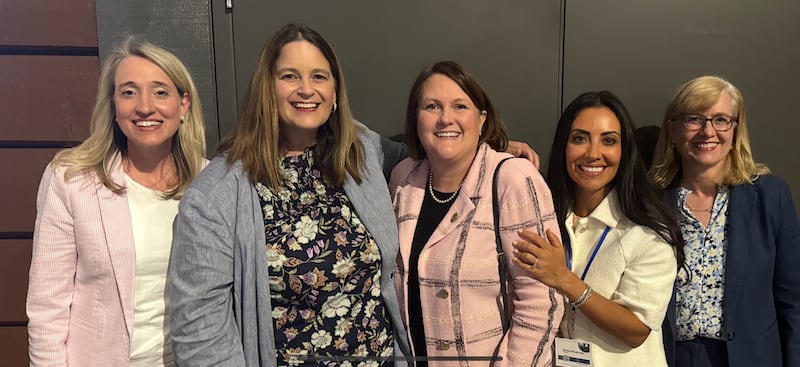
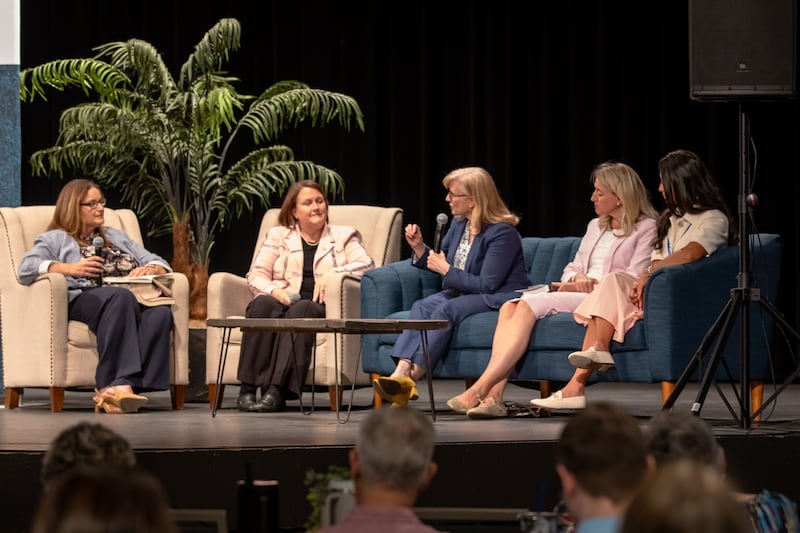
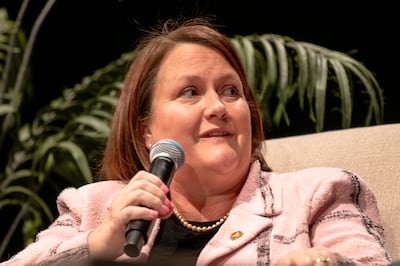
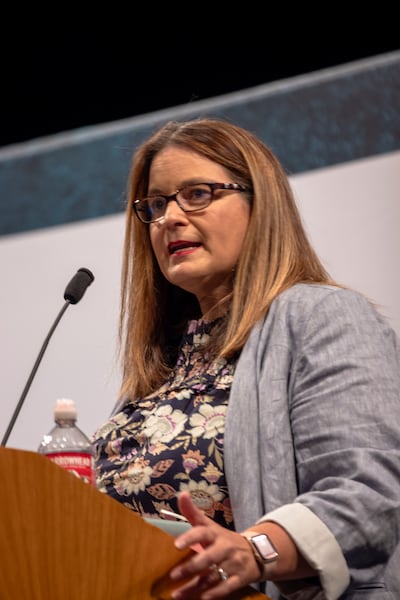
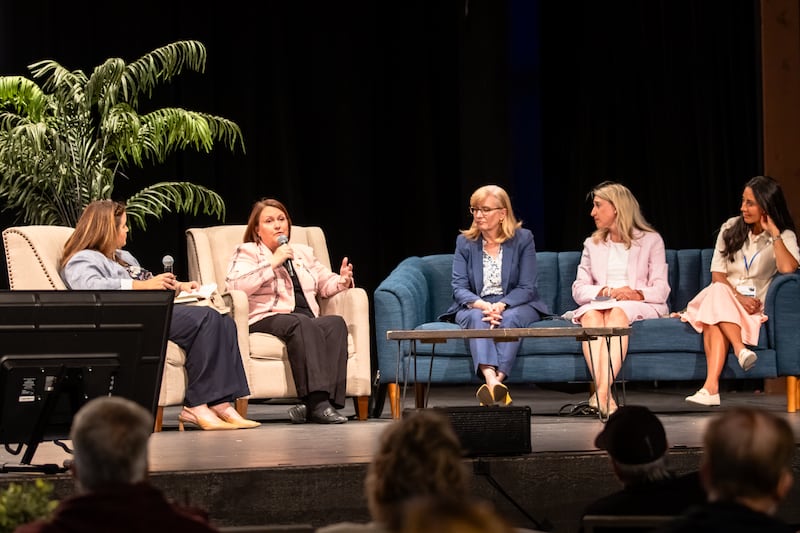
The panel focused on the “lived experience of Latter-day Saint women” and also featured BYU Marriott School Dean Brigitte C. Madrian, BYU professor Jenet Erickson, BYU law professor Shima Baradaran Baughman and was moderated by Barbara Morgan Gardner, professor of Church History and Doctrine at BYU.
Gardner said her motivation for gathering the panel came from pondering what women need who are grappling with their faith. An impression came to her: “Many of them don’t know where to find the truth, because the voices on social media are so loud ... and they don’t know where to find the grounded, solid women” prominent in the faith’s history.
Compared with the “powerful, strong, healthy, wise, brilliant” women of faith she knew, Gardner referred to the frequently distorted images in mainstream media that seem “unrecognizable” to many Latter-day Saint women today.
She cited new Pew data showing a high percentage of Latter-day Saint women experiencing “deep spiritual peace and well being on a weekly basis” and showing the “highest rate of being very happy.” This same survey found Latter-day Saint women significantly more likely than any other religious group to say that “religion is very important” in their lives, with lower rates of disaffiliation compared with other Christian denominations.
A ‘limitless vision’ being offered
Erickson, an associate professor in the Department of Church History and Doctrine in BYU’s Religious Education department, recalled a conversation with a developmental evolutionary biologist colleague who identified as atheist and taught gender classes at a prestigious university.
“What are things like at BYU in terms of teaching about gender?” Erickson was asked.
Her answer: “We believe that we literally are the children of a divine mother and a divine father, and that we are their children. They are embodied like we are.”
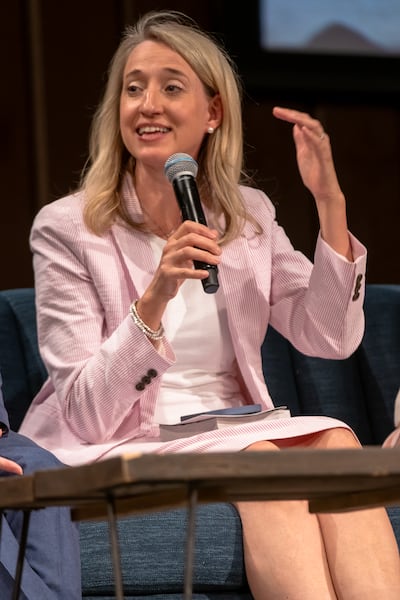
As she was talking, Erickson saw tears in her colleague’s eyes. “And she stopped me and she said, ‘that is the most beautiful thing I’ve ever heard.’”
Erickson talked about appreciating the “absolute, radical nature of the doctrine” that The Church of Jesus Christ of Latter-day Saints teaches about women.
“What the gospel of Jesus Christ offers to women is a limitless vision of what we can become, which is all that God, Father and Mother is and are, and it’s an unlimited potential that’s offered to us,” she said.
A vision beyond male-female conflict
Madrian, dean and distinguished professor in the BYU Marriott School of Business, described telling her bishop that she’d like to serve in the Mount Timpanogos Temple. After over two years of weekly experiences serving, she said, “There is nothing like serving in the temple to really deepen your understanding of how God loves all of his children, men and women, equally.”
“In the temple, we are making the same covenants. We are given the same promises. We are participating in the same ordinances. ... It’s really beautiful,” she said. “If you want to understand your place as a daughter of God, I can bear my testimony of President (Russell M.) Nelson’s plea to spend more time in the temple and of his promise that spending more time in the temple will help you with every single problem you are facing in your life.”
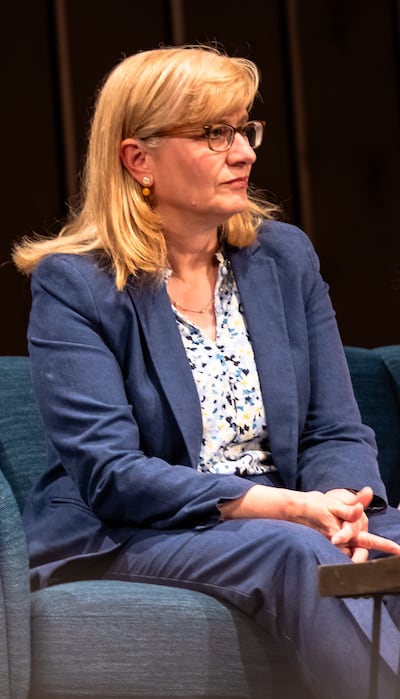
Madrian added her feeling that if men and women would “spend more time in the temple, the divisions and the misunderstandings would dramatically shrink.”
Baughman, the Woodruff J. Deem professor of law and a distinguished fellow at the Wheatley Institute at BYU, disclosed a time when she and her husband were “fighting a lot and having a hard time getting along.”
The couple decided to try going to the temple once a week. At the time, she grappled with some questions about women in the church and in the gospel — but had “put them on the shelf … like, ‘I’ll deal with that later.’”
“What really helped me transform my life and my understanding of women and our role in the kingdom is the doctrines that we learn in the house of the Lord,” Baughman said.
After spending more regular time in the temple, she came to understand that “as a woman in God’s kingdom, I have so much power.”
“I look at our first mother, Eve, and her brave choice to bring forth the plan of happiness, to allow us the covenant with our Savior, Jesus Christ, to wear the holy garment that protects us from Satan. And then on and on,” Baughman said.

She came to appreciate “how important men and women together are” and said “it kind of solved that shelf issue, as well as healed my marriage.”
To those women who grapple with their role in the church, Baughman said, “go to the house of the Lord and take it up with him. Talk to him about your role in the kingdom of God as a woman and a man, and I promise you he will tell you exactly your role.”
‘Just what the Savior would be doing’
Weaver described being in Fiji in 2016 for the rededication of the Suva Fiji Temple when a major storm hit. As she visited a coastal village and interviewed those involved in the humanitarian response, Weaver witnessed the local Latter-day Saint stake president organizing the men in the little village, asking them to gather up materials to begin rebuilding. Another brother serving as a humanitarian missionary was asking the village chief, “Who’s died? Do you need clean water? Were your crops destroyed? How many members are sick and lost homes? How many members of other faith traditions need help that the church can assist with.”
Then Weaver saw the Relief Society leader. “She was going door to door, and she was hugging the families. She had candy in her pocket for the children, and she was offering hope and comfort and healing.
“It occurred to me that the things that the Savior did in his lifetime, taking care of the poor and needy, and ministering and teaching — those are the things and the responsibilities that the Lord has given women in his true church.”
Weaver reflected, “I think that if the Savior had been in that village that day, where the church was functioning in every way to lift and strengthen every member of that village, he would have been right there with that sister, ministering one-on-one and sharing his love.”
‘I can’t go forward without your help’
One theme of the panel was men and women partnering together in church service. Baughman described speaking with a friend serving in an inner city area where stake leaders were exploring changes to the ward boundaries. The Relief Society, Young Women’s and Primary leaders were invited to give input. They pointed out that half of the school would go to one ward and half to another. The leaders then fine-tuned the boundaries based on the feedback.
Erickson described her experience as a Relief Society president.
“There’s a very clear sense from my stake president, my bishop, that I can’t go forward without your help, without your wisdom, without your insight, without your experience,” Erickson said. “And that I have to have the women’s voices in order for the Lord to even guide me in any way.”
She recalled serving as stake Relief Society president, and having the stake president call her when he was worried about something and say, “This is what I’m worried about. What counsel do you have based on your experience with the women? What could we do and should we do?”
“And I was right beside him in that work,” Erickson said. “There was a very clear sense that the Lord could not give them the direction that was needed in their stewardship without that sharing counsel together of the voices of women.
“There’s no question that the plan of heaven is that men and women work alongside one another … equals in guarding the very essence of life.”
Learning to be equal partners
While many women have had positive experiences like this, such respect and cooperation is not always intuitive to many men around the world. Prior to being baptized into the Church of Jesus Christ, Baughman’s family came from the Middle East, where she said women “inherit less property than their brothers and women don’t have a lot of rights.”
Baughman described working for years in Africa and witnessing a “cultural tradition that the man walks 10 steps ahead of his wife.
“Of course, when you join the church, that’s not the case,” she said. “You’re now co-equals with your wife.”
Erickson referenced a story recounted by Sharon Eubank, director of Latter-day Saint Charities, about Eubank’s friend (Lillian DeLong) and a woman in Ghana who grabbed her arm following church training being provided to families. “You’ve told me that the children that I have had who have died will be mine forever, and in the other room, you were teaching my husband about what it means to be an equal partner, to not abuse or do violence to his family.”
“This is a woman’s church,” the Ghanaian mother said.
After visiting nearly 50 nations in her previous role as a reporter and editor of the Church News, Weaver said she has numerous stories — from Tonga to England — demonstrating “how the church has elevated the lives of women across the globe and how women have risen to that potential.”
“I know this is a woman’s church,” she said.