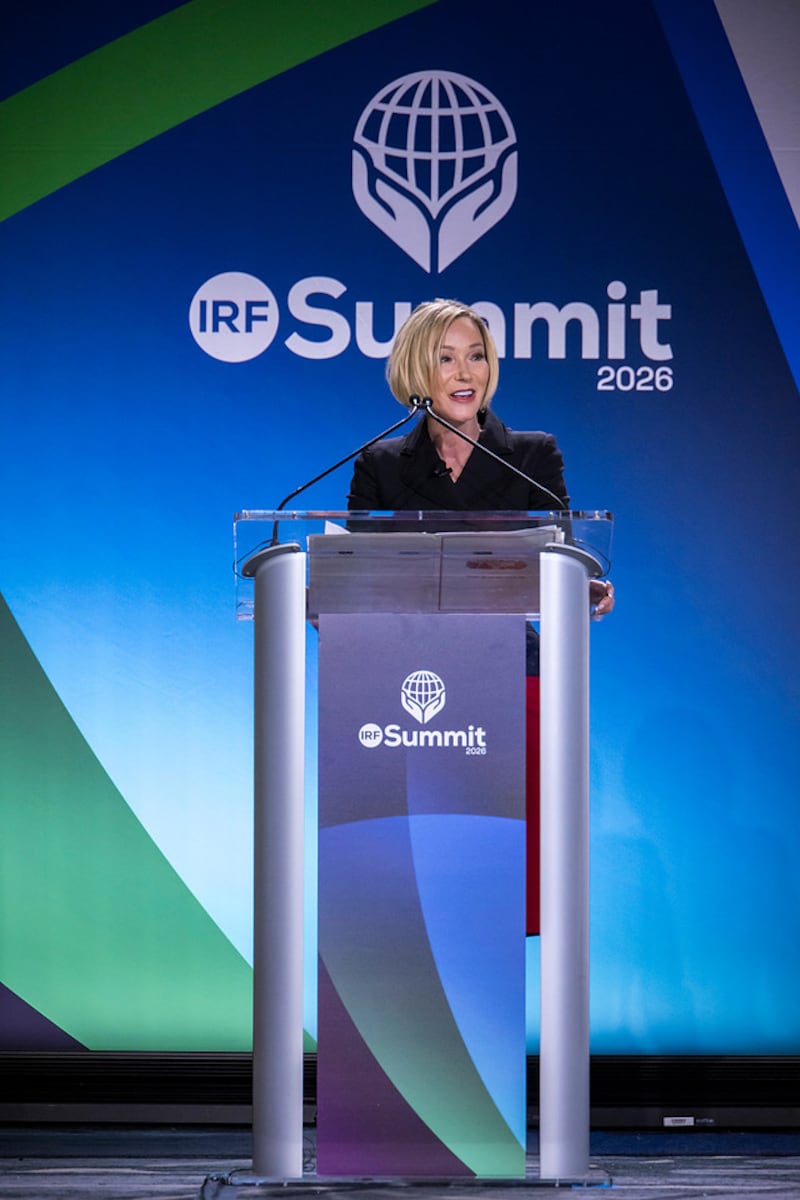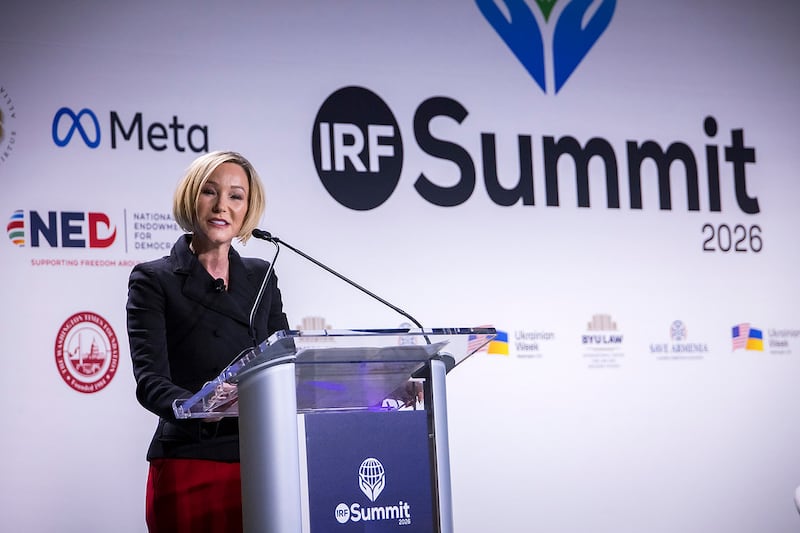

President Donald Trump’s chief faith adviser suggested a religious test on Monday during an international conference in Washington, D.C.
“The test of our integrity is whether we will defend the rights of those whose beliefs differ from our own,” said the Rev. Paula White-Cain, Trump’s longtime personal pastor and his senior adviser in the new White House Faith Office.
An administration official’s clear signals about religious inclusion were welcomed by 1,500 people at the sixth annual International Religious Freedom Summit.
“You build something that is truly different,” White-Cain said, “not simply bipartisan, but genuinely nonpartisan, a place where people can come together with a sincere desire to defend the (religious) conscious rights of everyone, everywhere, all the time.”
She said religious liberty is the No. 1 priority of the White House Faith Office, created a year ago this week.
The summit’s first day included a short videotaped message from former President George W. Bush and panels including former members of former President Barack Obama’s administrations.
Former U.S. Sen. Sam Brownback, a summit co-founder, called it a convention of Bravehearts dreaded by dictators around the world. Panelists said the less religious freedom a country provides, the more likely it is to be less democratic and to be a global security concern.
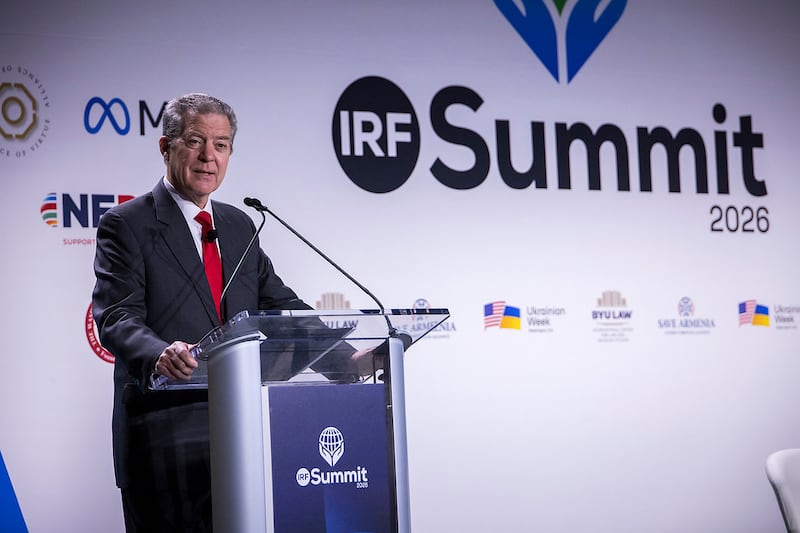
That makes religious freedom the paramount global security concern, Brownback said.
Dictators fear religious liberty “more than aircraft carriers or even nuclear weapons” because it threatens their leadership, he said.
“From experience, they know people of faith will stand up to government oppression,” he said.
The IRF Summit annually attracts officials from the current administration. Vice President JD Vance spoke last year.
White-Cain described a global assault on freedom of belief to the summit, which included government, religion and advocacy leaders from around the world.
Speakers mentioned the persecution of Yazidis, Falun Gong, Uyghurs and many more.
“This is not about protecting only my community or your community,” White-Cain said. “If religious freedom is only defended when it is convenient, then it’s not religious liberty and freedom at all.”
She relied for moral authority on both the Constitution and the Universal Declaration of Human Rights, adopted by the United Nations in 1948.
The U.N. declaration stated that everyone has the right to freedom of thought, conscious and religion, including the right to change one’s religion or belief and to manifest one’s beliefs in teaching, practice, worship and observance.
“That’s not a small statement, it’s a world-shaping one,” White-Cain said, “because when you and I protect freedom of religion or belief, you’re protecting more than just a worship service or sacred space. You’re protecting the human person, the right to hold convictions without coercion, to live with integrity, to speak and gather peacefully, to raise children with moral formation and to contribute to society without fear.”
The special adviser to Trump called the IRF Summit, which includes representatives from many Christian, Muslim, Jewish and other faith traditions, “the premier civil society gathering for this essential cause.”
IRF Summit co-founder Katrina Lantos-Swett said she was grateful for White-Cain’s message about nonpartisan cooperation.
“This is an island of refuge from the incredible division that seems to be afflicting our society,” Lantos-Swett said. “Ambassador Brownback and I certainly have felt that ... it is of paramount importance that this remain really not a bipartisan cause but a nonpartisan cause.”
Human dignity has become a key phrase and concept in the movement.
Former President Bush said America’s founders knew the freedom to worship was central to human dignity.
“Sadly, far too many people around the world still live without this freedom,” he said in the video. “Many worship in secret. Some languish in prison simply for exercising that core human right. Tonight, Laura and I join you in standing in solidarity with those oppressed for their beliefs.”
Speakers pointed to the specific suffering of single religious prisoners and described the deaths and displacement of millions killed in Africa or elsewhere because of their beliefs.
“There is a pandemic of persecution affecting millions across the world,” said Knox Thames, former U.S. Special Adviser for Religious Minorities at the State Department.
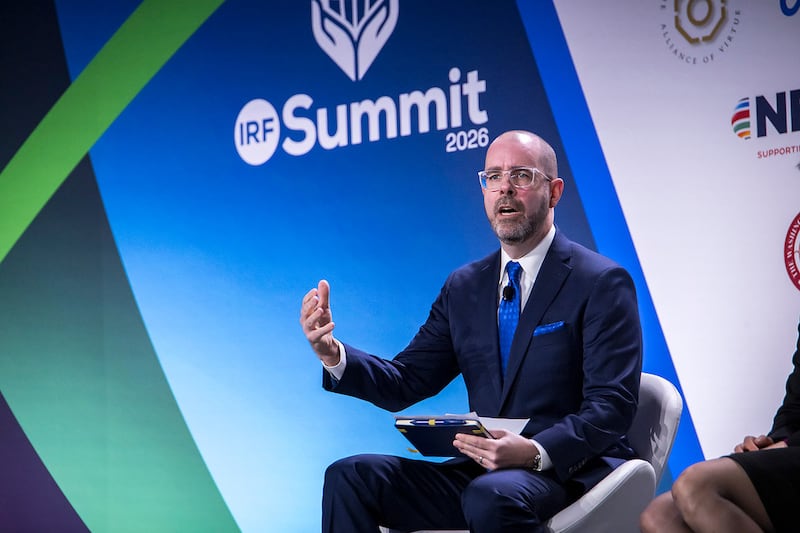
“There is biblical-level persecution happening around the world,” said Jordan Sekulow, executive director of the American Center for Law and Justice.
Bush applauded the work IRF attendees do to secure the release of wrongly detained believers.
“We pray for a day when your work will no longer be needed,” he said. “God bless you all.”
Religious freedom must be integrated into national security and foreign policy strategy, said Nicole Bibbins Sedaca, a foreign policy expert at the George W. Bush Institute.
Reams of data show that countries with religious freedom do better and people with that liberty are healthier and happier, panelists said. Conversely, when governments or dictators take religious liberties from one group, it is a red flag indicating future attempts to rein in free speech and other freedoms, said Rachel Miner, executive director of Bellwether International.
“If one group is unsafe, then all groups must be on high alert,” she said.
Trump’s new ambassador-at-large for the Office of International Religious Freedom at the State Department, former Rep. Mark Walker of North Carolina, also joined a panel on Monday.
Walker pointed out that Trump has twice gone to the United Nations to advocate for free speech. Last fall, the president told the General Assembly to defend free speech and free expression and to protect religious liberty.
Brownback is a former religious freedom ambassador. His latest successor, Walker, echoed his contention that religion scares autocrats.
“The biggest threat to these autocrats is whether we fundamentally believe something that changes the whole dynamic,” Walker said. “It’s simply this, do we believe that our rights come from God Almighty, our Creator, or do we believe they come from man, from an autocrat, from a dictator, from a government?
“If we believe genuinely that our rights come from our Creator, there is nothing more appalling, nothing more threatening to these autocrats, because what it does, it collectively brings us together to lock arms, to be willing to be bold and pushing back. There is no greater cause than standing up for our faith. There is no greater cause for advocating for those who cannot.”
The cause is a cornerstone, according to White-Cain.
“The world must have a coalition that refuses to look away,” she said.
“The stakes,” she added, “are too high for sporadic attention.”