


In 2006, the 20-year conflict with rebel forces in northern Uganda had subsided and the region, ravaged by war and violence, was in desperate need of healing. Nearly 1.8 million people had been forced into overcrowded displacement camps, where they lived with disease and fear of attacks from both the Lord’s Resistance Army, a rebel group fighting the Ugandan government, and the government itself.
When the conflict ended, families scarred by trauma and loss began their journey home only to find their land occupied and their ownership rights disputed by clans after a long absence. Amid this tumultuous resettlement process, one man emerged as a pivotal figure in helping people reclaim and protect their land, and reestablish their homes.
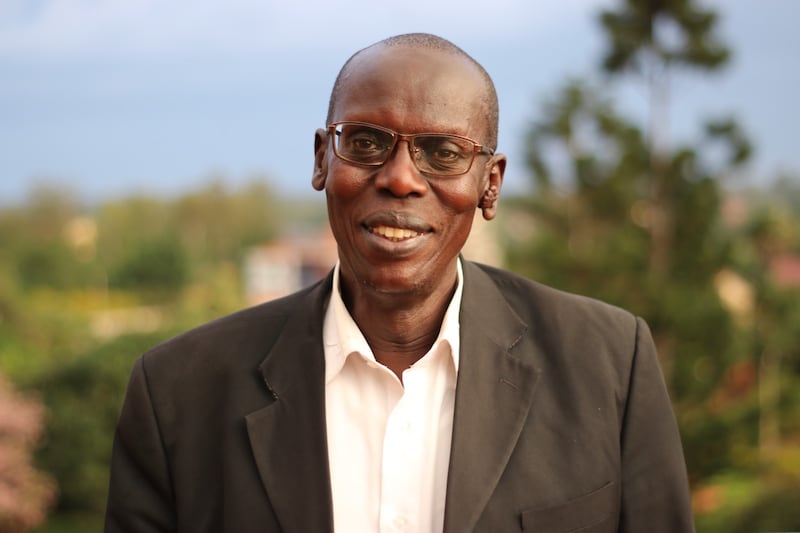
Ojera James Latigo, an economist and member of The Church of Jesus Christ of Latter-day Saints from Gulu, Uganda, a small town about 120 miles north of Kampala, played a key role in helping people rebuild their lives — reunite fractured families, set up support networks, and negotiate with rebels to bring back abducted children and reintegrate them back into normalcy.
For Latigo, restoring land was about more than property and making a living — it was a way for people to reclaim a sense of home and identity after losing everything in the war.
On May 17, Latigo, who was serving as the first counselor in the Gulu Stake, died in a road accident, according to the message from the Gulu Stake.
“James became very famous for trying to make sure that people who went back home were accessing their land, using their rights correctly and (that) they were not fighting each other,” said Phillip Odiambo, a Ph.D. student in biochemistry at BYU who worked with Latigo on land issues in Gulu and got to know him in church circles. “He had a gift of talking people out of anger.”
Latigo leaves behind his wife, Nalweyiso Barbara Katende Ojera, a social worker, and their four children.
Latigo had a gift for lowering tensions between competing tribes and acting as a connector between local communities and the government in the Acholi subregion in Northern Uganda, where his work was concentrated. In situations of deep mistrust, he had a knack for creating channels for dialogue and for turning a relationship away from confrontation.
Odiambo recalled arriving in a small community in northern Uganda with a team of four to train the locals on land issues, only to be met by a group of young people armed with pangas, a type of African machete, and hoes, heavy handheld iron tools used for tilling soil.
“We couldn’t run because if you start running back to your vehicle, they will surely begin shooting at you and block the road and then kill you,” Odiambo recalled.
Instead, they called Latigo for help. After prompt arrival, he proceeded to calm the hostile situation through conversation. By the meeting’s end, “nobody was angry anymore,” Odiambo recalled, and the community invited the group to return for further dialogue.
“He knew how to talk,” Odiambo said. “He did it so well that he could go for peace talks when things were very tough.”
Odiambo first met Latigo while he was investigating the church, and later reported to him at the Ugandan office of Trócaire, the official international development agency of the Catholic Church in Ireland. Latigo also encouraged Odiambo to pursue a Ph.D. at BYU and provided a recommendation.
“He always thought it’s good to let people pursue what they have to pursue,” he said.
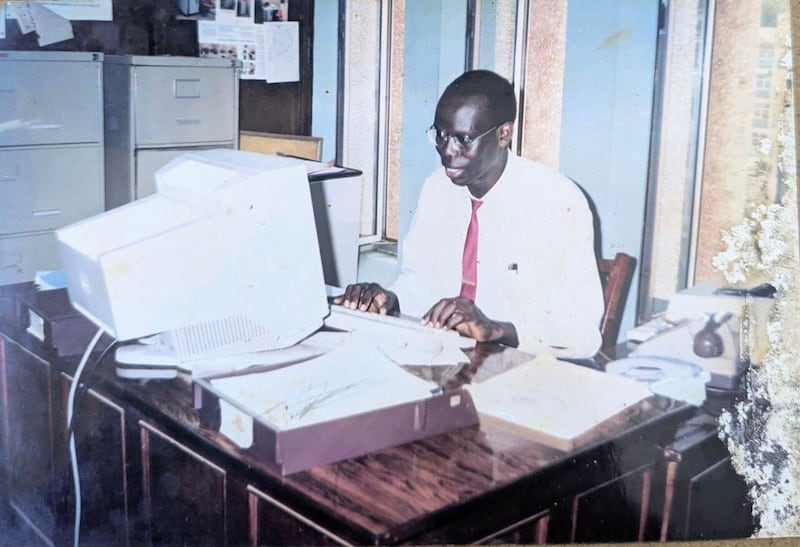
Latigo, who was an economist with a robust legal expertise, negotiated directly with rebel officers, often putting himself in danger. He traveled to clan-held lands and worked with Acholi chiefs to sort out land rights.
“He was smart, he was well-connected and people respected and responded well to him,” said Ron Atkinson, a retired professor of African Studies at the University of South Carolina, who worked closely with Latigo on land issues. Latigo was sensitive both issues of customary land — ancestral land governed by traditional community customs — and people’s positions in society. “It was very difficult work and sometimes dangerous,” Atkinson said.
Before focusing his work on land issues, much of Latigo’s work revolved around creating transitional justice frameworks after the devastation caused by the Lord’s Resistance Army insurgency on the Ugandan communities. Latigo was the director of the USAID-backed Northern Uganda Peace Initiative and was on the board of several organizations. He helped establish the Grassroots Reconciliation Group, helping to bring home abducted child soldiers and girls captured by rebels and forced to have babies.
Throughout his various initiatives, Latigo advocated for local restorative rituals and traditional justice, which he believed were often more effective at repairing a broken society than the purely punitive measures enforced by international courts.
He turned to both modern legal methods and traditional mediation to help elders and chiefs settle land disputes. In Nwoya, a district in the Acholi subregion of northern Uganda, he also helped create one of the first government-registered Customary Land Trusts, which kept land under shared clan ownership so it couldn’t be easily sold off or divided.
Latigo had an “unwavering belief that true, lasting peace cannot be imported from the West,” according to Odiambo. “Rather, it must be cultivated from the deep roots of local culture, faith and communal stewardship.”
In a society rife with corruption and conflict, Latigo’s honesty stood out and made him a rare trustworthy figure.
“He was trusted by everyone,” said Patrick Lumumba Oola, a former child soldier who has been the mayor of Gulu for 8 years. “The rebels trusted him, people in government trusted him, people in the U.N. trusted him.”
Latigo lived a “simple life,” Oola said, without caring for wealth and power.
“He cared about education of his children,” Oola said.
When Latigo and his wife met for the first time, they discovered “the same interest in loving children.”
“I was touched by how he related to them and that’s how we started interacting,” Barbara shared with the LDS Women Project in 2024. Latigo began discussions with missionaries and in 2003, the two were baptized together. In 2012, they were sealed in the Johannesburg South Africa Temple of The Church of Jesus Christ of Latter-day Saints. Together, they raised four children.
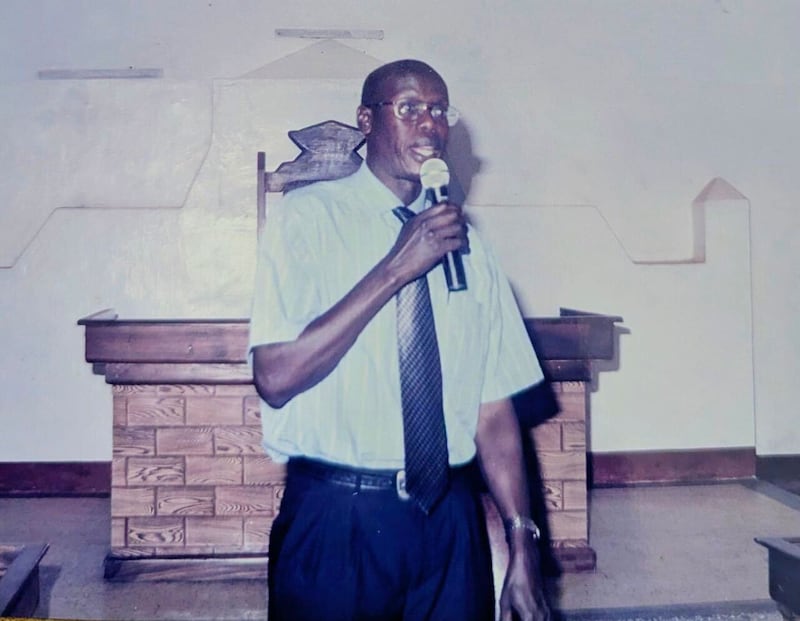
Latigo had served in various capacities in the church from branch employment specialist, branch president, family and temple history consultant and his last calling as the first counselor in the Gulu Stake Presidency.
But Latigo’s mediation went beyond land issues. He tried bridging his native culture with the newly embraced traditions and values of his church, which is headquartered in the United States.
“He tried to bridge the good things that the church culture brought and also tried to uphold the good part of our culture,” Odiambo said.
When local traditions posed challenges for young Latter-day Saints trying to start families, Latigo intervened to help. In East Africa, it is customary for the groom to pay a “bride price,” which may include goats, chickens or clothing, to the bride’s family upon marriage.
Latigo would mediate on behalf of young men, convincing the bride’s family to allow the marriage first and postpone traditional obligations until the couple was financially stable and able to formally honor their parents later.
“He meditated a lot, so the couple could live within the covenant path,” Odiambo said.
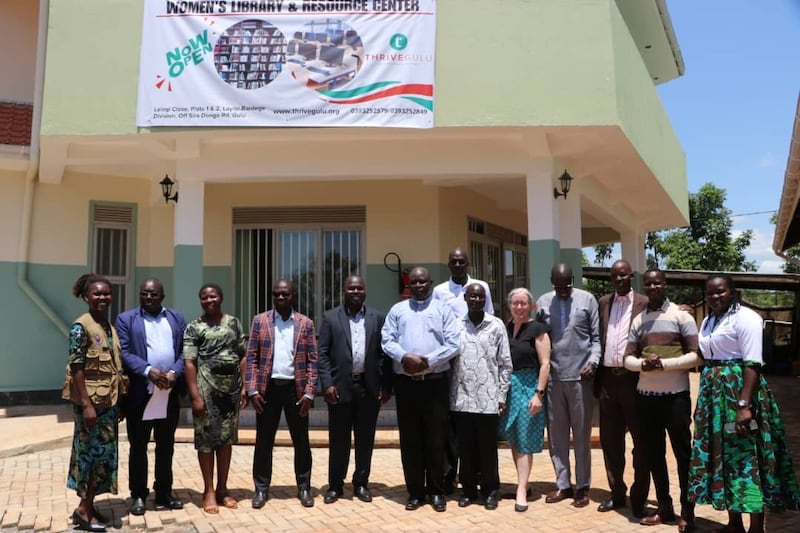
Judy Dushku relied on Latigo’s legal expertise when she founded THRIVEGulu, an organization that supports survivors of the Lord’s Resistance Army insurgency and refugees from South Sudan.
“James knew everyone, it seemed, and people trusted him and therefore trusted us. We could not have done our work without him,” said Dushku, a Boston-based humanitarian, who is the author of “Is This the Way Home?”, a book that details the homecoming of a young woman abducted by the Lord’s Resistance Army at 11 years old. During her annual visits to the local branches, she observed Latigo seemingly always leading a new branch: “He has been a huge inspiration to three generations of members.”
Latigo leaves a legacy of peacemaking and reconciliation both in the civic society and his religious community. Latigo’s burial will take place on May 30 at his ancestral home in Gulu.
“He leaves an East Africa where ancestral lands are safer, where former enemies have learned to forgive,” Odiambo wrote in statement to the Deseret News. “And where the vulnerable can stand firmly on the ground of their ancestors.”