


This article is an excerpt from the weekly ChurchBeat newsletter. Sign up to receive the newsletter in your inbox each Wednesday night.
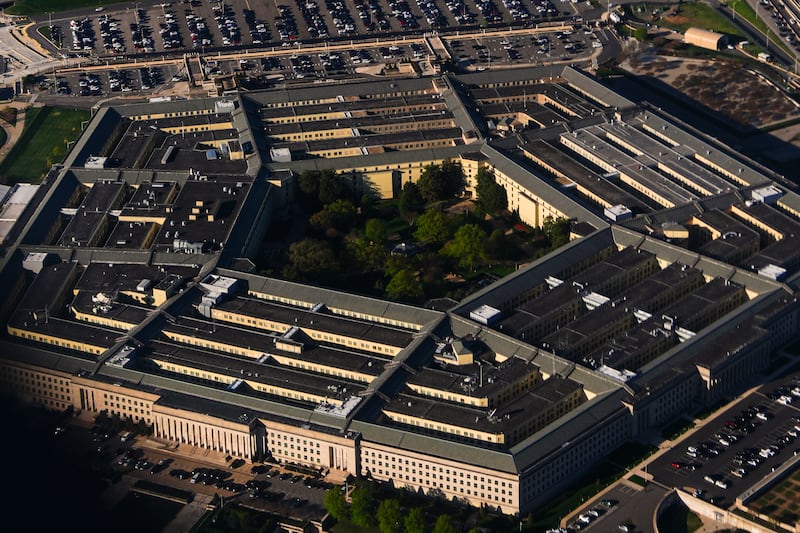
The social media tsunami is receding after the U.S. military’s about-face on new chaplain codes that initially appeared to be a government-sanctioned effort to drum Latter-day Saints out of Christianity.
In case you missed it — well, there’s no way you missed it — many Latter-day Saints ran to the walls to defend against what to them felt like an assault on their belief in and faith in Jesus Christ.
The whole mess made me think of cooler heads: Those evangelicals and Latter-day Saints who spent two decades criss-crossing the United States, Canada and Great Britain to engage on stages in civil dialogue about their beliefs.
I called one of them, Robert Millet, to ask three questions about the hullabaloo. Here’s what I learned from the former dean of Religious Education at BYU, where he also served as the Richard L. Evans Chair of Religious Understanding.
Tad Walch: Bob, how did this week’s controversy make you feel after spending over 22 years working to build bridges with evangelicals like Pastor Greg Johnson?
Robert Millet: I saw it all on my phone. I also recently saw two Roman Catholics use the term “atheist” to describe members of The Church of Jesus Christ of Latter-day Saints on a television program.
For some evangelicals and Catholics, Latter-day Saints are not Christian because we do not believe in the post-New Testament creeds and theological formulations concerning Christ and the Godhead, beginning with the Council of Nicaea in A.D. 325. (Latter-day Saints believe there are three distinct members of the Godhead who exist in such unity that they frequently are referred to as “one eternal God” in the Book of Mormon. The Nicene Creed states that Jesus Christ is “of one being with the Father.”)
We also do not believe in the sufficiency of the Bible. We believe in additional scripture.
At this point, we’re so used to facing this question. This weekend again illustrated that we’ve totally lost the concept that “Christian” is defined by how a person lives.
Walch: The word “Christian” has always had a broader definition than what someone believes about Christ. I’ve seen some Latter-day Saints refer to that limited definition as “Christian gatekeeping.” Couldn’t this be resolved if the discussion wasn’t about “Christian or other” but was instead about “Creedal Christian or other Christian”?
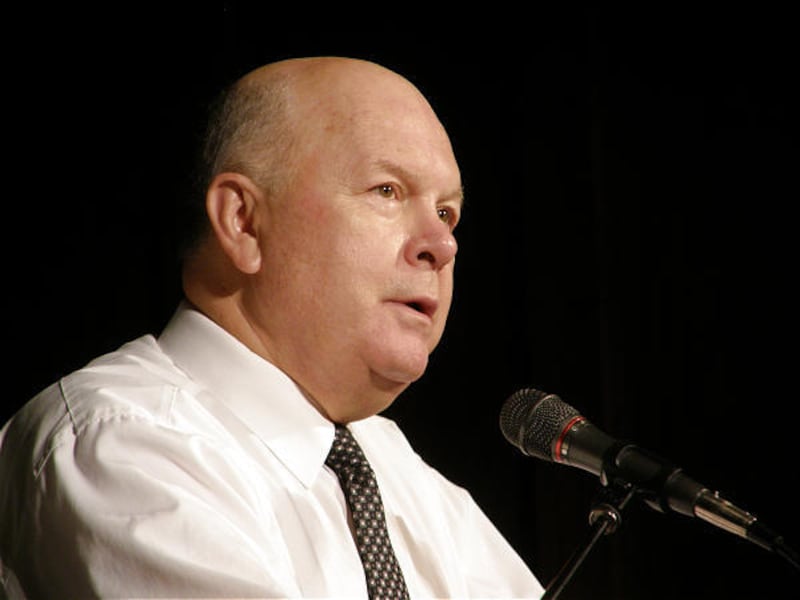
Millet: I remember meeting Richard John Neuhaus after he wrote “Catholic Matters,” and after a delightful, hourlong conversation, he said, “It’s long past time for Latter-day Saint Christians and Nicene Christians to begin talking respectfully with one another.”
I don’t have a problem with that definition at all.
Today, it seems like the conversation no longer is about, “Are you a follower of Jesus?” or “Do you think you ought to live your life like a Christian, like a follower of Jesus?” Instead, some are too prone to say, “Do your beliefs sit with the post-New Testament creeds?”
Former Fuller Theological Seminary President Richard Mouw (who apologized to Latter-day Saints at the Salt Lake Tabernacle in 2004 for how they’d been treated by some of his fellow evangelicals) once put his arm around me during an event at Calvin University in Grand Rapids, Michigan, and said to the audience, “There’s no question in my mind whatsoever that this man is a brother in Christ.”
Walch: What should Latter-day Saints know that would better help them understand evangelicals who would not go as far as Mouw?
Millet: I think there’s some concern about the growth of our church. In that sense, they see us as “sheep stealers.”
And people are afraid of what they don’t understand. My experience has been when I work closely with people on religious matters, be it Roman Catholic or Protestant, once they understand us, it’s a different thing entirely.
There was an article that came out in Christianity Today years ago about Greg and I and our work together. On two or three occasions, the writer asked members of the dialogue from the evangelical side, “Do you think these people are Christian?” And in almost every case, they said, “That’s not an easy question to answer.”
For me, that’s progress. It’s not an easy question to answer, because they know us well enough to know our behavior and they know us well enough to know our love for the Lord.
Walch: President Russell M. Nelson and President Dallin H. Oaks each have recently and repeatedly called on Latter-day Saints to engage civilly, respectfully and peacefully with others. How should Latter-day Saints respond if they feel misrepresented?
Millet: One of the great things I found during the dialogue was that for me personally, I hated to be misrepresented. The lesson for me was, if I feel that way about myself, why would I ever want to misrepresent anybody else?
Occasionally one of my students would make a statement like, “Well, you know how the Catholics are.” Or, “The Baptists or the evangelicals, they’re literally this.” And generally speaking, it was not correct.
I would say, “Can we talk about that for a minute?” I remember in one large class a young man way in the back said, “Well, Brother Millet, you know how those born-againers are. They believe that once you accept Jesus, you can live anyway you want to live.”
But that’s not their doctrine. That’s not what they believe. They believe the same way we do that once we’ve come unto Christ, once we’ve accepted Christ, then we need to live like Christ. They believe the same things we do, that one’s beliefs ought to be manifest in the way they live their lives.
What I’m saying is, I have had so many opportunities over the years, and I’m still having them, where I can say, “Actually, no, that’s not what they believe. They believe this, this and this.”
So we can look at situations like what happened this past weekend as opportunities to build understanding.
My recent stories
Church of Jesus Christ acquires daguerreotype some say is the only photo of Joseph Smith (June 5)
About the church
President D. Todd Christofferson dedicated the Yorba Linda California Temple as a testament of the Lord’s work.
“It will enrich our lives”: President Dieter F. Uchtdorf dedicated the Willamette Valley Oregon Temple.
Elder Gerrit W. Gong released an official church video about AI’s impact on faith, flourishing and core relationships.
The special America 250 episode of “Music and the Spoken Word” will feature Kansas City Chiefs Coach Andy Reid.
A new BYU report showed that Latter-day Saints continue to demonstrate uniquely high religiosity.
What I’m reading
Making sense of the Pentagon’s religious code controversy.
Elder Clark G. Gilbert and Utah Gov. Spencer Cox on the need for education and morality.
Addiction, dementia, heart disease? Seven ways religion can help improve your health.
The publisher of The New York Times bluntly accused AI companies of stealing online content from news organizations.
Behind the scenes
