


This article was first published in the State of Faith newsletter. Sign up to receive the newsletter in your inbox each Monday night.
The effort to reclaim Christianity as a force on the political left has been picking up momentum, with more clergy and pastors stepping into Democratic politics as candidates.
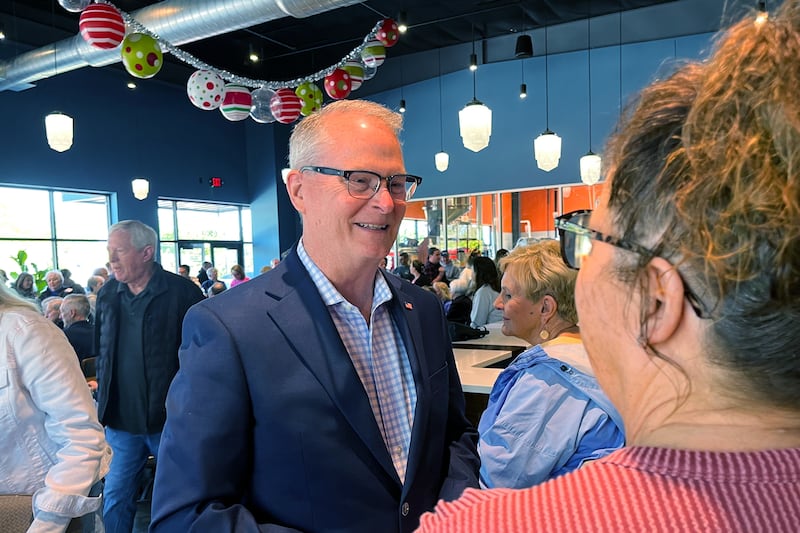
Last week, the Rev. Adam Hamilton, pastor of the largest United Methodist congregation in the country, won the Democratic primary for the U.S. Senate in Kansas, setting up a challenge to Republican incumbent Roger Marshall. If elected, Hamilton would be the first Democrat to represent Kansas in the Senate in almost a century.
For some Americans, the idea that you can be both Christian and a Democrat is still hard to reconcile, and these candidates are challenging the assumption.
Hamilton has argued that Christianity should not be confined to any one political party. The same argument, he suggests, can be made about the tension between some Republican positions and the teachings of Jesus.

“Jesus never talked about fiscal responsibility, limited government, strong defense or personal civil liberties, but he talked a lot about children and poverty and helping people who are in need,” Hamilton said in one interview. Now, Hamilton, who leads the Church of the Resurrection in Leawood, Kansas, is seeking to persuade traditionally Republican voters — many among them farmers frustrated by rising costs — to give a Democrat a chance.
Hamilton’s not new to catering to the centrist middle ground in his own community. His congregation is massive — about 24,000 people, and includes almost equal parts Republicans, Democrats and Independents. Hamilton has described himself as a “moderate” Democrat who wants to heal the country reeling from political divisions. He has also called himself a “liberal conservative and a conservative liberal.”
Hamilton is part of the recent wave of about a dozen clergy stepping into Democratic politics. These candidates are eager to appeal to the white Republican voters who are rooted in Christian principles but have become disillusioned with the economic realities under the current administration and with the particular vision of Christianity it has elevated in public life.
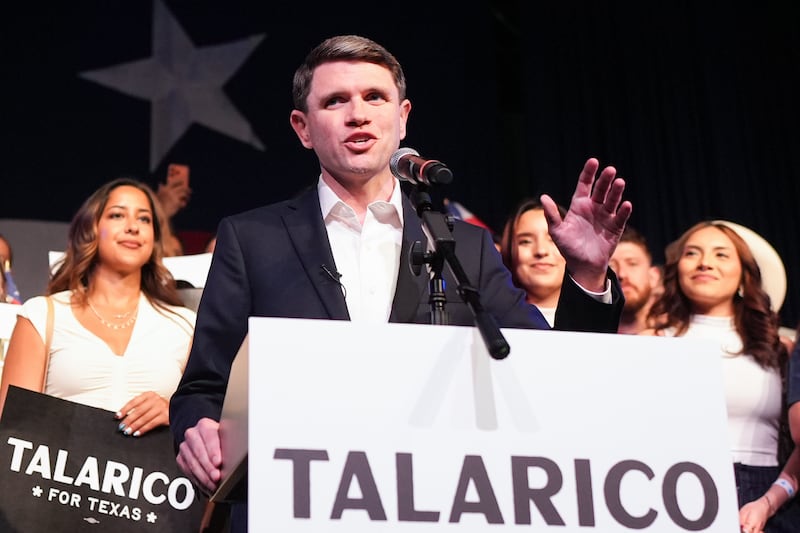
James Talarico, a Presbyterian seminarian and Texas state representative, won the Democratic primary for U.S. Senate. In Iowa, Sarah Trone Garriott, an ordained Lutheran pastor and state senator, is running for the U.S. House. Two other Democratic pastors in Iowa are seeking congressional seats.
Unlike Christian Democratic politicians before, these candidates aren’t hiding their faith but are presenting their beliefs as part of their political platforms. “They view policy as an extension of faith and want to challenge the GOP’s fusion of Christianity and conservatism,” according to WSJ.
They’re invoking Jesus, the Bible and teachings about caring for immigrants, the poor and other vulnerable groups. (Among Democrats, around 50% of voters are Christian, according to Pew, and the party is often perceived as growing more secular.)
These positions often clash with the Christians on the Republican side, who tend to emphasize other Christian beliefs like protecting lives of unborn babies, family values and religious liberty. But as Christianity more prominently enters politics on the left, the question remains whether faith can be an expression of sincere belief without becoming a tool in advancing political agendas.
With these differing views on what it means to be Christian, a more public conversation about doctrine is becoming more relevant. As religious journalist Terry Mattingly put it on a recent podcast: “The doctrine has been put back on the table.”
Mattingly says this new rise of Christian Democrat politicians invites a serious examination of how the beliefs of the mainline Protestants running for office align with Christian teachings. This new religious landscape offers journalists a chance to ask tough doctrinal questions — not just of the political candidates on the right but those on the left, too.
Looking ahead, hopefully Christian faith, with the principles of mercy and human dignity at its core, can offer a common language for unifying the country instead of being another flashpoint of division.
Fresh off the press
- Former Vice President Mike Pence is joining the faculty of Colorado Christian University this fall.
- How the Gen Z gender divide on politics could reshape religion.
- Opinion: My parents immigrated to the U.S. The Constitution guaranteed we belonged.
What I’m reading
For an Ohio mother and her two daughters, AI is their personal assistant, companion and confidant. This story gives an intimate, everyday snapshot into how different generations are making AI part of their very personal parts of their lives. – The New Yorker
“‘They’re not real pastors’: As clergy run as Democrats, Republicans question their faith.” – RNS
Summers with children are chaotic and messy with never enough time to relax into the season’s carefree rhythm and get all the necessary things done — aka work. This piece beautifully captures the joy and the hard parts of summering with kids. - The Atlantic
End note
My favorite thing on the internet this week was this 20-second footage of a mother dolphin in Australia carrying the body of her 2-year-old calf on her back. The scientists say this is how the mother is grieving her baby before letting them go.