

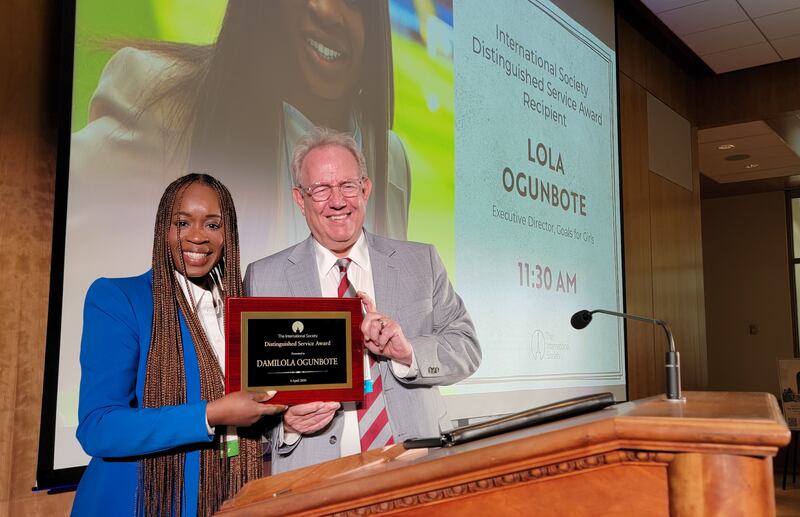

“The future of the planet is not a policy — it is a child,” Deborah Pandit-Sawaf, founder of The Power of Words Foundation, said at a Brigham Young University conference on Monday.
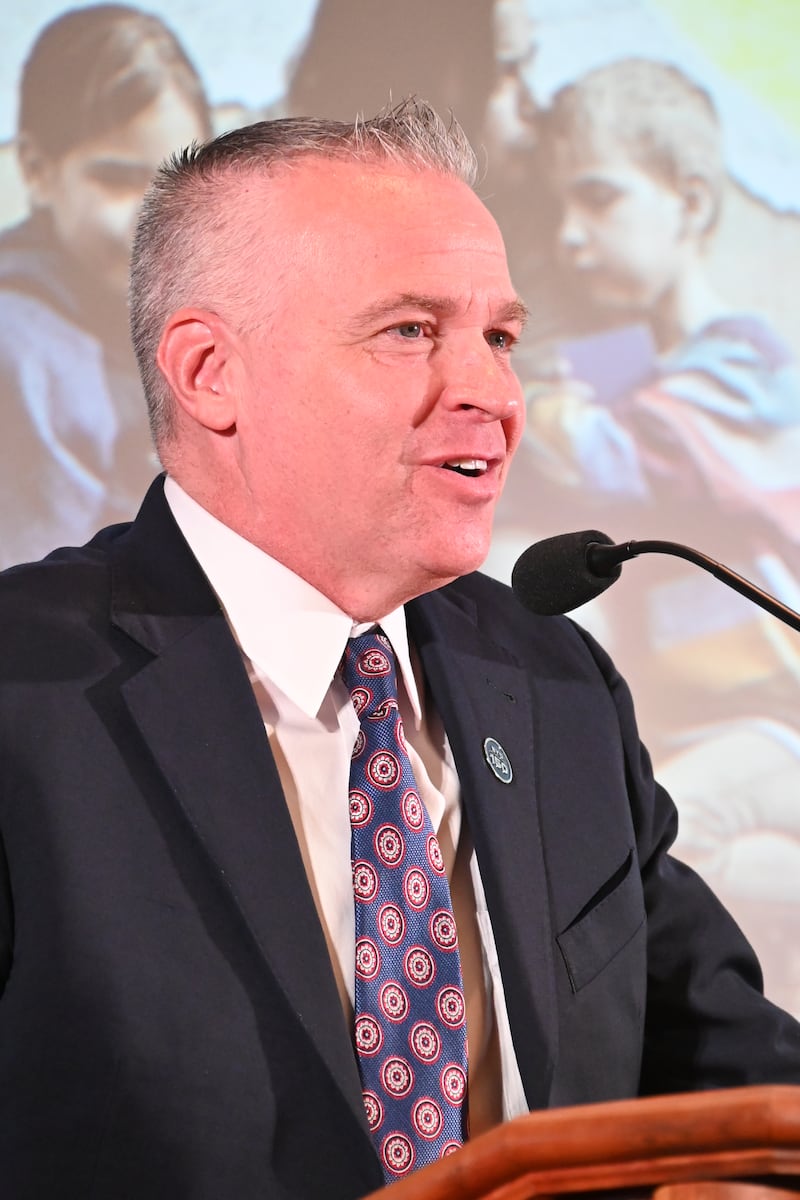
“If the world’s harmony requires the suffering of even one innocent child, then that harmony is not worth the price,” International Society President David Kirkham said, paraphrasing Dostoevsky’s “The Brothers Karamazov.”
Kirkham spoke at the beginning of the 36th annual International Society Conference, held in partnership with the BYU Kennedy Center. He highlighted sobering statistics about how many children suffer mental illness, live in conflict zones and experience trafficking today.
Alongside a keynote address on helping children understand their worth from President Susan H. Porter, Primary general president of The Church of Jesus Christ of Latter-day Saints, other speakers explored different themes of the conference’s focus on “The Dignity of God’s Children.”
“At the core of every major human rights framework is human dignity,” Kirkham continued. “But for Latter-day Saints, dignity is not just philosophical or legal — it is theological.” He then reviewed some basic convictions of the faith: “We lived with God before this life. We are created in his image. Children, we are taught, are innocent in his sight. The worth of souls is great in his sight. His very work and glory is to bring to pass our immortality and eternal life.”
Given all this, he said, “each person carries not just dignity in the abstract, but divine potential — a potential that, when understood, transforms how we see one another and how we treat the most vulnerable among us.”
Conference presentations focused on additional ways to enhance flourishing and reduce suffering among vulnerable children. “Change starts in small, everyday moments — not just big programs or policies,” said Austin Hanks with the Church Humanitarian Department.
Sarah Bouchie, president of Helen Keller International, spoke about the impact of providing micronutrient supplements to pregnant women where access to care is limited. Costing only a few dollars, they make an outsized impact.
“These things are not expensive, and they have the power to reach millions,” Bouchie said.
Speakers addressed ways to overcome several other vulnerabilities facing youth around the world:
1. Teaching young people how to have dialogue
In opening remarks welcoming conference participants, BYU President Shane Reese recalled asking President Dallin H. Oaks, leader of the Church of Jesus Christ, “what advice he would give a new president.”
“After a long pause,” Reese said, President Oaks shared, “You need to teach the rising generation how to speak and have dialogue with people with whom they disagree.”
“They don’t see it in the public square,” the prophet continued. “They often don’t see it at home. They certainly don’t see it on social media.
“So we must model and teach young people how to engage in real dialogue.”
“As you begin this conference, consider how peacemaking and honoring the dignity of others go hand in hand,” President Reese said. “Let us learn to have conversations with those we disagree with — and become peacemakers in a world that desperately needs it.”
2. Fostering critical thinking
Valerie Hudson, a Deseret News contributor and Texas A&M professor, spoke about the potential for “significant intellectual, emotional, spiritual and environmental costs of AI” — especially among children. From observing students in recent years, Hudson said, “the ability to follow a complex argument over more than two to three pages of text has become almost completely lost.”
“No one but AI models will be reading the books of the great libraries of the world anymore,” she said. “And without retention and comprehension skills, critical thinking becomes impossible.”
Hudson cautioned about the danger of “returning to a preliterate oral culture … a population also prone to sway with every wind of viral memeing.”
Hudson called AI’s expansion “parasitical on information generated by humans” — claiming that “all available text on the internet had been scraped and pirated by the year 2024.”
As a result, she said, many creators have gone out of business — with traffic to news websites also dropping precipitously. “The parasite is killing its host,” she said, referring to the human ecosystem of content creators. “And that host is precious, even necessary to human experience and to the great plan of happiness.”
3. Preventing youth exploitation
“The subject of my presentation, modern slavery and human trafficking, is one I believe God would be very disappointed in,” said Kevin Hyland, the former Independent Anti-Slavery Commissioner in the United Kingdom — describing how “more than a quarter of the way through the 21st century, slavery is thriving on the face of the earth.”
A large share of the tens of millions exploited are children, as well as poor and migrant populations, Hyland said. But rarely do they end up looking obviously enslaved. Recruitment is also deceptively normal and most often online, he said, with the resulting exploitation embedded in everyday economic activity.
For instance, a child receives a message offering work, then travels and disappears. “This is recruitment in the 21st century for purposes of trafficking and slavery,” Hyland stated.
However, he added, “Let’s not let the size of the problem overwhelm or deter us.”
Hyland underscored that the challenge is not only a matter of criminal justice but also one of human dignity, leadership and moral responsibility. He also emphasized the need to focus more on preventing systemic forces that enable exploitation — rather than responding only after abuse has occurred.
4. Nurturing children in an unsettling world
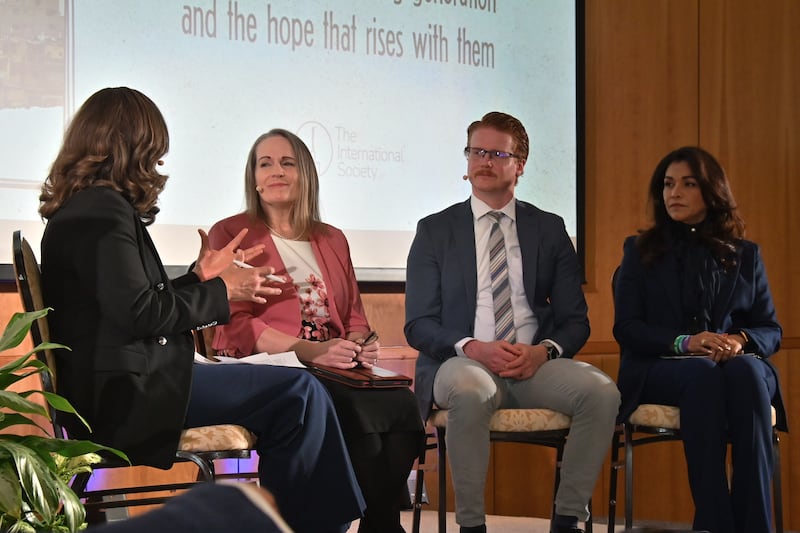
“Words matter,” Deborah Pandit-Sawaf said in a panel discussion. “The way we speak to children — and about them — shapes how they see themselves and what they believe is possible.
“Language can either build a child up or quietly break them down.”
Nanon Talley, with Latter-day Saint Family Services, added, “If we don’t stop and truly listen to our children, we will miss what they’re trying to tell us.
“Adults need to listen more and watch more,” she continued. “If you don’t stop and take a break and listen, you’re going to miss it.”