

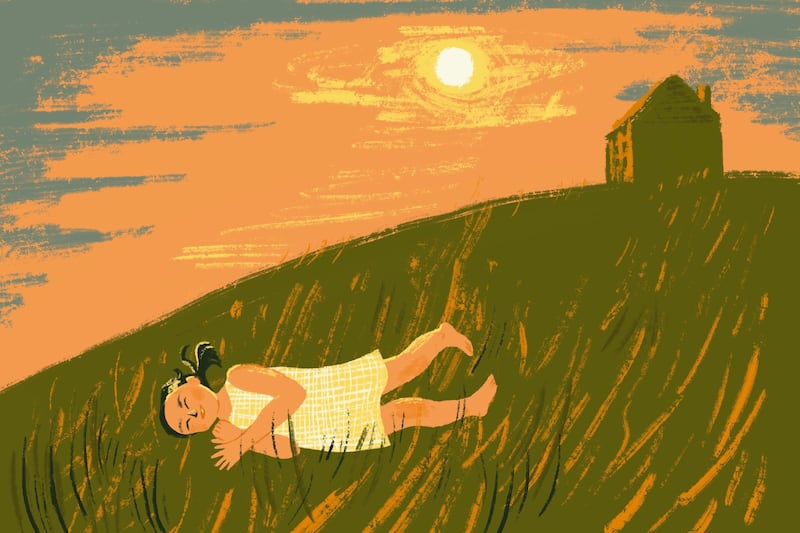

- Fearful parenting has led to decreased opportunities for children's unstructured playtime.
- Parents recognize independence is important but often don't allow autonomous child activities.
- Balancing safety with autonomy helps children develop resilience and problem-solving skills.
Lenore Skenazy holds a pair of kids’ sneakers, carefully peeling back two layers of the inner sole and turning a tiny screw to reveal a hole designed to hold a locator tag. The shoe is marketed as special because you can find your sneakers if they wander off.
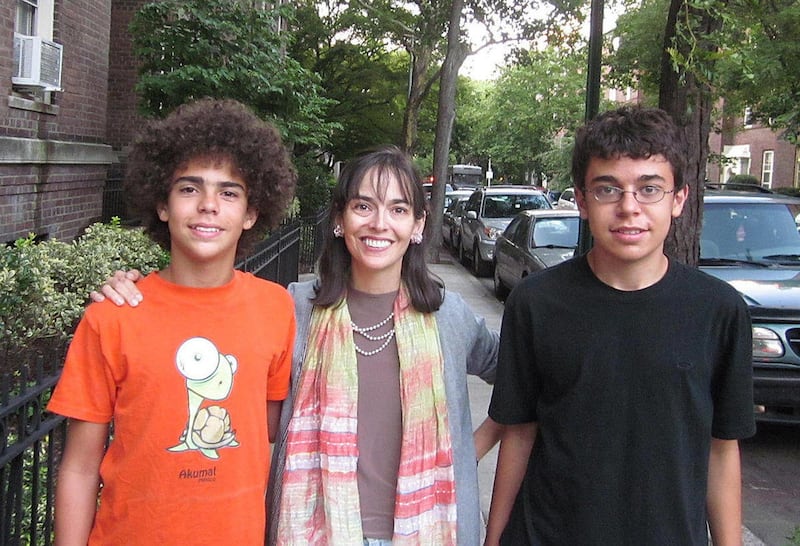
It also tells an adult where the child wearing the sneaker is, said Skenazy, who was once dubbed “America’s worst mom” because she let her now-grown son ride a subway by himself when he was 9 years old. The adventure, for which they’d practiced and prepared, ended up being the flashpoint for what would over time become what she dubbed the “free-range kid” movement.
The backlash at the time was ferocious. And Skenazy’s wasn’t the only case. Headlines over the years outlined case after case of parents accused of neglect for letting their kids play in the park, walk home from school, go solo to a neighborhood store or even play in front of their homes without an adult present.
Someone coined the term “helicopter parent.” The pick-up ball games in the streets that were a hallmark of bygone childhoods seemed to disappear. In some communities, spotting a child alone on a bike was about as likely as spotting a unicorn. Fear was easier to find: parents afraid someone would harm their children and others afraid one of those fearful parents would call police and accuse them of neglect.
So kids stayed indoors, traveled in parent-approved groups or were out and about only with an adult — until a backlash to the backlash resulted in some states, Utah first, codifying the parental right to give kids independence within reason.
“I think it’s important because around the country parents have been arrested, investigated and had their kids taken from them for doing things as simple as letting their kids play in the park or play basketball in the front yard while they’re on their way home from work, or walking to and from school,” said Sen. Lincoln Fillmore, R-South Jordan, around the time he sponsored Utah’s bill in 2018.
That bill and subsequent efforts were born of belief kids need some freedom if they’re going to become capable adults.
“Utah led the nation by passing our free-range parenting law, making it clear that letting kids play outside, walk to school or explore their neighborhoods is not neglect — it’s good parenting. We know that unstructured, independent play helps children build confidence, resilience and real-world problem-solving skills,“ Aimee Winder Newton, director of the Office of Families in the Utah Governor’s Office, recently told Deseret News.
“As a state, we should continue creating an environment where families feel supported — not second-guessed — for raising capable, independent kids.”
In the years since Skenazy’s son rode the subway solo, social media’s influence and anxiety and depression among young people have grown dramatically. Some believe there’s a connection — and excessive sheltering of kids may also play a role.
An article in the Journal of Pediatrics led by Peter Gray of Boston College — who with Skenazy and author and social psychologist Jonathan Haidt created a program called Let Grow — found as kids’ opportunities for independence and free play shrank over decades, levels of anxiety and depression grew. Gray and his co-authors credited independent activities with “building mental characteristics that provide a foundation for dealing effectively with the stresses of life.”
Social media and anxiety
Skenazy sees both good and bad in social media’s popularity with youth. Kids — and parents — can use it to arrange activities, which is helpful. Neighborhood apps talk about coming events and opportunities: “Let’s get the kids together for free-play Friday.” Social media forms connections, a place where parents and kids can even help each other gain confidence and celebrate success.
But social media is also a tool that fuels fear, an echo chamber within which to ponder the worst that could happen. “I had an incident yesterday. I was at the store with my kids and saw a guy looking at them and then later I passed him again. I think he wanted to traffic my kids,” Skenazy said with an eye roll. Or, “Somebody walked by while we waited for the bus. I’m worried.”
Skenazy thinks some folks earn “social currency for adding to the fear soup.” She’s among those who say that constantly checking on your kids doesn’t alleviate fear. What does is teaching boundaries and skills: not to go places with strangers and what to do if something makes them feel nervous, then helping them practice an appropriate and ever-growing degree of self-reliance.
What parents say versus what they do
A University of Michigan Health poll two years ago found that more than 4 in 5 parents believe independence is important for kids.
But many don’t parent that way. When asked what they let their kids do without their presence, half say they won’t let a child age 9 through 11 visit a different aisle at a store. Two-thirds won’t let a child that age walk or bike to a friend’s house. Just 15% will let children that age go trick-or-treating with friends. And more than 4 in 10 will not let their child stay home for a half hour to an hour on their own.
One-fourth also reported they’ve criticized another parent for not adequately supervising their child.
When Let Grow commissioned a Harris Poll last summer, it found that children ages 8 to 12 are “rarely” or “never” allowed to walk unsupervised in their neighborhood. A similar nearly two-thirds are rarely or never allowed out in public alone. “I don’t think that kids think their life is on lockdown, but when you think about almost any other era or almost any other country, it is very constricted here,” Skenazy said.
Ask kids to choose between a structured activity like ballet or soccer, time online or unstructured play, they want the latter. “We keep saying kids are addicted to their phones. Really, they’re addicted to each other,” she said.
Lessons in resilience and confidence
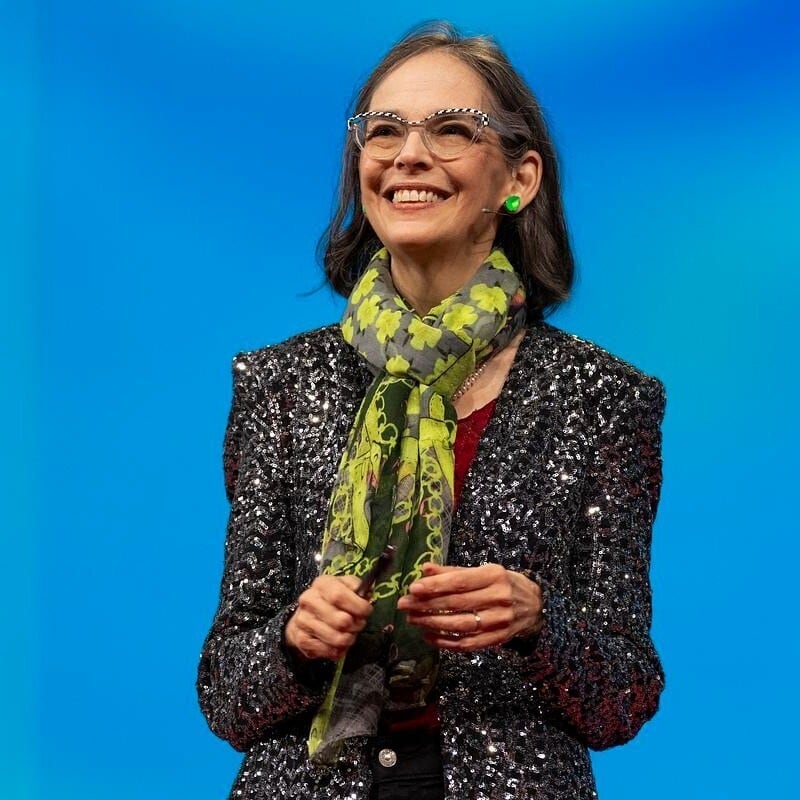
Susan Groner tells parents to picture an imaginary leash when it comes to the important goal of growing a child’s independence. She founded The Parenting Mentor and advises corporate parent/caregiver employee resource groups. She also wrote the book "Parenting with Sanity & Joy: 101 Simple Strategies." She said young kids need a short leash as they learn to do, solve and experience things without a constantly hovering parent. The leash grows along with the child’s competence.
Groner, of Bedford, New York, asked some of her friends who are moms about their comfort levels with kids’ independence. Each said she wants her children to be independent and have more freedom. But those moms are also strong on the idea they need a tracking device of some kind. They’ll let their children do things as long as there’s a way to see where they are and that they’re safe.
That might bump into the reluctance many parents have to give younger kids cellphones. Groner references Okay to Delay, a group emphasizing kids shouldn’t have cellphones before 8th grade. Many parents resolve the conflict with devices that aren’t smartphones — perhaps even shoes that can track.
Letting kids grow
Let Grow believes “when adults step back, kids step up. The website champions childhood, helping kids build confidence, resilience and self-reliance through independent play and real-life experiences.
Let Grow is all about crafting increasingly independent experiences, including a curriculum that schools can use K-8. “Go home and do something new on your own (with your parents’ permission): Walk the dog, make lunch, run an errand ... anything!”
Skenazy said a pilot study found independence worked faster than cognitive behavioral therapy on childhood anxiety.
The cycle of anxiety, per Skenazy, arises from “worst-first” thinking. “You go to the worst-case scenario first and since you think that that’s going to happen, you say ‘no’ to everything. Something happened at a library somewhere, so no going to the library. Something happened at a park somewhere, so no going to a park.”
Said Groner, “There’s so much anxiety out there now and everyone’s blaming it on social media — and a lot of it is because of social media. But if I’m constantly hearing ‘Don’t do this,’ ‘You can’t,’ “Watch out!’ I’m going to be so worried, so anxious to go out into the world.”
Teaching a child solid safety-first rules like not going into traffic and being alert and not going off with strangers is a vital part of parenting. If they feel like someone is threatening them, they should kick, scream and run, of course. If a child feels like a van is following, they should know to cross the street and stand next to the guy who’s raking the leaves, Skenazy said.
Then parents need to let children put those lessons into action and explore and play — and grow.
“You teach your children to be part of the world and then you let them do it. Not all at once. The horizon expands as they get more comfortable and competent,” she said. “If that means that you have to sit and clutch your coffee cup for half an hour while they’re walking the dog, OK. That’s the deal.”
The prize is positive messages a child absorbs. “I think my mom trusts me” and “I can handle this on my own.”
The opposite action creates the opposite message, according to Groner. “My parent doesn’t think I’m capable. My parent is constantly worried; should I be worried? The message is this is a horrible world and a really scary, dangerous one. That causes anxiety, too.”
Kids given no chance to explore, to make small mistakes, to learn how to recover from those will never be able to handle responsibilities later, Groner said. Parents may try to eliminate all risks, but the point is to raise kids who can handle normal life.
Allowing children to work it out
Parents aren’t alone in overprotection. In his book “The Anxious Generation,” Haidt wrote that on the playground during recess, teachers, parent volunteers and aides interfere in even little squabbles, although kids can usually work things out for themselves and would benefit from learning how.
Feelings might be hurt, but that’s part of life, too — and part of learning to advocate for yourself, Groner said.
Children should become adults who have learned to trust themselves, to problem-solve, to cope with failure, disappointment and myriad emotions, said Groner. Well-meaning parents can stunt that.
She emphasized that there are ways to prepare kids for real dangers without preventing them from ever feeling disappointment or frustration or other emotions that are an inevitable part of life, she said.
Skenazy said she doesn’t blame parents for worst-first thinking.
“Think of all the things that have been denormalized. So many schools won’t let a kid get off the bus unless a parent is there to walk him home. So parents start thinking, I guess it makes sense; I guess it’s too dangerous. There are afterschool programs that won’t let a child self-dismiss. There’s an assumption there will always be an adult there. That does little to build a child’s skills or self-confidence,” she said.
There are different kinds of dangers and different degrees, Skenazy said, but crime is down nationally. She’s surprised people don’t see a difference between a child on a mountain hike alone and going two blocks to a convenience store.
Groner doesn’t see anything wrong with tracking your kids, even if you put a locator tag in the child’s sneaker. But it’s something the child should know.
What’s really important, she said, is reaching a point where you know your kid can handle being unhappy, frustrated, disappointed, scared, worried, bored, hungry — “any normal uncomfortable feeling. That’s what I want to teach my kid.”