



“Child sexual abuse is preventable, not inevitable.”
That is the most important message Elizabeth J. Letourneau hopes people take away from her new book, “One in Five: Why Child Sexual Abuse is Our Biggest Public Health Crisis and What We Can Do To Stop It.” Many believe “there’s nothing we can do about this,” she told the Deseret News.
Letourneau is the director of MOORE, a research center in the Johns Hopkins Bloomberg School of Public Health. Her new book, co-written with journalist Luke Malone, draws on Letourneau’s 38 years of experience studying this social problem, which affects 1 in 5 children worldwide (including online exploitation).
But Letourneau said “incorrect thinking” makes this crisis worse. “The public is deeply fatalistic about the prevention of child sexual abuse,” she said, with most seeing it as a “criminal justice problem” that has to be dealt with “after the fact.”
Letourneau’s nearly four decades of research says otherwise.
Risk factors are key
In 2012, Stephen and Julia Moore helped Johns Hopkins found a center dedicated to child sexual abuse prevention after their own family experienced child sexual abuse at the hands of a grandfather.
Over the last 14 years, this center has studied events leading up to abuse as part of developing prevention initiatives “that will spare future generations from ever experiencing the lifelong harm of (child sexual abuse).”
As Letourneau emphasizes on the institute’s website, “to prevent victimization at scale, we need to understand and address the risk factors for perpetration.”
Letourneau has been pleasantly surprised by “how much research has been undertaken in the last five years,” she told the Deseret News. “An absolute tsunami of data is headed our way.”
Here are five other important takeaways from the book.
1. Engaged, gentle parenting can protect against online exploitation
Among the variety of factors that increase safety explored in the book — such as better wages and education for girls and women — they highlight two factors that need additional attention.
First, Letourneau said, “We know that fathers, stepfathers and adoptive fathers who are involved in raising their children are far less likely to abuse them” — emphasizing the value of “inculcating the norm” of men providing childcare.
Second, parents who are controlling or harsh, Malone told the Deseret News, also increase their child’s risk of exploitation “because they didn’t have parents to turn to.”
Malone cited a 2023 study of teens whose parents were overly controlling: “Don’t do this, don’t do this … and if you do these things, we’ll take away your phone.” Girls in these homes ended up being more hesitant to disclose online sexual harassment or exploitation.
Conversely, he said, it can be more protective for teens when parents say, “Hey, let’s talk through some red-flag situations and behaviors. We don’t want you to be involved in those, but we’re not going to punish … and we want you to feel comfortable coming to us if anything untoward happens to you.”
2. Children often abuse children
It’s surprising for many people to learn that most sexual offending against children is actually caused by other children. Up to 70% of sex offenses against children in the U.S. are committed by other kids, according to the authors. (They also note that half of online sex abuse cases involving children under 18 are also committed by teens.)
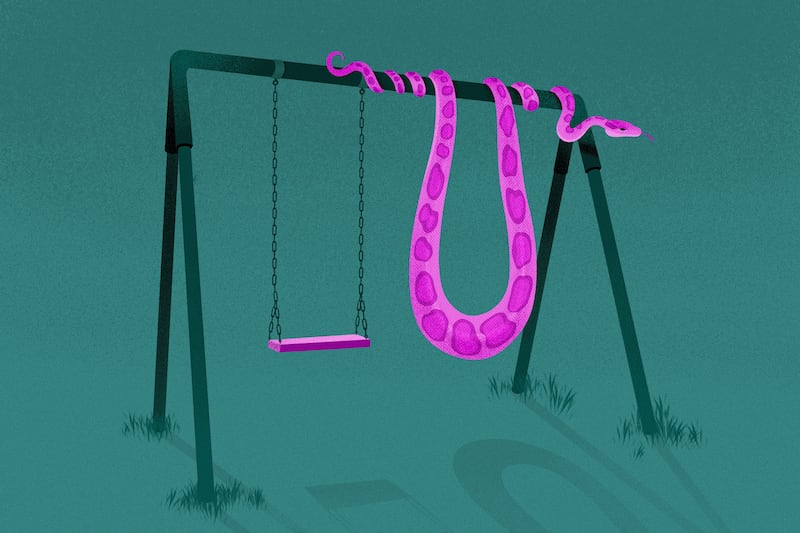
“It is not the adult playground lurker who is most likely to abuse children — it’s the kid hanging next to them on the monkey bars.”
This often takes place in a context of “ignorance, impulsivity or lack of adult supervision,” the authors state, rather than out of “an emerging pattern of predation.”
Other patterns that make children more likely to abuse include older children mixing with younger children without supervision, family problems, pornography exposure and having experienced abuse themselves. The authors write that many child perpetrators “are mimicking sexual abuse that was inflicted upon them.”
Compared with adult perpetration, perpetration by a child is easier to prevent and easier to stop once it’s caught.
3. We have a shared goal
The Johns Hopkins research institute’s website states, “Everyone benefits when children live their lives free from sexual abuse. And everyone shares the responsibility for preventing it.”
Malone told Deseret News they were “careful in the book not to be too finger-waggy, because this really is a shared goal. No matter where you are on the political spectrum, where you are at any stage of life, we can all unify around the idea of preventing child sexual abuse.”
“It’s not just people with kids, it’s not just for law enforcement,” Malone underscored. “It’s something that we can all get behind.”
Letourneau added that even while individuals and institutions are held accountable, “We cannot vilify and exclude because of past failures.” Whether discussing religious organizations or Big Tech, she said, “They’re all partners in keeping children safe.”
“Every community is responsible for the safety of children.”
4. Faith communities already play a role
Letourneau said that faith communities are already playing a role in this more comprehensive response in many ways.
Mentioning safety measures implemented by the U.S. Council of Catholic Bishops since 2002, she pointed to 2024 research by her colleagues documenting reductions across religious settings in “boundary-violating behaviors” that often precede child sexual abuse.
That includes, she explained, “things like being alone with a child, holding a child on your lap, giving a child gifts, giving the parents of the child gifts, telling a child secrets and developing special relationships.”
None of those things necessarily lead to child sexual abuse, but they do often precede child sexual abuse. As these “boundary-violating behaviors” decrease, Letourneau and colleagues believe that will ultimately correspond to “significant reductions in child sexual abuse victimization.”
This has been observed in what she calls the “big six” youth-serving organizations — Boy Scouts, Girl Scouts, Big Brothers Big Sisters, Boys & Girls Clubs, 4-H and the YMCA — where policy changes that reduce boundary-violating behaviors have led to corresponding decreases in sexual abuse.

5. Lack of AI safeguards is an oversight
“The other thing that surprises me,” Letourneau said, “is the fact that we released AI the same way we released social media … without any safeguards for children.”
“And that blows my mind,” she said, describing a meeting she had with several Big Tech companies that same week. “We’ve got great people working at OpenAI and Anthropic and Google and Meta and everywhere to try to make things safer, but I just can’t believe that we released this massive new technology without more boundaries.”
“And anybody could have predicted the very first thing people were going to start doing is generating synthetic child sexual abuse material,” she said, some of which is “based on images of actual kids.”
“There were no guardrails against that at all,” Letourneau argued, despite “experience after experience” in prior decades “where we don’t consider the safety and well-being of children before we release these life-altering technologies.”
These oversights may be connected to the fact that child sexual abuse for many is too horrible to imagine, these researchers suggest.
Yet if we cannot imagine the abuse actually happening — and the precursors that make it more likely — this book makes clear that it will be difficult to imagine effective steps to more effectively prevent these heartbreaking experiences from continuing to happen.