


In Orem, Utah, Karyann Parkinson’s children rode their bikes to school, climbed trees and roamed their neighborhood. But after the family moved to Virginia, the decision to give her 5-year-old son the same independence resulted in a criminal charge and a six-month suspended jail sentence.
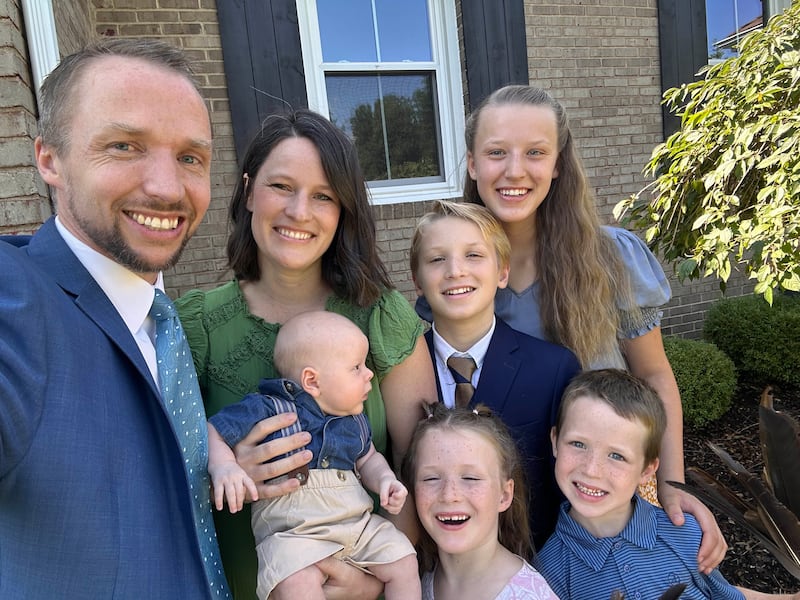
Parkinson, a mother of five and a lawyer who lives in Williamsburg with her family, believes in helping her children build what she calls “scaffolding.”
“Teach your kids how to do things on their own and they will build a lot of skills and a lot of confidence with proper support,” Parkinson told the Deseret News. She practiced this approach with her older kids, who are ages 14, 12 and 7. “I encourage them to explore their own boundaries and to determine their own safety, within healthy limits.”
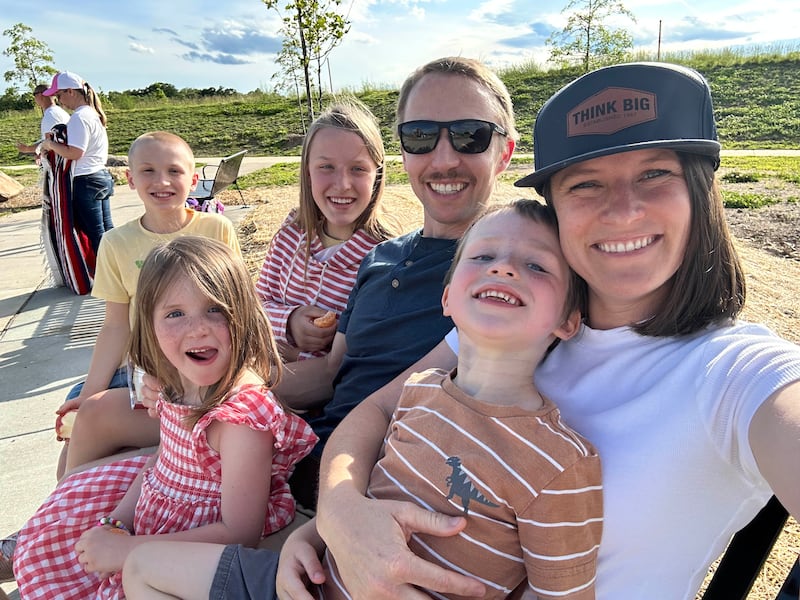
She never imagined that letting her son take a short walk in their quiet, gated community could lead to a criminal conviction. The story resurfaced the questions at the heart of the free-range parenting debate: When does giving children independence cross the line into neglect? Where does parental freedom end and government intervention begin?
‘Something has gone horribly wrong’
In June, Parkinson went on her daily neighborhood walk, and her 5-year-old son, Sam, came along on his bike. Along the way, he stopped by the pond to collect goose feathers. Once they got home, Sam said he wanted to go back for more. This time he wanted to walk so he could hold more feathers in his hands, Parkinson explained.
Parkinson described their residential community in Williamsburg, Virginia, as “idyllic” and full of “amazing people.” There are three golf courses, a pond and a 25-mph speed limit. The neighborhood, accessible only to residents, has nine entrances, each one with a gate and live security. The family moved to the area in 2023 so Parkinson could attend law school.
About 20 minutes later, while she was making lunch, Parkinson heard a knock at her door. A neighborhood security guard stood outside with Sam, who was clutching his feathers and looking scared. The guard said that a neighbor had called to report a child alone and said that the boy wasn’t allowed to be out by himself under the Homeowners Association rules.
“I pushed back and I just said, ‘I’m pretty familiar with the HOA bylaws. What rule are you talking about?’” Parkinson told the Deseret News. Her son appeared scared, she said, because he was told that he had broken the rules and that “there were bad people in the neighborhood who would hurt him.” The guard told Parkinson he was going to call the police.
Next thing she knew, there was a police officer at her house. She made her case that Sam was capable of walking two streets down to the pond on his own in a safe neighborhood. “He was on a protected pathway — it’s set back 10 feet with road, grass, path. He was on the path,” Parkinson said. He had to cross the street twice on protected crosswalks. “He’s done that route hundreds of times in the last three years,” she said.
After an exchange with the police officer, she recalled saying, “I’m not interested in having a conversation about it,” she said. Next, Child Protective Services (CPS) arrived. When CPS asked her to sign a safety plan, Parkinson declined.
“I do love the way that I parent. I love my kids,” Parkinson told the Deseret News. “What I do comes from a place of, one: a whole lot of educational expertise, and two: I know my kids.”
When does giving children independence cross the line into neglect? Where does parental freedom end and government intervention begin?
Two weeks later, just when Parkinson thought the saga over her son’s pond walk was over, two police officers showed up at her home with a warrant for her arrest. Parkinson, who was then eight months pregnant with her fifth child, was told that she had to sign it or go to jail.
“I was really scared and stressed out,” she said. “I thought my parenting was good. It used to be this point of pride, and now I feel like something has gone horribly wrong. It felt really confusing.”
She learned that she had been charged with a misdemeanor and that CPS had opened an investigation. As a result, Parkinson was placed on the state’s child abuse and neglect registry, where she will remain for seven years.
Last week, a judge convicted Parkinson of contributing to the delinquency of a minor, which is a first-degree misdemeanor. Although the judge suspended the six-month jail sentence, Parkinson still has a criminal record.
Independence and mental health
Although many parents in Virginia lean toward a protective parenting style, Parkinson said, she often heard from parents that they wished to give their children more independence. “I never got a sense that people disapproved or thought it was weird,” she said.
Parkinson has spent much of her education and professional life thinking about parenting. She studied family science at Brigham Young University, which included coursework in human development and parenting studies.
While her husband was in graduate school to become a marriage and family therapist, the couple became foster parents. Later, in Utah, they started a business and worked at a treatment center, where Parkinson served as a behavioral specialist and, alongside her husband, helped care for 35 girls.
In Virginia, she interned at the Institute for Justice and worked in the law office of former Virginia state Sen. Jill Vogel, who also co-sponsored the reasonable childhood independence law that passed in Virginia in 2023.
Virginia’s law is one of the more explicit “free-range parenting” provisions in the country. The law amended the state’s definition of child neglect to say that a child is not considered abused or neglected because a parent allows age- and maturity-appropriate independent activities without adult supervision. The law also doesn’t establish a specific minimum age for independent activities and names playing outdoors and walking to nearby locations without supervision.
Parkinson told Reason she believes the “delinquency of a minor” charge in her case was an attempt to bypass this law.
In 2018, Utah became the first state to enact a similar law. It explicitly states that parents are not neglectful for allowing children who are mature enough to walk to school, play outside, travel to nearby places or be home alone.
Experts like Jonathan Haidt and Lenore Skenazy have argued in favor of moving away from the “helicopter parenting” approach and allowing kids more opportunities for independence and risk-taking.
“It’s up to parents to decide when to give their kids some independence,” Skenazy, the author of “Free-Range Kids,” wrote in a post for Let Grow. “It’s up to the government to swoop in only when kids are in grave danger. Not anytime they walk to the dollar store.”
In his book “The Anxious Generation,” Haidt has argued that the crisis in youth mental health stems from a paradox: Parents are fearful of the real world while leaving the virtual world wide open for their children. One of his proposed reforms is to give children more unsupervised and unstructured play.
Parkinson’s case in Virginia is not the first time that a mother has gotten in trouble for giving her child some independence.
Last year, a Georgia mother was arrested after her 10-year-old son was found walking alone in the town of Mineral Bluff, Georgia. She said she was at a doctor’s appointment with another child and didn’t think her son’s walk posed a danger. She was handcuffed and taken into custody in front of her child and was charged with reckless conduct. Georgia has since passed the “Reasonable Childhood Independence” law.
The right to a good childhood
Parkinson is appealing her misdemeanor conviction.
While a slew of dangerous things could happen to any child anywhere, “we don’t arrest moms for driving their kids to the store, even though they could be hit by someone running a stop sign,” Lenore Skenazy wrote in an article about Parkinson’s story.
“Hypothetical dangers are not reason enough to condemn a person. And neither is hypothetical immaturity. No one proved that the boy was incapable of walking a few blocks safely by himself,” she wrote.
Being on the child abuse registry means Parkinson will likely not be able to volunteer at her kids’ school. “It’s really disappointing,” she said.
Still, she wants to keep the focus on her children.
“I want to make it about my kids and helping them know I will make sure that they have a right to a good childhood,” Parkinson told the Deseret News. “I’m not going to abridge their happiness and their experiences because I’m afraid.”
Parkinson insists that living in fear is not a solution.
“We have to be reasonable about assessing risk and not living in this place of irrational fear of the boogeyman that is just not there,” she said.