

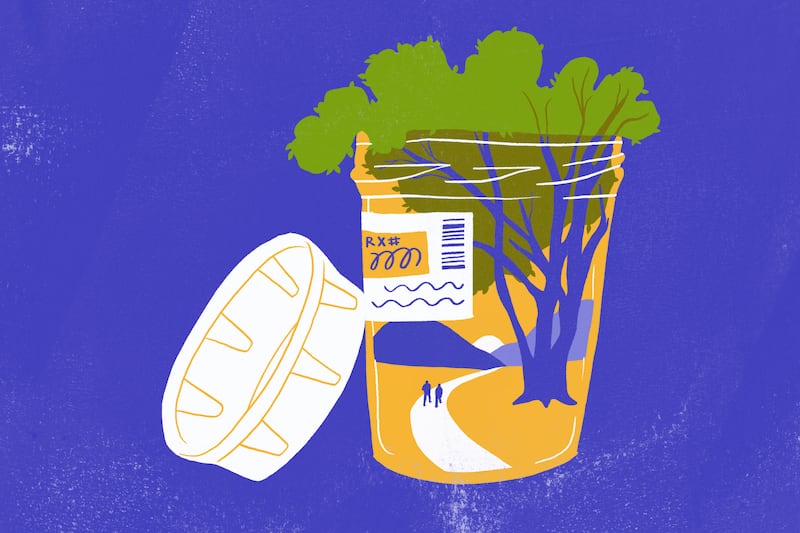

In the olden days, my friends and I used to sit around and talk about sports or vacations or politics. Now we talk about medical appointments, medications and maladies.
Sometimes, it is like watching water circle a drain — around and around and around.
There is a real hazard we face as we age. It’s not how our home is arranged or how we drive or where we live or even our own health; it is having our lives consumed with health woes, both our own and those of our loved ones.
Of course, there are times when a singular focus on health challenges makes sense. Physical emergencies and acute pain can draw all our focus, as they should. And when people face chronic health challenges, there’s a natural, ongoing focus that is often required.
But sometimes even milder or more intermittent health challenges start to occupy all our focus, too. When my wife comes back from lunch with friends, she’s inclined to tell me the latest knee replacements, doctors’ appointments or new medication of her friends. When people are suffering, this kind of understanding is a way to extend compassion.
But it can be overdone, too. One short couplet, often attributed to Arthur Guiterman, goes: “‘How are you?’ is a greeting, not a question. Don’t tell your friends about your indigestion.”
Many older people are managing some type of chronic condition — it happens as we age — so it’s easy to fall into an almost automatic routine of telling everyone else about them. According to a 2025 analysis by the Centers for Disease Control and Prevention, 93% of adults age 65 and older have at least one condition, while 79% have two or more — ranging from high blood pressure to dementia to diabetes to a host of other health conditions.
“Every body part has a doctor,” Deana Hendrickson told me. “I regularly see a primary care doctor, a cardiologist, a pulmonologist — because of a family history of lung cancer — plus an ophthalmologist, a gynecologist, a urologist, a podiatrist, a gastroenterologist, and I just came back from the dentist today.”
It’s this persistence and universality that can make talking about health problems as we age almost a toxic cycle. Commenting on his popular book “Stupid Things I Won’t Do When I Get Old,” Steven Petrow said, “The more we obsess over our frailties and illnesses, the more we allow them to define us.”
An overemphasis on discussing health matters can limit us from engaging in other topics with each other — causing some people to avoid us when we could likely benefit from more social interaction.
“When older people focus on their aches and pains, they are less likely to share their joys,” Dr. Louise Aronson, a professor of medicine at the University of California, San Francisco, said. When that happens, a sense of gratitude and appreciation is neglected.
Of course, the answer isn’t simply to ignore any discussion about health and wellness. Minimizing or driving real health concerns underground could result in missing early warning signs that, if acted upon, could address some serious conditions before they get worse.
This is where our own compassionate listening to each other, no matter what each of us is going through, can make a positive difference — especially if done patiently and without judgment. We all appreciate comforting words; they enable us to be seen, heard and acknowledged. There is, however, a delicate balance between extending empathy and reinforcing venting or complaining.
Like anything else needing boundaries, it’s good to budget the space, time and energy invested for ourselves and our relationships in exploring the many dimensions of health concerns.
Boundaries, of course, can be harsh and hurtful or kind and compassionate. They needn’t even be explicitly discussed and can, instead, simply be reflected in the reframing of a conversation.
You might ask yourself: Without ignoring health issues, how can we channel discussions so that these questions get their proper due without having them dominate every discussion that occurs — and so that the overall trajectory of discussion can be in direction of growth and development?
There’s much to say about this, but maybe a starting point is reconsidering how much of our daily and weekly energies ought to go to this on an individual level.
Recent research suggests that older people receive too many screenings of dubious worth. So, one strategy is to simply reduce what some experts are now calling “low-value care.” We may just have to live with some bodily malfunctions as we age.
With a conscious shift toward wellness across our lifespan, it may also become easier to reframe conversations about illnesses into shared inquiries into living longer, better.
My wife Stephanie does this with friends and family members alike in a simple and unobtrusive way. Rather than ask, “How are you?” she instead asks, “What’s been the highlight of your day?” or “What are you looking forward to this week?”
Such reframing changes both the tone and content of conversations among friends and acquaintances in a positive, encouraging direction.
No doubt, talk of our ailing bodies will continue as long as there are health concerns among us. As a fact of life, these questions are just as relevant as any other conversation topic.
But let’s make sure they’re not the main or only thing we talk about. By doing so, we’re all better off, even as we age.