

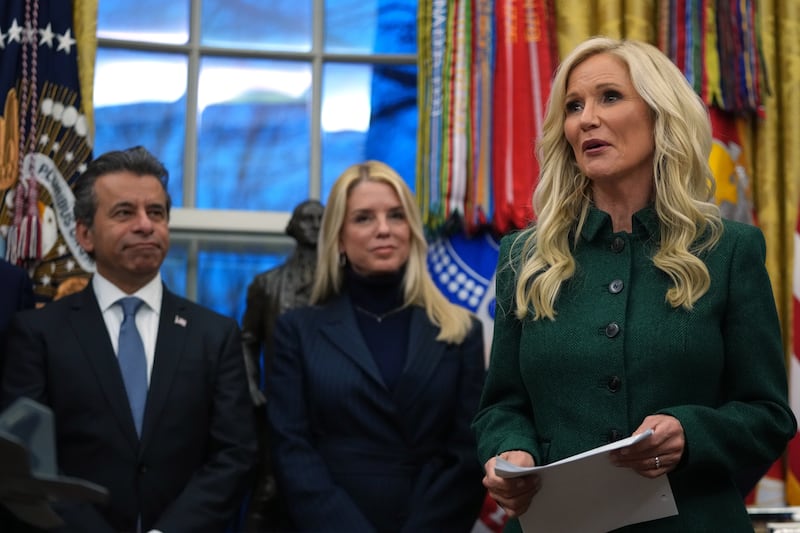

- Kathryn Burgum is co-chair of the Great American Recovery Initiative and White House senior adviser for addiction recovery.
- The former North Dakota first lady shared her personal struggles with alcohol at an outdoor recreation forum.
- Stacy Bare talked at the forum about how nature and the outdoors can help people recover from addiction.
When Kathryn Burgum was growing up in North Dakota, children were supposed to be seen and not heard. Her family did not discuss emotions, love was conditional and she subsequently felt that she could not even be loud, let alone express herself.
By the time she was enrolled at a Catholic high school, where she said mental and physical abuse were common, she often felt isolated and alone. Around that time she began to hear voices that told her, “I’m not good enough, I always make mistakes.”
That was until she had her first alcoholic drink. It was drinking, she said, that made the voices go away.
“I was like, ‘This is the answer. This is nirvana. I can do this. I can do anything,’” Burgum recalled. “Then I had my first blackout in high school and that really started me on a journey of a 20-year struggle of trying to stop drinking.”
During that time she was still engaged — she got an MBA, progressed her career and was capable of almost anything she set her mind to. That is, except for not drinking.
Not being able to stop made her feel suicidal, she said, and one day while she was on on a walk she had a revelation.
“I was once again thinking, ‘How am I going to do this? How am I going to stay sober?’ And the voice popped into my head and said, ‘Maybe you should ask for help,’” Burgum said. “I just said, out loud — I wasn’t with anybody — ‘If there’s anybody out there, I need help,’ and I have been sober and in recovery since I said those words.”
That was more than 20 years ago and today Burgum is the co-chair of President Donald Trump’s Great American Recovery Initiative and White House senior adviser for addiction and recovery. She’s also the former first lady of North Dakota and married to Interior Secretary Doug Burgum.
How the personal can be the universal
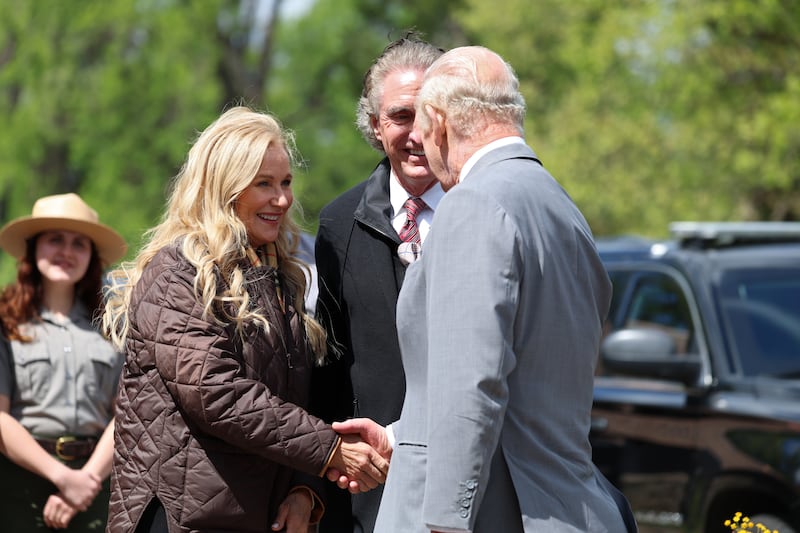
Burgum shared the emotional and vulnerable recounting of her experience, strength and hope during the opening reception of the National Executive Forum on Health and Outdoor Recreation in Washington, D.C., earlier this month.
The event was a gathering of outdoor recreation executives, health experts and federal leaders who were seeking ways to ensure that outdoor recreation is treated as a solution to some of the nation’s pressing health challenges.
She was on stage for a surprise panel during the welcome dinner with Stacy Bare, a combat veteran and former Utahn who is the executive director of Friends of Grand Rapids Parks and someone in recovery.
The talk was slotted in towards the end of the evening and followed the presentation of a lifetime achievement award to Richard Louv, the author of “Last Child in the Woods” who invented the expression “nature-deficit disorder.”
He’s also the founder of the Children & Nature Network and has long advocated for the health benefits of nature for children and society.
Which meant that by the time Louv left the stage, members of the audience — who by the nature of their work are disposed to hear such messaging — were especially primed to learn about the positive effects of nature on health.
But they perhaps were not entirely ready for the vulnerability and candor of Burgum and Bare. By the time the two were done, there were more than a few misty eyes.
Addiction as a disease
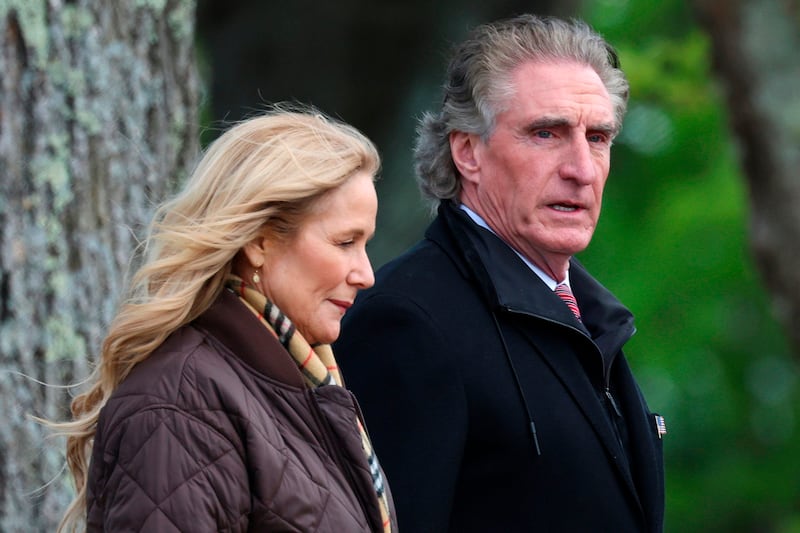
Burgum has shared her story before as it was the cause she championed as first lady of North Dakota. At that time, she wanted to diminish the stigma associated with addiction and recovery.
She found success in her home state, but was looking forward to taking some time off after her husband left the governorship. But life had other plans for Burgum, ones that gave her access and a much bigger platform to continue the work she started on the Great Plains.
Those initial efforts have now evolved and been taken up as a cause by the current presidential administration. The Great American Recovery Initiative is an executive order titled “Addressing the Disease of Addiction.”
“I’m calling addiction a chronic disease. I believe that because there’s no other way to explain how this happens to people,” Burgum said. “How people don’t care about their kids, they don’t care about anything, they live on the streets — people don’t choose these things."
According to the most recent data, almost 50 million Americans struggle with addiction. That’s more than 15% of the country, which means that a much larger percentage of the country is either related to or knows someone with a substance abuse disorder. Or, as Burgum and the Trump administration describe it, a chronic disease.
The disease claims more than 100,000 Americans every year, making it one of the leading causes of death. Around the world, that number is more than 3 million people, according to the World Health Organization.
“So I created the initiative, focused on creating a chronic disease model for this disease, and really getting America to understand that this is a chronic, relapsing, lifelong, fatal, if not treated, disease,” Burgum said.
The Great American Recovery Initiative was launched in January 2026 and is set up to create and act on the recommendations of the co-chairs to increase awareness of the disease, help Americans receive treatment and “foster a culture that celebrates recovery.”
And even if that extended vacation never turned out as planned, she still believes she is in the right place.
“But, you know, here’s the thing: more than anything, I get up every day just grateful for all these opportunities that that show up in my life,” she said, “because, I always say, ‘Well, I don’t know why I’m still here, but I am here, and this is the work I’m gonna do.’”
Can nature help those struggling with addiction?
Bare also shared with the audience about his struggle with drugs after he returned from war and how that led him, too, to suicidal thoughts.
After telling a friend how he was feeling, that person invited him to go climbing near Boulder, Colorado.
“I got up on the First Flat Iron and, at the top of it, I had this somatic experience,” Bare said. “I was shaking and I was crying and it was for the first time I realized I hadn’t been spending all day thinking about the fear of living or the guilt of not; the fear of what I had done and the guilt that I was still alive when my friends weren’t. Why did I survive and they didn’t?”
He walked down the mountain and said to his friend — in a rather tragic moment of self-loathing — if that was as good for him as it was, what could it do for other veterans “who actually deserve it?”
“Because, at the end of the day, one of the things that addiction steals from you is the belief that you are worth it and one of the things I think the world does when we’re outside is it shows us how wonderful and beautiful this planet is,” said Bare, a National Geographic Adventurer of the Year and pioneer in promoting time outdoors as health care.
“I have never been to a place that is not gorgeous. And I grew up in eastern South Dakota, and I can take you to awe-inspiring places there. And that sent me on a path of just trying to figure out how do I get more people out,” he said.
The power of getting outside
Since 2009, Bare has been finding ways to take veterans and regular folks out into nature for restorative experiences with the likes of the Sierra Club, the American Alpine Club, Veterans Expeditions and his work today building park infrastructure in Grand Rapids, Michigan.
He believes the outdoors is not a catch-all and that professional help is also necessary and extremely beneficial, but he knows the power of time spent outside from firsthand experience and through helping others.
“The outdoors is amazing for a lot of things. Thirty percent reduction in post-traumatic stress — we’ve done the research — 20% reduction in overall stress,“ Bare told the audience. ”But when it comes to acute trauma connected to generalized trauma, the outdoors can get you there and it can keep you alive until you can get the additional help you need. And then when you’re done with the help, the outdoors is still there. And it needs to still be there.”
Which was something that Burgum agreed with as well. As part of her initiative, she wants to find and use all the methods to ensure addiction and recovery lose their stigma.
She said businesses need to create recovery-friendly workplaces and government can promote activities inclusive of those in recovery. She’s actively seeking private-public partnerships that might broaden the reach of her office’s efforts.
Among the important ones, she said, was getting more folks access to the outdoors.
“When I said those words — ‘I need help’ — I was outside. All the times I was thinking about it, I was outside. Being outside is the most important thing, I think, for people to do," Burgum said.
“It’s really important for us to be able to focus on that as a component, because we’re looking at the gaps of what’s missing and why people aren’t staying sober. And thinking about the outdoors and what’s possible, that’s a huge part of what could be filling in the gaps and helping people stay sober and in recovery.”