

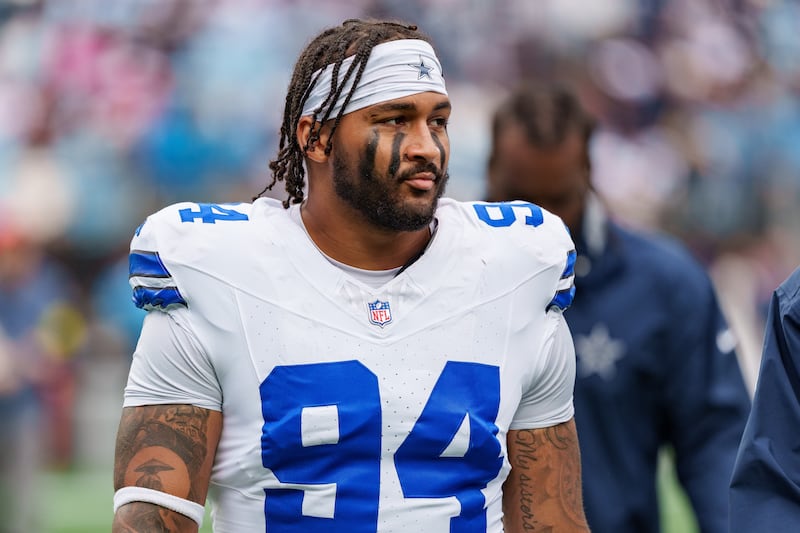

- A new study finds NFL players dying of neurodegenerative diseases at up to four times the rate of the general population.
- Despite the elevated brain disease risk, NFL players live longer overall.
- The study came out just as it was reported that Dallas Cowboys lineman Marshawn Kneeland, who died by suicide last year, was in the early stages of chronic traumatic encephalopathy (CTE).
A study of nearly 20,000 NFL players finds they are up to four times more likely to die from dementia or Parkinson’s disease than the general population. But conversely, they’re also more likely to live longer overall.
That’s according to researchers from Mass General Brigham, Boston University and the Concussion & CTE Foundation that showed pro football players had much higher risk of dying from a neurodegenerative disease than people in general. But while the risk of a brain-degenerative death was more likely than in other populations, they also had lower mortality on average compared to national rates.
The study, released Wednesday, is published in the peer-reviewed journal eClinicalMedicine.
“This is the clearest population-level evidence we have ever had that NFL players are dying due to neurodegenerative disease at real and measurably higher rates,” co-senior study author Dr. Daniel Daneshvar, chair of Physical Medicine and Rehabilitation at Mass General Brigham and Harvard Medical School, said in a news release.
“This study demonstrates that, when looking at athletes who have played in an NFL game, including nearly 20,000 players, across every official cause of death, the result is the same: NFL players are dying of dementia and Parkinson’s disease three to four times more often than they should,” he said.
The researchers noted that in neurodegenerative diseases such as dementia, Parkinson’s and amyotrophic lateral sclerosis (sometimes called Lou Gehrig’s disease), the biggest risk is age, but a number of studies have shown that people like NFL players who repeatedly suffer brain impacts are more likely to experience those diseases, which is the cause of CTE, or chronic traumatic encephalopathy.
What is CTE?
CTE results from repetitive head impacts and is a progressive neurodegenerative disease. It is making headlines again this week with news about the death of a young NFL player. Marshawn Kneeland was 24 when he took his own life last year. It was just confirmed by Boston University’s CTE Center that the Dallas Cowboy defensive lineman had stage 1 chronic traumatic encephalopathy.
He died after a car chase with Texas State Troopers when he fled a stop for a traffic violation, BBC reported. He crashed his car and fled on foot, but was found dead from a self-inflicted gunshot wound in early-morning hours.

The same brain-injuring condition that is believed to contribute to the study findings has also been linked to personality changes, headaches, difficulty concentrating and other problems.
The center’s director, Dr. Ann McKee, told BBC that “we have found this progressive brain disease in nearly half of the athletes we have studied who have died before the age of 30.”
Per the article, “Kneeland’s family said in a statement that the diagnosis provided ‘important context’ about some of the struggles he was facing.”
Boston University’s CTE Center said CTE is sometimes linked to contact sports, military service, employment as a first responder and any activities that involve repeated blows to the head.
The center’s “frequently asked questions” page notes that CTE “has been found in athletes who did not play sports after high school or college.”
Repeated blows to the brain lead to degeneration of brain tissue and build-up of the protein tau.“ These changes in the brain can begin months, years or even decades after the last brain trauma or end of active athletic or miltary involvement,” the center reports.
About the study
The researchers looked at health records from 19,824 NFL players who competed between 1960 and 2019, to quantify their higher risk.
Per the release, “They found that players had lower all-cause mortality but nearly four-times higher neurodegenerative mortality, including all-cause dementia (3.8-times higher) and Parkinson’s (3.88-times higher). When accounting for other known risk factors, neurodegenerative mortality was still three times higher for players compared to the general population.”
NFL players had much lower overall mortality and were less likely to die from cancer, cardiovascular disease and suicide. To the researchers that suggests “this is a population that is generally healthier yet still dying of brain disease at higher rates.”
The research showed those who died before age 60 had more than a 12-fold increased rate of neurodegenerative-linked deaths compared to the general population. And the longer the football career, the greater the risk. Those who played five or more seasons had nearly double the risk of neurodegenerative death compared to those who played up to four seasons.
Researchers said that showed a “dose-response relationship” — the more hits to the head, the greater the risk — that has been found in studies of chronic traumatic encephalopathy (CTE). CTE is believed to be the most logical explanation of the increased risk.
”To put that in perspective, heavy lead exposure, which was banned from paint and gasoline in the U.S. due to its neurological and cardiovascular consequences, leads to a 2-to-3 times greater rate of dementia and a 1.5 times greater rate of cardiovascular death,“ said study co-senior author Dr. Jesse Mez, associate director of the Boston University Alzheimer’s Disease Research Center and co-director of Clinical Research at the Boston University CTE Center, quoted in the release.
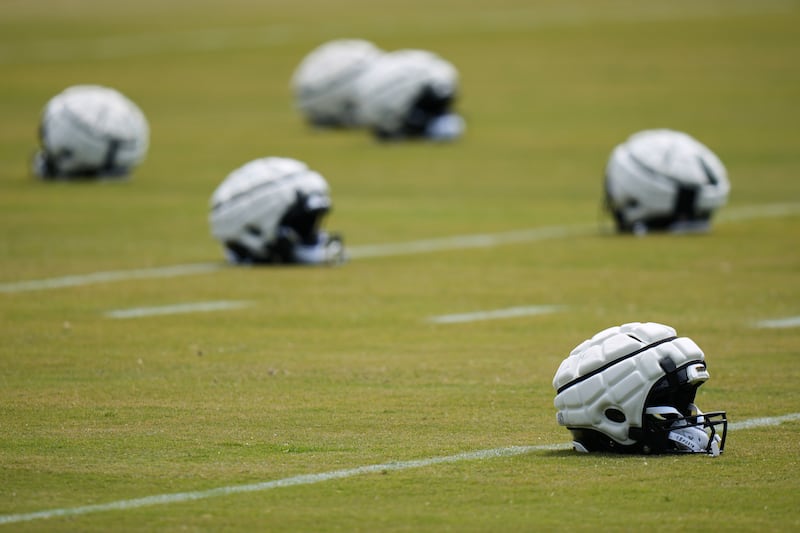
NFL players live longer overall
The researchers also attempted to explain why former NFL players do tend to live longer overall, despite the increased risk of neurodegenerative death. What they called the STARS effect — Selection Through Athletic Resilience Survivor — “suggests that the same genetic, environmental, medical, and behavioral characteristics that enable individuals to become professional athletes — such as exceptional physical and cognitive performance, resilience, self-discipline, as well as lower rates of smoking and serious early illnesses and injuries —also contribute to longer overall survival."
Other advantages that contribute to longer life could include higher educational attainment and greater access to medical care, they said, noting that given those advantages, the disadvantage of repeated head trauma could be even more significant.
The researchers recommend that former football players worried about brain health check in with a specialist in neurodegenerative disease. Some treatable conditions, they noted, mimic dementia.
Per the release, “Even when long-term risk cannot be eliminated, identifying and managing modifiable risk factors can help support overall brain health and quality of life. Players seeking guidance, specialist referrals, or support in managing health concerns are encouraged to utilize available resources, including The Trust Powered by the NFL Players Association (NFLPA), the NFLPA’s Professional Athletes Foundation, and the Concussion & CTE Foundation HelpLine."